The Poetics of Absence: Terracotta Fragments and the 2026 Old Money Silhouette
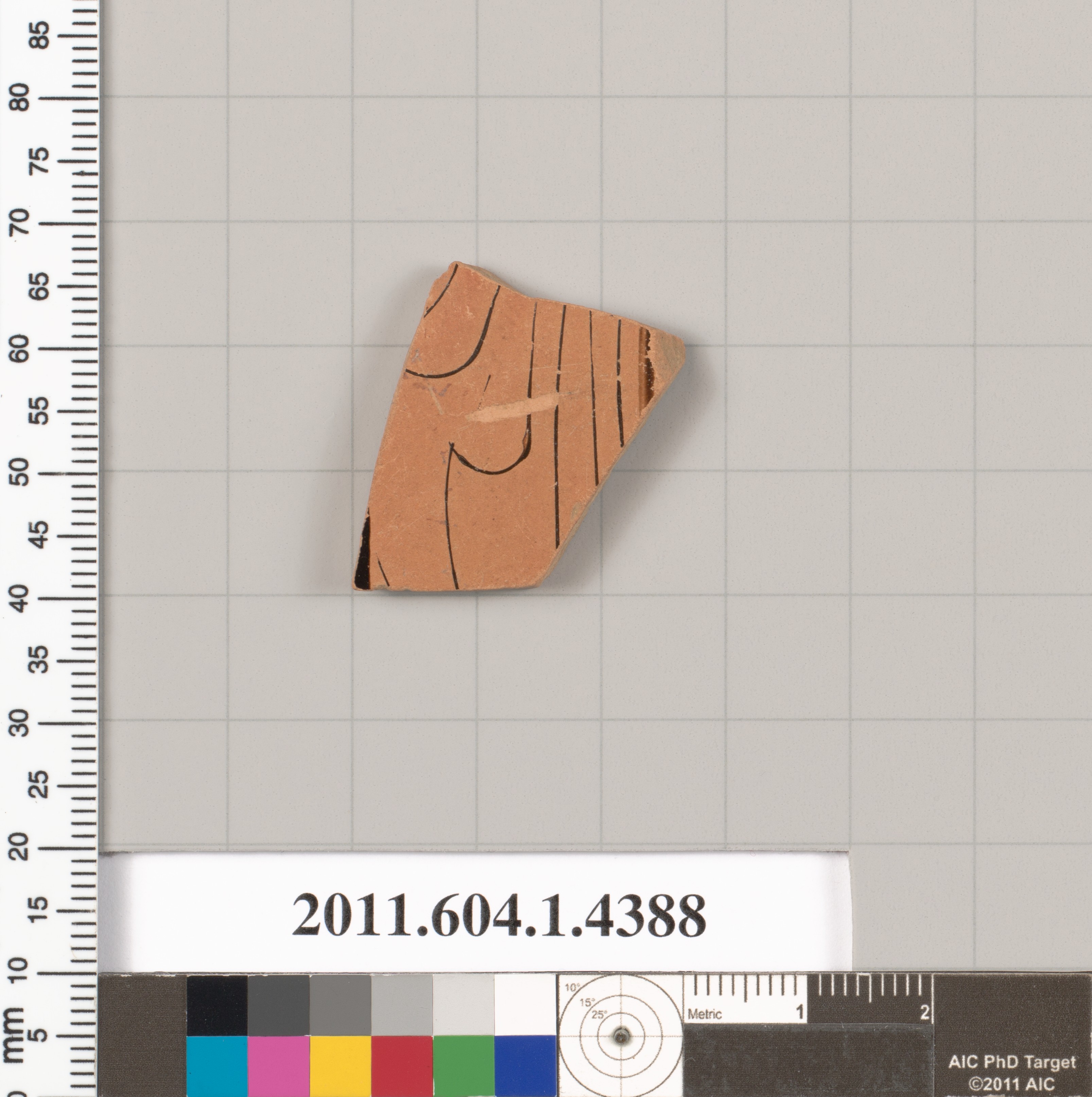
The Lauren Fashion Heritage Lab’s internal genetic code—a dialogue between a Mold Fragment with Musicians and a Rubbing of a Stone from the Tang-Fang Collection—offers a profound hermeneutic for reading material culture. These artifacts, one a tactile remnant of a casting process, the other a two-dimensional transcription of an inscribed surface, both enact a dialectic of presence and absence. The mold fragment is an incomplete vessel, its value lying in its “unfinished” state; the rubbing is a copy, a secondary inscription that paradoxically liberates the line from its stone matrix. Together, they reveal an aesthetic channel from materiality to image, from the thing itself to the trace of its becoming. This paper argues that a Greek Attic terracotta kylix fragment—a drinking cup shard—operates within an identical logic, and that its aesthetic principles directly inform the 2026 Old Money silhouette as articulated by Lauren Fashion. The kylix fragment is not a ruin; it is a generative node of form, texture, and temporality, offering a blueprint for a luxury that is silent, restrained, and deeply historical.
The Terracotta Fragment as a “Mold Fragment with Musicians”
The Attic kylix fragment, like the Tang mold, is a fragment of process. It is not a complete cup but a broken shard, its edges raw, its surface bearing the marks of the potter’s wheel and the painter’s brush. Yet within this incompleteness lies its power. The mold fragment from the Tang codex “did not provide a complete orchestra” but instead allowed us to “glimpse how musicality was born from clay.” Similarly, the kylix fragment does not present a full symposium scene; rather, it preserves a single gesture—a hand, a fold of drapery, the curve of a lip. This is the essence of “qi yun sheng dong” (vitality and resonance) in material form: the art does not depict the symposium; it makes the clay itself a field of occurrence for the symposium’s energy. The fragment’s broken edges are not a loss but a concentration. The silence of the shard amplifies the imagined sound of the kylix’s use—the clink of wine cups, the murmur of conversation, the strum of a lyre. This is the Old Money aesthetic in its purest form: a luxury that does not shout but resonates through absence.
The Rubbing as a “Rubbing of a Stone”: From Object to Line
The Tang-Fang rubbing, as described, is a “copy” that achieves autonomy. By removing color, thickness, and weight, it allows the calligraphic line to “achieve complete independence.” The kylix fragment, when subjected to the same analytical gaze, becomes a rubbing of itself. Its painted figures—often black-figure or red-figure—are already a form of graphic transcription. The painter’s line is a trace of a gesture, a brushstroke that has been fired into permanence. When we view the fragment, we are not looking at a cup; we are looking at a drawing of a cup, a line drawing of a line drawing. This is the “object-departure” that the Tang codex identifies: the “xiang” (image) is liberated from the “qi” (vessel). For the 2026 Old Money silhouette, this translates into a flattening of volume into line. The silhouette is not about the body’s mass but about the contour—the clean, uninterrupted line of a shoulder, the sharp crease of a trouser, the unbroken flow of a coat. The body is the stone; the garment is the rubbing.
The Generative Cycle: From Fragment to Silhouette
The Tang codex posits a “generation-transformation” cycle: the mold fragment is the solidification before the image, the rubbing is the regeneration after the copy. The kylix fragment occupies both positions. It is a mold in the sense that it was shaped on a wheel, a negative space that once held wine. It is also a rubbing in that its painted surface is a transfer of an image from the painter’s mind to the clay. This dual nature is the deep structure of the 2026 Old Money silhouette. The silhouette is not a new creation; it is a fragment of a longer history—a re-emergence of the 1920s drop-waist, the 1950s New Look, the 1980s power shoulder. But these references are not quoted; they are broken, flattened, and re-inscribed. The shoulder is not padded but drawn by a seam. The waist is not cinched but implied by a drape. The silhouette is a rubbing of a silhouette, a trace of a form that is no longer fully present.
Materiality and Temporality: The 2026 Old Money Silhouette
The kylix fragment’s terracotta is a material of time. Its red-brown clay is the color of earth, of kiln fire, of centuries of burial. This is the Heritage-Black category’s foundational principle: a color that is not a color but a patina, a depth achieved through age and use. The 2026 Old Money silhouette, as derived from this fragment, is not about novelty but about duration. The garments are cut from fabrics that age gracefully—wool, cashmere, silk, linen. They are not “trendy” but timeless, their value accumulating with each wear. The silhouette itself is fragmented: a jacket that ends at the hip, a trouser that breaks at the ankle, a sleeve that stops at the wrist. These are not arbitrary cuts; they are edges that invite the viewer to complete the form. Just as the kylix fragment requires the imagination to reconstruct the symposium, the 2026 silhouette requires the wearer to inhabit the absence. The garment is not a container for the body; it is a trace of the body’s movement, a rubbing of the body’s line.
Conclusion: The Aesthetics of the Trace
In the final analysis, the terracotta kylix fragment, the Tang mold, and the Tang rubbing converge on a single aesthetic principle: the trace is more powerful than the object. The broken cup teaches us to gaze at the material’s interior force; the black-and-white rubbing teaches us to appreciate the pure transformation of appearance. For the 2026 Old Money silhouette, this means a luxury that is silent, restrained, and deeply historical. The silhouette is not a statement; it is a whisper from the past, a fragment of a longer conversation. It is the Heritage-Black of a perfectly worn cashmere coat, the line of a tailored trouser that seems to have been drawn by a master calligrapher. In these garments, the fingering of a pipa from a thousand years ago still resonates, and the ink of a stone rubbing is still wet. The 2026 Old Money silhouette is not a new form; it is a re-inscription of an ancient one—a rubbing of time itself.