← BACK TO ARCHIVES
Silk
Heritage Synthesis: Scarf
Curated on Jul 14, 2026 // Node: LDN-01
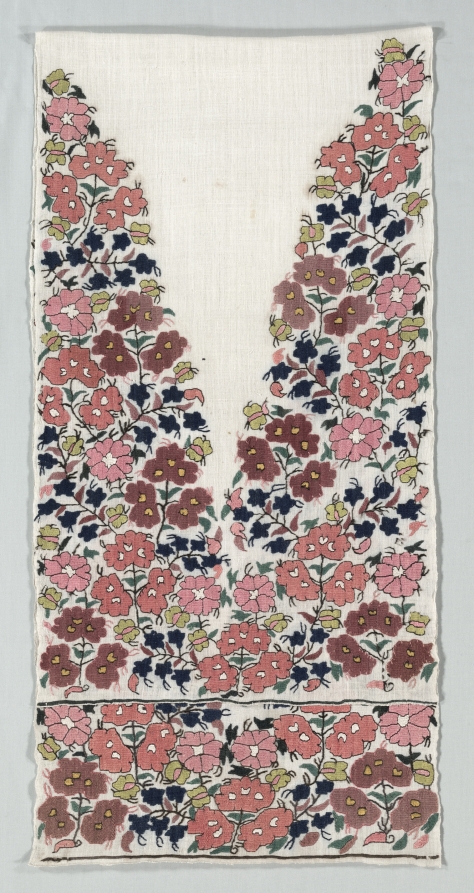
The Scarf as Silent Testament: Silk, Imperial Legacy, and the Craft of Endurance
In the hushed corridors of heritage, where fabric speaks louder than fashion, the silk scarf emerges not merely as an accessory but as a profound artifact of imperial ambition and artisanal resilience. At Lauren Fashion Heritage Lab, we examine this object through the lens of materiality—specifically, the legacy of imperial silk weaving—to understand how a seemingly simple square of silk carries the weight of dynasties, trade routes, and the quiet mastery of hands that have shaped civilization’s most luxurious thread. This paper posits that the silk scarf, in its material essence and historical context, serves as a portable monument to the imperial silk industry, a narrative woven into every filament, and a testament to the enduring dialogue between power, craft, and identity.
The Materiality of Silk: From Sericulture to Sovereign Thread
Silk is not a fiber; it is a chronicle. Its origin lies in the sericulture of ancient China, a closely guarded imperial secret for millennia. The Bombyx mori silkworm, fed exclusively on mulberry leaves, produces a continuous filament of unparalleled luster, strength, and drape. This materiality—its ability to absorb dye with a depth unmatched by cotton or wool, its thermal regulation, and its tactile whisper—made silk a currency of empire. By the time of the Han Dynasty, the Silk Road was not merely a trade route but a conduit for imperial ideology. Silk scarves, often square or rectangular, were among the most portable and prestigious items exchanged, their patterns encoding the authority of the emperor and the cosmology of the court.
The imperial silk weaving legacy is defined by its technical rigor. In Beijing’s Imperial Silk Workshops, established during the Ming Dynasty, master weavers employed drawlooms that required two operators: one to manipulate the pattern, another to throw the shuttle. The resulting fabrics—satin, damask, brocade—were not merely decorative but symbolic. A scarf woven with the five-clawed dragon, for instance, was reserved for the emperor alone; the four-clawed dragon denoted nobility. This hierarchical materiality imbued silk with a political charge that transcended its physical form. The scarf, therefore, was never neutral; it was a statement of allegiance, status, and imperial favor.
Imperial Silk Weaving: A Legacy of Control and Creativity
The legacy of imperial silk weaving is one of paradox: absolute control over production coexisting with extraordinary creative expression. Under the Qing Dynasty, the Imperial Household Department managed vast workshops in Suzhou, Hangzhou, and Nanjing, where thousands of artisans produced silks for court ceremonies, diplomatic gifts, and personal use. The scarf, in this context, became a microcosm of imperial power. Its dimensions—typically 90 to 140 centimeters square—were standardized for portability, yet its decoration was anything but uniform. Patterns drew from Confucian symbolism, Buddhist motifs, and natural elements like peonies (wealth) and bats (good fortune). The materiality of silk allowed for intricate jacquard weaving, where patterns were integral to the fabric, not printed on its surface. This technique ensured that the scarf’s message was permanent, woven into its very structure.
The decline of imperial patronage in the early 20th century did not extinguish this legacy. Instead, it transformed it. Artisans who once served the court adapted their skills for a global market, particularly in Europe and America. The silk scarf, once a symbol of imperial exclusivity, became a luxury commodity accessible to the emerging bourgeoisie. Yet, the materiality of silk remained unchanged: the same sericulture, the same weaving techniques, the same reverence for the filament. This continuity is what makes the scarf a heritage artifact. It carries the memory of imperial workshops, the discipline of master weavers, and the tactile knowledge passed through generations.
The Scarf as Artifact: Preservation and Interpretation
At Lauren Fashion Heritage Lab, we approach the silk scarf as a primary source for understanding imperial heritage. Its materiality offers clues to provenance: the weight of the silk, the density of the weave, the type of dye (natural versus synthetic). A scarf from the Qing Dynasty, for example, might reveal traces of indigo or madder root, while a 1920s Art Deco piece might show aniline dyes. The edges, often hand-rolled and stitched, indicate the skill of the finisher. These details are not mere trivia; they are evidence of the scarf’s journey from imperial workshop to private collection.
Consider a scarf in our archive: a 1930s piece from a French maison, woven in Lyon but inspired by Chinese dragon motifs. The silk is Chinese, the design imperial, but the production is European. This hybridity speaks to the global afterlife of imperial silk weaving. The scarf is not a copy but a reinterpretation, a dialogue between East and West that continues today. Its materiality—the crisp hand of the silk, the precision of the pattern—reflects the enduring influence of imperial techniques on modern luxury.
Conclusion: The Enduring Thread
The silk scarf is a heritage artifact that defies obsolescence. Its materiality, rooted in imperial silk weaving, connects us to a history of power, trade, and artistry that spans millennia. As we handle these scarves at the Lab, we are reminded that heritage is not static; it is woven anew with each generation. The scarf’s legacy is not merely in its past but in its potential—to inspire contemporary design, to educate future artisans, and to remind us that the finest threads are those that bind us to our shared human story.
In the end, the scarf is a silent testament. It asks nothing, yet reveals everything.
Heritage Lab Insight
Lab Insight: CMA Silk Archive Node integration.