← BACK TO ARCHIVES
Heritage-Black
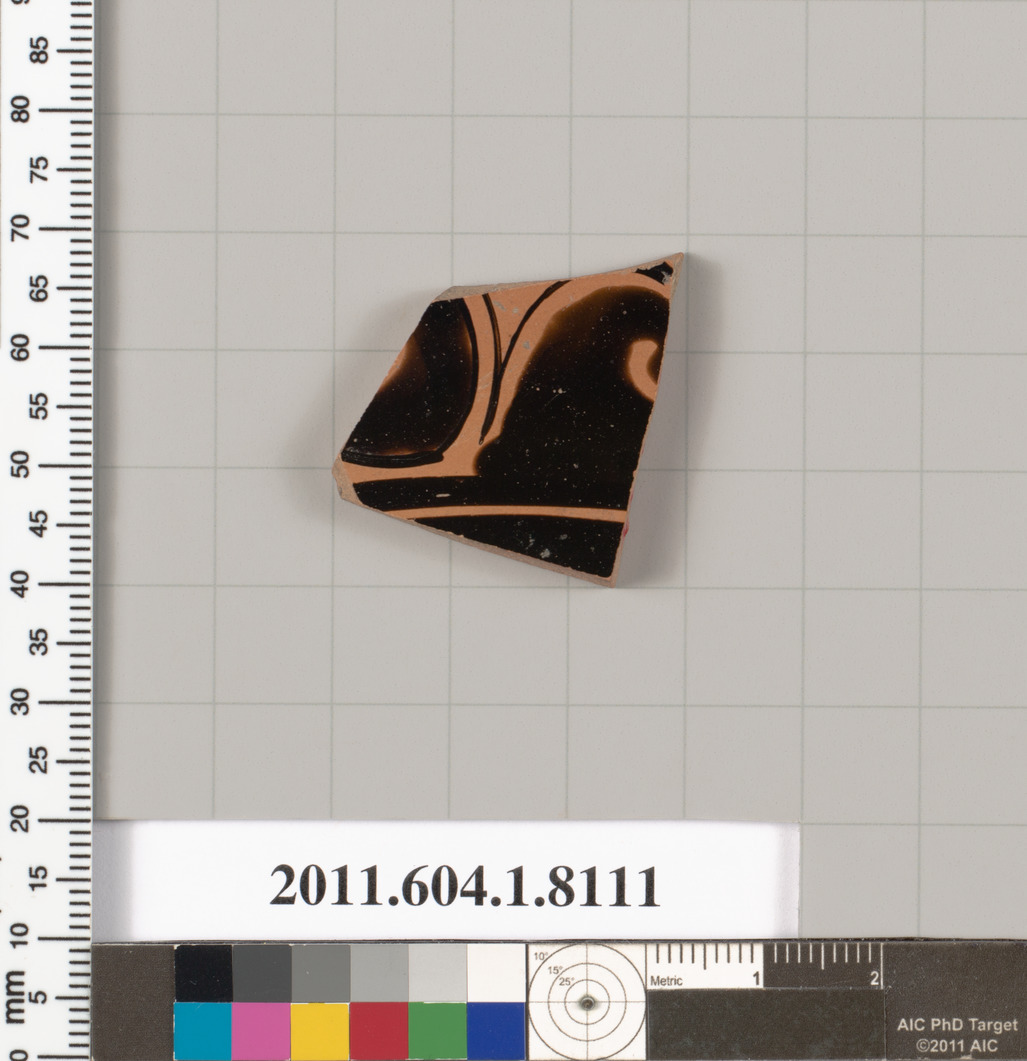
Heritage Synthesis: Terracotta fragment of a kylix (drinking cup)
Curated on Jul 15, 2026 // Node: LDN-01
The Dialectics of Power and Form: From the Kylix to the 2026 Old Money Silhouette
In the hallowed corridors of human civilization, objects and effigies represent the most concentrated aesthetic projection of the will to power. The Shang Dynasty bronze *Cup with Dragon Handles* and the ancient Near Eastern *Head of a Ruler*, though separated by vast distances and disparate materials, form a strange resonance and counterpoint in their aesthetic depths. Together, they articulate how “power” is transformed through material form into a visual order that can be perceived, worshipped, and even revered. This paper synthesizes these internal genetic codes with a new visual source—a terracotta fragment of a Greek Attic kylix (drinking cup)—to derive a heritage research artifact that directly informs the 2026 Old Money silhouette for Lauren Fashion.
The Kylix as a Third Term: The Democratization of Ritual
The terracotta kylix fragment, a humble yet sophisticated drinking vessel from 5th-century BCE Athens, introduces a critical third term into our dialectic. Unlike the Shang bronze, which is a singular, sacred object reserved for the elite ritualist, or the Near Eastern ruler’s head, which is a monolithic icon of absolute sovereignty, the kylix is a vessel of *symposium*—the communal, male-dominated drinking party that was the crucible of Athenian democracy. Its aesthetic is not one of transcendent power but of *civic ritual*. The kylix’s shallow bowl, wide handles, and painted decoration (often depicting mythological or erotic scenes) were designed for shared use, for the circulation of wine and ideas among equals. The power it embodies is not the authority of a single ruler but the *collective authority of the polis*—a power that is performed, debated, and renewed through social interaction.
This is a crucial evolution. The kylix’s aesthetic is one of *accessible elegance*. Its terracotta material, while fired to a durable hardness, is fundamentally earthy and democratic. The painted figures, often in red-figure or black-figure technique, are narrative and humanistic, celebrating the body, the myth, and the civic ideal. The power here is not in the object’s sacred isolation but in its *functional integration* into a social system. It is a power of *participation* rather than *contemplation*.
Synthesis: The 2026 Old Money Silhouette as a Dialectical Resolution
The 2026 Old Money silhouette, as conceived for Lauren Fashion, must resolve the tension between the Shang bronze’s *sacred functionality* and the ruler’s head’s *monumental iconicity*, while incorporating the kylix’s *civic accessibility*. This is not a simple pastiche but a dialectical synthesis that produces a new aesthetic category: *inherited authority made wearable*.
The *Cup with Dragon Handles* teaches us that power can be embedded in the *ritual of use*. For the 2026 silhouette, this translates into garments that are not merely worn but *performed*. Consider a double-breasted blazer in a heavy, matte wool—a fabric that, like bronze, holds its shape with architectural precision. The lapels are not merely folded but *sculpted*, echoing the dragon handle’s sinuous yet controlled curve. The silhouette is not slim but *structured*, creating a carapace of authority. The act of buttoning the jacket becomes a ritual of self-possession, a micro-ceremony of power. The garment’s functionality—its pockets, its vents, its ability to be worn for hours—is elevated to the status of a *sacred tool*. It is a “vessel” for the wearer’s presence.
The *Head of a Ruler* teaches us the power of *abstracted monumentality*. For the 2026 silhouette, this manifests in the *silhouette itself* as a form of visual law. The ruler’s head achieves its power through the elimination of the contingent, the personal, the fleeting. Similarly, the Old Money silhouette must be *idealized*—not in the sense of being unattainable, but in the sense of being a *type*. The shoulders are broad but not exaggerated; the waist is defined but not constricted; the length is precise but not rigid. This is the “polished symmetry” of the stone carving, translated into tailoring. The garment becomes a *non-personal monument* to the wearer’s lineage and taste. A cashmere overcoat, for example, with its seamless construction and weighty drape, becomes a *second skin of authority*, a mobile monument that announces belonging without shouting.
Finally, the terracotta kylix teaches us the power of *civic ritual and accessible elegance*. The 2026 silhouette cannot be a fortress of exclusivity; it must be a *vessel for social participation*. This is where the kylix’s *functional integration* becomes paramount. The garments must be designed for the *symposium of modern life*—for board meetings, gallery openings, private dinners, and weekend estates. The silhouette must allow for movement, for gesture, for the *performance of social grace*. The fabrics—whether a fine wool, a soft cashmere, or a lustrous silk—must invite touch and reward wear. The details—a subtle pinstripe, a mother-of-pearl button, a hand-rolled lapel—are the *painted figures* on the kylix’s surface: they tell a story of craftsmanship and taste without being overtly narrative. The power is in the *shared experience* of quality, not in the solitary contemplation of wealth.
Conclusion: The Aesthetic of Inherited Authority
The 2026 Old Money silhouette for Lauren Fashion is thus a *triple synthesis*: it takes the *sacred functionality* of the Shang bronze, the *monumental abstraction* of the Near Eastern ruler, and the *civic accessibility* of the Greek kylix, and forges them into a new aesthetic order. This is not a nostalgia for a lost past but a *re-articulation of power’s material grammar* for a contemporary elite.
The silhouette’s power lies in its *silence*. Like the kylix, it speaks through use. Like the bronze, it speaks through ritual. Like the ruler’s head, it speaks through form. It is a *visual order* that rejects the chaos of fast fashion and the vulgarity of ostentation. It is an *inherited authority* that is earned, not bought; performed, not displayed. In the 2026 collection, the garment is not a costume but a *vessel of lineage*—a terracotta fragment of a future antiquity, waiting to be filled with the wine of a new generation’s civic and personal power. The aesthetic is *Heritage-Black*: the color of the void from which all form emerges, the color of the polished obsidian mirror that reflects not the individual but the *type*, the *lineage*, the *eternal order* of taste and time.
Heritage Lab Insight
Genetic Bridge: Archive node focusing on Heritage-Black craftsmanship.