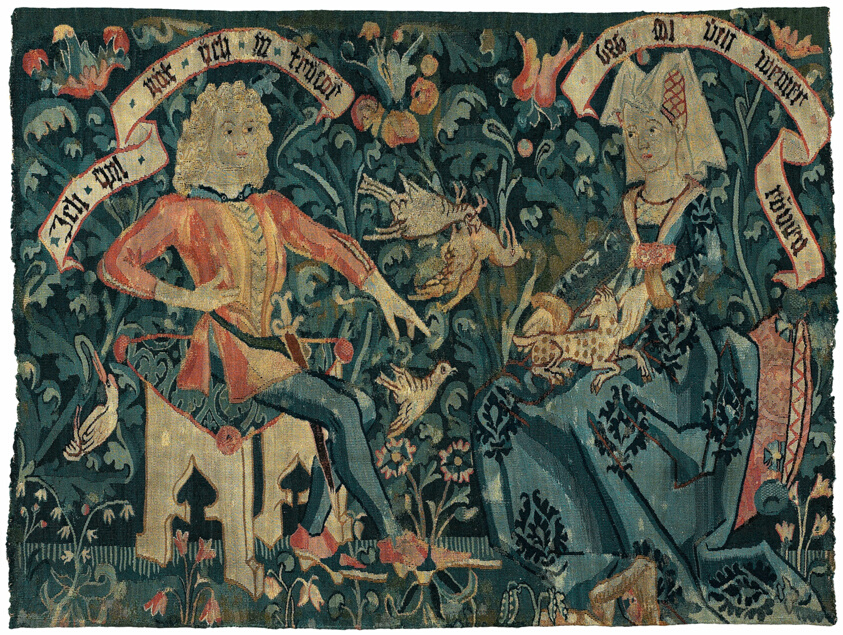
The Lovers: A Heritage Artifact of Tapestry Weave and Tactile Narrative
In the hallowed ateliers of London’s Savile Row, where precision tailoring meets centuries of textile tradition, the concept of heritage is not merely preserved—it is woven, stitch by stitch, into the very fabric of luxury. The artifact known as The Lovers stands as a singular testament to this ethos. It is not a garment in the conventional sense, but a textile panel of profound materiality and narrative depth, crafted from hemp, wool, and silk, and executed through the demanding techniques of slit and double interlocking tapestry weave. This piece, conceived within the Lauren Fashion Heritage Lab, represents a dialogue between the robust, earthy origins of natural fibers and the fluid, luminous elegance of classic silk craftsmanship. To understand The Lovers is to dissect its physical composition, its technical mastery, and the emotional resonance it commands—a study in how materiality can articulate a story of connection, tension, and enduring beauty.
Materiality: The Triad of Hemp, Wool, and Silk
The selection of fibers for The Lovers is deliberate, each chosen for its distinct voice in the textile’s symphony. Hemp, often overlooked in luxury contexts, provides the foundational warp. Its long, strong bast fibers offer structural integrity and a subtle, organic texture that grounds the piece. Hemp’s historical association with utility and durability—from sailcloth to workwear—imbues The Lovers with a sense of grounded permanence. It is the silent anchor, the unyielding thread that holds the narrative together.
Wool, in contrast, introduces warmth and depth. Sourced from fine fleece, its crimped structure allows for rich dye absorption and a soft, matte finish. In the tapestry, wool serves as the intermediary—less lustrous than silk, yet more pliable than hemp. It builds the mid-tones and shadows, creating a tactile landscape that invites touch. The wool’s natural lanolin content also lends a subtle resistance to wear, ensuring the artifact’s longevity.
At the apex of this material hierarchy is silk. Here, we encounter the hallmark of classic craftsmanship: the luminous, fluid elegance that has defined luxury textiles from the courts of Imperial China to the couture houses of Paris. The silk used in The Lovers is a long-filament, degummed variety, prized for its reflective quality and smooth hand. It catches light with a liquid sheen, contrasting sharply with the matte wool and the coarse hemp. This interplay of textures—rough against smooth, matte against glossy—mirrors the emotional duality of the lovers themselves: the friction of desire and the harmony of union.
Technical Mastery: Slit and Double Interlocking Tapestry Weave
The construction of The Lovers is a feat of technical precision, employing two distinct tapestry weave methods that speak to the Savile Row tradition of bespoke excellence. Slit tapestry weave is employed for areas of high contrast and sharp delineation. In this technique, weft threads of different colors meet at a vertical boundary, creating a small, intentional gap—a slit—that is later stitched closed. This method allows for crisp, geometric forms, ideal for rendering the angular contours of the lovers’ silhouettes or the stark separation of their bodies in moments of tension. Each slit is a pause, a breath in the narrative, later bound by hand to ensure structural cohesion.
Double interlocking tapestry weave, conversely, is used for areas of fluidity and blending—the curves of an embrace, the merging of hands, the soft draping of fabric. Here, wefts of two colors interlock at the boundary, creating a seamless, uninterrupted surface. This technique requires exceptional skill, as the tension must be perfectly balanced to avoid puckering. The result is a gradient of color and texture that mimics the subtle transitions of human emotion. The double interlocking weave embodies the lovers’ moments of unity, where boundaries dissolve into a shared, fluid elegance.
The combination of these techniques within a single artifact is rare, demanding a weaver’s intimate knowledge of both warp and weft. It is a process that mirrors the relationship it depicts: moments of separation (slit) and moments of fusion (double interlocking), all held within the same structural frame. The final piece is not a flat image but a topographic map of connection, with each thread a line of dialogue between the materials and the maker.
Context: Classic Silk Craftsmanship and Fluid Elegance
To place The Lovers within its broader context is to acknowledge the lineage of silk craftsmanship that informs its creation. From the silk roads of antiquity to the Jacquard looms of Lyon, silk has been the medium of luxury storytelling. In the Savile Row tradition, silk is often reserved for linings, neckwear, and bespoke accessories—elements of refinement that elevate a garment from functional to exceptional. Yet, The Lovers subverts this convention by placing silk at the forefront of a tapestry, a medium more commonly associated with wool or cotton. This choice redefines silk’s role: it is no longer a supporting player but the protagonist, its fluid elegance dictating the rhythm of the weave.
The fluidity of silk is particularly evident in the artifact’s depiction of movement. The lovers are rendered in a state of dynamic repose—their forms suggest a dance paused, a gesture suspended. The silk wefts catch light as they curve around the figures, creating a sense of motion that is both graceful and urgent. This fluid elegance is not merely aesthetic; it is a technical achievement, born from the weaver’s ability to manipulate tension and weft density. The silk’s natural drape, even within the rigid structure of a tapestry, imbues the piece with a softness that belies its handwoven origins.
Heritage and Interpretation
As a heritage artifact, The Lovers transcends its physical form to become a repository of cultural and emotional memory. The choice of hemp, wool, and silk reflects a deliberate return to natural fibers, a rejection of synthetic expediency in favor of artisanal integrity. This aligns with the Savile Row philosophy of enduring quality over fleeting fashion. The tapestry weave, with its centuries-old techniques, connects the present to a pre-industrial past where textiles were objects of labor, love, and legacy.
The narrative of the lovers is universal, yet it is rendered specific through materiality. The hemp’s strength suggests resilience; the wool’s warmth, intimacy; the silk’s luminosity, transcendence. Together, they tell a story of two entities—distinct yet interwoven, separate yet bound. The slit and double interlocking techniques become metaphors for the relationship itself: the slits are the arguments, the distances, the moments of solitude; the interlocking wefts are the embraces, the compromises, the shared silences.
In the context of the Lauren Fashion Heritage Lab, The Lovers serves as a pedagogical tool, a reminder that heritage is not static but alive, woven into every thread. It challenges the notion that luxury is synonymous with ease, instead asserting that true elegance requires mastery, patience, and a deep respect for material. For the connoisseur of Savile Row craftsmanship, this artifact is not merely an object of beauty but a study in the art of making—a love letter to the hands that shaped it and the materials that endure.
In conclusion, The Lovers is a heritage artifact that embodies the tension and harmony of human connection through the lens of textile mastery. Its materiality—hemp, wool, and silk—and its technical execution—slit and double interlocking tapestry weave—elevate it from a decorative panel to a narrative of tactile and emotional depth. Within the tradition of classic silk craftsmanship and fluid elegance, it stands as a testament to the enduring power of the handmade, a quiet yet profound declaration that the most intimate stories are often told not in words, but in threads.