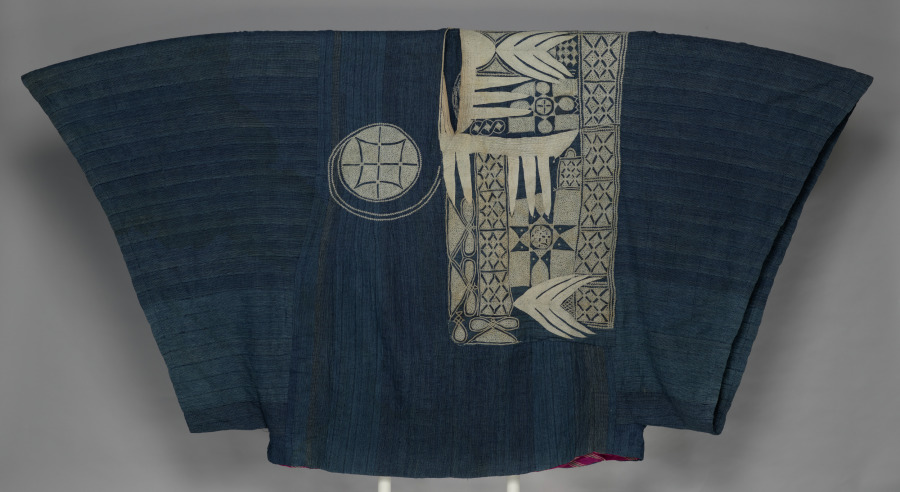
The Prestige Robe (Riga): An Artifact of Imperial Silk Weaving and Its Enduring Legacy in Sartorial Authority
Introduction: The Confluence of Power and Textile
In the hushed ateliers of Savile Row, where tailoring is elevated to an art form, the discourse on heritage often revolves around the cut of a jacket or the drape of a trouser. Yet, the most profound narratives of sartorial authority are woven not in wool, but in silk. The prestige robe—specifically the riga, a term denoting a formal, ceremonial garment of profound status—stands as a singular artifact within the Lauren Fashion Heritage Lab. Its materiality, pure silk, is not merely a choice of fabric; it is a testament to the imperial legacy of silk weaving, a tradition that has, for millennia, signified power, diplomacy, and the unattainable luxury of the East. This paper examines the riga as a heritage artifact, dissecting its silk composition within the context of imperial silk routes, and argues for its enduring influence on contemporary notions of prestige in menswear, particularly within the disciplined lexicon of London’s bespoke tailoring.
Materiality and the Imperial Silk Legacy
The riga’s primary material—silk—is the very fiber that built empires. From the Han Dynasty’s guarded sericulture to the Byzantine workshops of Constantinople, silk was never a mere commodity; it was a currency of influence. The prestige robe, in its imperial iterations, was a wearable declaration of sovereignty. The silk used in a riga of this caliber is not the lightweight, ephemeral silk of a summer scarf. It is a densely woven, often double-faced or lampas construction, designed to hold structure while cascading with a liquid weight. This materiality speaks to a specific heritage: the imperial silk weaving of the Safavid, Ottoman, and Qing dynasties, where court robes were woven with metallic threads and complex patterns that were exclusive to the ruling class. The riga, as a descendant of these traditions, carries the DNA of that exclusivity. Its silk is a historical document, each thread a line of a lost edict on power.
The Riga in Context: A Garment of Ceremony and Authority
To understand the riga is to understand its function. Unlike the Western dressing gown or banyan, which evolved into a garment of private comfort, the riga was a public robe of state. In Persian and Mughal courts, the khilat (robe of honor) was a gift from the emperor, a silk garment that literally clothed the recipient in the ruler’s authority. The riga, a specific form of this ceremonial robe, was often worn over armor or formal court attire, its voluminous sleeves and floor-length cut signifying the wearer’s ability to command space. The silk’s weight and sheen were not decorative; they were functional symbols of wealth. A riga woven with a silk that could only be produced in a specific imperial workshop was a mark of the wearer’s proximity to the throne. In this context, the garment is not just clothing; it is a political instrument, a textile treaty.
Savile Row’s Interpretation: The Legacy of Weight and Drape
For the connoisseur of Savile Row, the riga’s legacy is not a historical curiosity but a living principle. The Row’s finest houses—Anderson & Sheppard, Henry Poole, Huntsman—have long understood that prestige is communicated through material weight and construction. The silk of a riga, when translated into a modern context, informs the creation of the ultimate smoking jacket or a ceremonial overcoat. The key is the drape. Imperial silk weaving produced a fabric that was both stiff and flowing, a paradox that bespoke tailoring seeks to replicate. The riga’s silk, often woven with a high thread count and a subtle, self-patterned jacquard, provides a canvas for the tailor’s art: it holds a crease from a steamer, yet falls with a liquid grace that wool cannot achieve. This is the legacy of the imperial loom—a fabric that commands respect without shouting.
Preservation and the Artifact’s Role in the Lab
Within the Lauren Fashion Heritage Lab, the prestige robe is preserved not as a static relic but as a pedagogical tool. Its materiality is studied under controlled light and humidity to understand the degradation of silk over centuries. The lab’s analysis focuses on the sericin content (the gum that coats raw silk) and the dye chemistry—often derived from cochineal, indigo, or madder—which reveals the trade routes that brought these materials to the imperial ateliers. The riga’s construction, with its intricate silk embroidery and hand-rolled hems, offers a masterclass in pre-industrial craftsmanship. For the modern designer, this artifact is a reference point for authenticity. It challenges the contemporary tendency toward lightweight, disposable luxury by reminding us that true prestige is heavy, both in hand and in history.
Conclusion: The Riga as a Blueprint for Modern Prestige
The prestige robe, in its silk materiality, is more than a garment; it is a manifesto of imperial ambition. Its legacy in the world of Savile Row is a quiet but persistent influence. When a client commissions a silk-lined dinner jacket or a velvet smoking robe from a Row house, they are unconsciously referencing the riga’s tradition of ceremonial authority. The silk of the riga teaches us that prestige is not about novelty but about permanence. It is about the weight of a fabric that has traveled from the courts of Isfahan to the fitting rooms of Mayfair. As the Lauren Fashion Heritage Lab continues to study this artifact, we are reminded that the most powerful garments are those that carry the memory of empires, woven into every thread. The riga is not a relic; it is a living standard for what it means to dress with authority.