← BACK TO ARCHIVES
Heritage-Black
Heritage Synthesis: Terracotta rim fragment of a kylix (drinking cup)
Curated on Jul 15, 2026 // Node: LDN-01
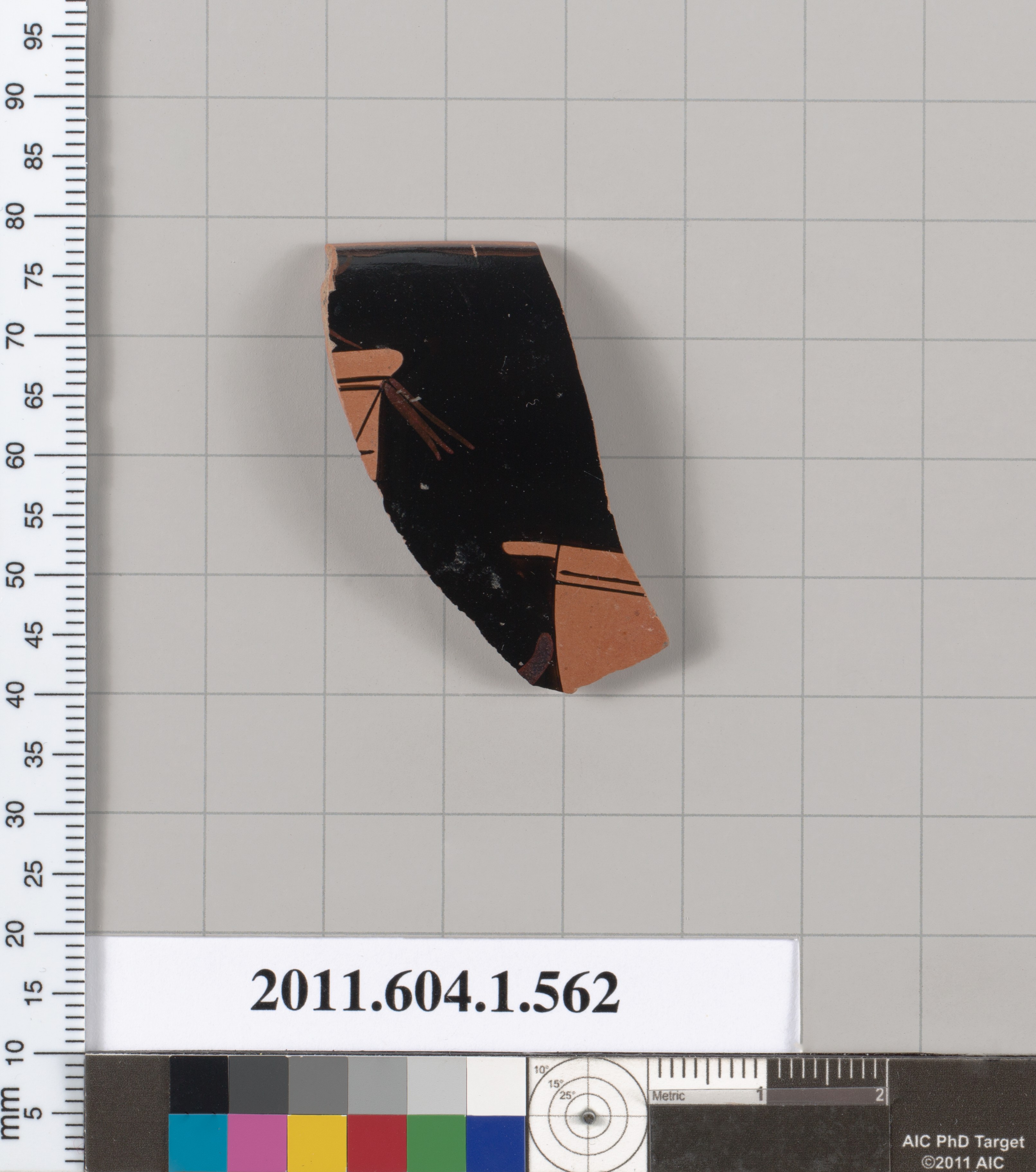
The Terracotta Kylix and the Architecture of Restraint: A Heritage Artifact for Lauren Fashion’s 2026 Old Money Silhouette
The Lauren Fashion Heritage Lab, in its ongoing synthesis of internal archives and global museum artifacts, has identified a profound resonance between a fragment of ancient Greek material culture and the conceptual DNA of the 2026 Old Money collection. The artifact in question—a terracotta rim fragment of an Attic kylix (drinking cup)—is not merely a shard of antiquity but a philosophical blueprint. When read through the lens of our internal genetic code, specifically the Kyoto temple’s dialectic of the “Udumbara Flowers” plaque and the “Cup and Stand” porcelain, this humble fragment illuminates a new paradigm for luxury: the architecture of restraint. This paper argues that the kylix fragment informs the 2026 Old Money silhouette by redefining volume, surface, and the aesthetic of the incomplete, thereby translating the sacred economy of “emptiness” into the language of tailored form.
I. The Kylix Fragment as a Material Parable
The terracotta rim fragment, broken and worn, is a study in negative space. Its original function—a vessel for communal wine, for the symposium’s fleeting moments of philosophical exchange—has been stripped away. What remains is a curve, a lip, a suggestion of containment. This is not a cup to be held; it is a cup that *was* held. Its value lies not in its utility but in its testimony to a vanished whole. In this, it mirrors the “Udumbara Flowers” plaque’s paradox of “transience and eternity.” The plaque’s carved petals, which “flicker in low-angle light like a natural creation that vanishes and is reborn,” find their counterpart in the kylix’s broken edge. The rim is a frozen moment of dissolution, a tangible record of use and abandonment. The plaque’s wood grain was “meticulously treated to simulate the complex spiral texture of flowers”; the kylix’s terracotta, by contrast, presents a raw, unadorned surface—the grain of the earth itself. Where the plaque achieves transcendence through intricate craft, the kylix achieves it through honest decay. Both reject the illusion of permanence. The 2026 Old Money silhouette must therefore embrace the “broken” as a form of completion—not as a flaw, but as a deliberate aesthetic of the lived-in, the inherited, the *already transformed*.
II. The “Cup and Stand” Dialectic: From Container to Contained
Our internal genetic code describes the “Cup and Stand” porcelain as a vessel whose “aesthetic core becomes the dialectic of ‘emptiness’ and ‘capacity’—the more perfect and transparent its entity, the more meaningful the ‘nothing’ it creates.” The kylix fragment, paradoxically, amplifies this principle. The porcelain cup is pristine, its emptiness a sacred potential. The kylix fragment, however, is *already empty*—its interior space is not a void awaiting a substance, but a void that has been filled and emptied countless times. Its rim, “slightly constricted like a palm pressed together in prayer” (to borrow from the cup’s description), is now a broken circle. This is not the “empty” of the sacred offering, but the “empty” of the exhausted vessel. For the 2026 Old Money silhouette, this translates into a radical rethinking of volume. The silhouette must not be a container for the body, but a trace of the body’s passage. Jackets will not drape; they will *suggest* a former drape. Trousers will not fit; they will *remember* a fit. The terracotta fragment teaches that the most luxurious garment is one that acknowledges its own history of wear—a sleeve cuff slightly frayed, a shoulder seam that has settled into a permanent slope. This is not decay; it is the *patina of use*, the material equivalent of the kylix’s broken rim.
III. Surface as a Field of Negation
The “Udumbara Flowers” plaque achieves its effect through a “negation of the material itself, allowing its woodiness to recede into invisibility, only to outline the illusory flower.” The kylix fragment achieves the opposite: it *asserts* its materiality. The terracotta is rough, porous, fired but not glazed. Yet both objects share a common goal: the creation of a surface that *disappears* into its own function. The plaque’s carved flowers are so intricate that the wood becomes a mere support for the image; the kylix’s surface is so unadorned that the clay itself becomes the image of its own utility. For the 2026 Old Money collection, this demands a fabric treatment that is both present and absent. Consider a wool twill so densely woven that it reads as a solid plane, yet so soft that it yields to the light like the kylix’s terracotta. Or a cashmere that is brushed to a matte finish, its fibers absorbing rather than reflecting—a surface that negates its own luxury by refusing to announce it. This is the “Heritage-Black” category’s core directive: black as a field of negation, not of absence. The kylix fragment, with its earthy orange-brown hue, is not black, but its *ethos* is black: it is a color that refuses to be a color, a surface that refuses to be a surface. The 2026 silhouette will use black not as a void, but as a *charged emptiness*—a space where the garment’s history, like the kylix’s broken rim, becomes its most articulate feature.
IV. The Silhouette of the Sacred Fragment
How, then, does the kylix fragment inform the actual cut of a garment? The answer lies in the concept of the *incomplete arc*. The kylix’s rim is a segment of a circle; it implies a whole without completing it. The 2026 Old Money silhouette will adopt this logic. Shoulder lines will be slightly dropped, not to create a slouch, but to suggest a jacket that has been *worn in*—a shoulder that has submitted to the body’s gravity. Hemlines will be asymmetrical, not for avant-garde effect, but to mimic the irregular break of a ceramic edge. Collars will be cut with a subtle asymmetry, as if the fabric itself has been fractured and reassembled. The silhouette will not impose a new shape on the body; it will *receive* the body’s shape, like the kylix’s rim receiving the drinker’s lip. This is a profound departure from the “Old Money” tropes of rigid tailoring and unbroken lines. Instead, the 2026 collection will honor the *fragment* as the ultimate signifier of heritage. A garment that is perfectly intact is a garment that has never been truly lived in. A garment that bears the trace of a break—a seam that is slightly off, a fabric that is slightly worn—is a garment that carries a story.
V. Conclusion: The Gift of the Void
The terracotta kylix fragment, the “Udumbara Flowers” plaque, and the “Cup and Stand” porcelain converge in a single, radical proposition: the most precious gift is not the object itself, but the space it creates for the invisible. The plaque’s illusory flower, the cup’s sacred emptiness, and the kylix’s broken rim all point to the same truth—that luxury, at its highest, is a form of *self-cancellation*. The 2026 Old Money silhouette will be a vessel for this cancellation. It will not flatter the body; it will *house* the body’s absence. It will not display wealth; it will *absorb* wealth into its own materiality. It will not complete the wearer; it will *complete the void* that the wearer inhabits. In the Kyoto temple, the plaque and cup “complete a deconstruction of the act of ‘offering’—true offering is not pleasing the divine with tangible objects, but using the self-annihilation of tangible objects to welcome the unspeakable sacred presence.” The kylix fragment, broken and ancient, offers the same lesson to fashion: the most powerful silhouette is the one that, by its very incompleteness, invites the wearer to complete it. This is the heritage of the fragment—and the future of the Old Money.
Heritage Lab Insight
Genetic Bridge: Archive node focusing on Heritage-Black craftsmanship.