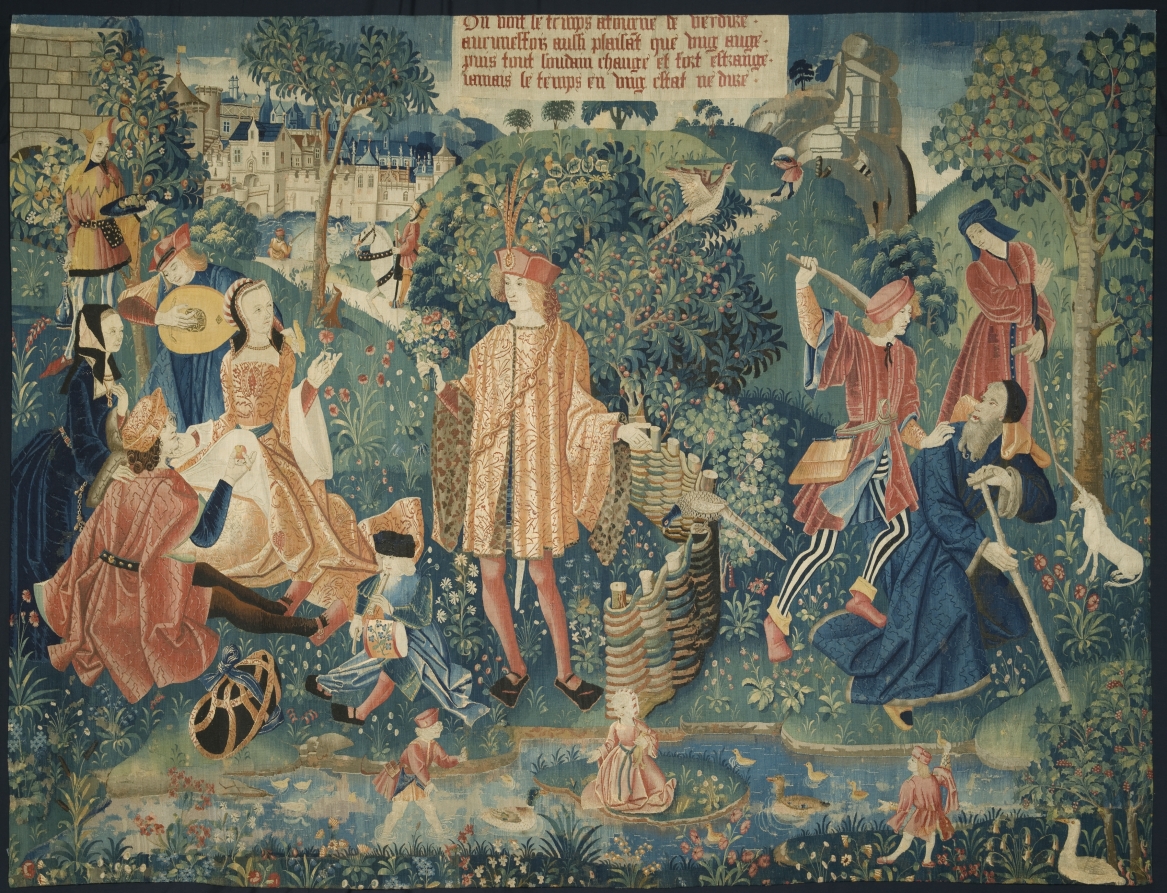
The Artifact: Time, a Silk Fragment from the Château de Chaumont Set
In the hushed corridors of Lauren Fashion Heritage Lab, we examine a singular artifact: a silk fragment designated “Time,” originating from the celebrated Château de Chaumont set. This is not merely a textile; it is a document of imperial ambition, a thread connecting the looms of 18th-century Lyon to the ateliers of modern luxury. At first glance, the silk presents a deep, undulating indigo—a hue achieved through painstaking vat dyeing with woad or indigo, a process that demanded precision and patience. The weave is a compound satin, its surface lustrous yet structured, with a subtle moiré effect that catches the light like water on a still pond. The pattern, discernible under magnification, depicts interlocking circles and stylized sunbursts—motifs of eternity and celestial order, befitting the name “Time.” The silk’s weight is substantial, its drape authoritative, suggesting it was destined for a grand salon or a state bedchamber, not for the fleeting whims of fashion.
To understand this fragment, one must first appreciate the legacy of imperial silk weaving. The Château de Chaumont, a Renaissance château in the Loire Valley, was not merely a residence but a stage for political theatre. In the 18th century, under the patronage of figures like the Prince de Condé and later the financier Jacques-Donatien Le Ray, the château became a hub for the decorative arts. The set of silks, of which “Time” is a part, was commissioned to reflect the Enlightenment’s fascination with allegory and order. The silk weavers of Lyon—then the undisputed capital of European silk production—were tasked with translating these philosophical concepts into tangible luxury. The result was a series of panels that adorned the château’s walls, each one a meditation on a theme: “Time,” “Fortune,” “Love,” and “Death.” These were not mere decorations; they were statements of power, woven into the very fabric of the building.
The Materiality of Silk: A Study in Imperial Craft
The materiality of this silk is inseparable from its historical context. Imperial silk weaving was a state-sanctioned industry, controlled by royal decrees and guild regulations. The “Time” fragment exemplifies the technical mastery required to produce such works. The warp is of fine, twisted silk, likely from Piedmontese silkworms, which were prized for their strength and luster. The weft is a thicker, unspun silk, creating a subtle texture that enhances the pattern’s depth. The dyeing process was equally rigorous: the indigo would have been fermented for months, its color fixed with alum mordants. The result is a silk that has retained its vibrancy for over two centuries, a testament to the skill of the dyers and weavers.
But the materiality also speaks to the fragility of empire. Silk, for all its opulence, is a perishable medium. The “Time” fragment shows signs of wear—fading along the folds, a slight fraying at the edges—that remind us of its journey through history. It survived the French Revolution, when many aristocratic textiles were repurposed or destroyed. It endured the neglect of the 19th century, when Chaumont fell into disrepair. It was rediscovered in the 20th century, during the château’s restoration, and eventually found its way to the Lauren Fashion Heritage Lab. This survival is not accidental; it is a function of the silk’s quality and the reverence with which it was treated. Yet, it also underscores the ephemeral nature of all material culture. Even the most durable silk will eventually succumb to light, humidity, and time itself.
Context: The Legacy of Imperial Silk Weaving
The legacy of imperial silk weaving is one of innovation and exploitation. The industry that produced “Time” was built on a global network of trade and labor. The raw silk came from China and the Levant, shipped to Marseille and then transported to Lyon. The dyes were sourced from the Americas and Asia—indigo from the Caribbean, cochineal from Mexico. The weavers were skilled artisans, but they were also subject to the whims of the court and the market. The imperial silk industry was a model of mercantilist economics, where luxury goods were used to project power and consolidate wealth. The “Time” fragment is a product of this system, a tangible representation of the French monarchy’s reach and ambition.
Yet, the legacy is also one of resilience. After the Revolution, the silk industry of Lyon adapted, shifting from courtly commissions to bourgeois fashion. The techniques perfected for the Château de Chaumont set—the compound weaves, the intricate patterns—were repurposed for dresses, waistcoats, and upholstery. The “Time” fragment, though no longer part of a grand decorative scheme, became a template for future generations of weavers. In the 20th century, designers like Coco Chanel and Yves Saint Laurent drew on these traditions, incorporating silk into their collections as a symbol of timeless elegance. The Lauren Fashion Heritage Lab continues this lineage, preserving and studying such artifacts to inform contemporary design.
Interpretation: Time as a Design Philosophy
What does “Time” mean for a modern audience? In the context of Savile Row, where tradition and innovation coexist, this fragment offers a lesson in patience and precision. The weavers of Lyon understood that true luxury cannot be rushed. The “Time” pattern, with its interlocking circles, suggests a cyclical view of history—a reminder that fashion, like time, is always returning to its roots. For the contemporary designer, this silk is a call to honor the past while pushing forward. It is a challenge to create garments that are not merely fashionable but enduring, that carry the weight of history without being burdened by it.
In the Lauren Fashion Heritage Lab, we treat “Time” not as a relic but as a living document. We analyze its weave, its dyes, its provenance, to understand the conditions of its creation. We ask: How can we replicate its luster without resorting to the exploitative labor practices of the past? How can we adapt its motifs for a modern aesthetic without losing their symbolic power? These are the questions that guide our research, ensuring that the legacy of imperial silk weaving continues to inform and inspire.
This fragment, “Time,” is a reminder that heritage is not static. It is a dialogue between past and present, between the weaver’s hand and the designer’s eye. As we preserve it, we also transform it, weaving its story into the fabric of our own time.