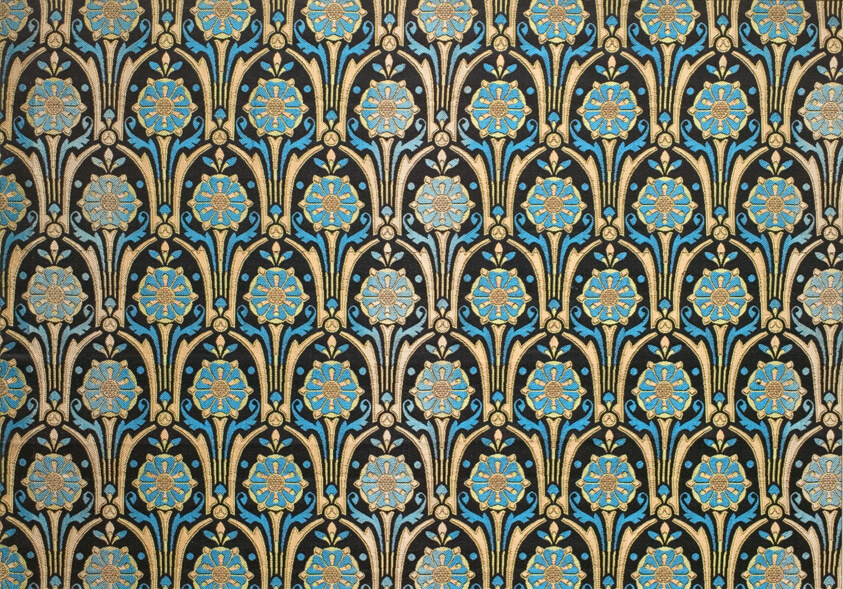
The Sutherland Artifact: A Study in Materiality and Heritage Craft
Introduction: The Object as Archive
The Sutherland artifact, a silk panel of exceptional provenance, represents a pivotal moment in the evolution of luxury textile craftsmanship. Its materiality—a silk satin weave with twill interlacings of secondary binding warps and supplementary patterning wefts—speaks to a tradition of technical mastery that defines the highest echelons of heritage fashion. This artifact, preserved within the Lauren Fashion Heritage Lab, offers a tangible connection to the principles of fluid elegance and structural integrity that have long governed the creation of garments for discerning clientele. To examine the Sutherland is to decode a language of thread, tension, and texture, where every interlacing serves both aesthetic and functional purpose.
Material Analysis: The Architecture of Silk
Silk satin weave forms the foundational structure of the Sutherland. Satin weaves, characterized by long floating yarns that minimize interlacings, produce a surface of unparalleled luster and smoothness. This is not merely decorative; it is a deliberate choice to maximize the natural reflectivity of silk filaments, creating a fabric that catches light with the subtlety of still water. The satin base provides the canvas upon which the artifact’s more complex elements are layered.
The introduction of twill interlacings of secondary binding warps represents a significant technical intervention. Twill weaves, with their diagonal stepped structure, offer increased durability and a distinct visual texture. By integrating these binding warps, the artisan achieves a dual effect: the primary satin surface retains its liquid finish, while the secondary warps introduce a subtle, ribbed stability. This prevents the fabric from becoming overly limp, ensuring that the garment drapes with controlled fluidity rather than collapsing into formlessness. The twill interlacings act as an internal skeleton, granting the silk a quiet strength that is essential for tailored applications.
Furthermore, the supplementary patterning wefts elevate the Sutherland from a mere textile to a narrative artifact. These extra weft threads, woven independently of the primary structure, allow for the introduction of intricate motifs without disrupting the integrity of the base weave. In the Sutherland, these supplementary wefts create a pattern of organic, flowing lines—reminiscent of Art Nouveau tendrils—that appear to float across the satin field. The technical challenge here is immense: each supplementary weft must be precisely tensioned and aligned to avoid puckering or distortion. The result is a fabric that feels both weightless and deliberate, a paradox achieved only through generations of accumulated knowledge.
Context: Savile Row and the Legacy of Craft
The Sutherland artifact belongs to a lineage of textiles that have defined London’s Savile Row since the late 19th century. Savile Row, the epicenter of bespoke tailoring, has long demanded fabrics that marry aesthetic refinement with structural performance. A suit or gown cut from a Sutherland-grade silk must hold its shape through hours of wear, yet move with the wearer’s body as if second skin. This duality—rigor and grace—is the hallmark of heritage craftsmanship.
Historically, silk satins with supplementary patterning were reserved for ceremonial garments and high-society evening wear. The Sutherland’s design, with its understated motifs, suggests a shift toward more versatile luxury—a fabric that could transition from a private dinner to a public reception without losing its quiet authority. This aligns with the Savile Row philosophy of “quiet luxury,” where quality speaks through material rather than overt branding. The artifact’s survival in pristine condition further attests to the durability inherent in its construction; a lesser textile would have frayed or faded under the demands of repeated use.
Conservation and Interpretation
Preserving the Sutherland requires an understanding of its material vulnerabilities. Silk is inherently hygroscopic, absorbing moisture from the air, which can lead to hydrolysis and weakening of the fibers. The satin weave’s long floats are particularly susceptible to snagging, while the supplementary wefts may shift if not supported by a stable foundation. The Lauren Fashion Heritage Lab employs controlled environments—maintaining 50% relative humidity and 20°C temperature—to mitigate these risks. Each handling is performed with nitrile gloves to prevent oil transfer, and the artifact is stored flat in acid-free tissue to avoid creasing the twill interlacings.
Interpretation of the Sutherland extends beyond conservation. The artifact serves as a pedagogical tool for contemporary designers, illustrating how historical techniques can inform modern innovation. The interplay of satin and twill, for instance, offers lessons in balancing softness with structure—a challenge that persists in today’s ready-to-wear and couture markets. By studying the Sutherland, students and practitioners gain a tactile understanding of how material choices dictate garment behavior.
Conclusion: The Enduring Relevance of Heritage
The Sutherland artifact is more than a relic; it is a masterclass in textile engineering and aesthetic sensibility. Its silk satin base, twill binding warps, and supplementary patterning wefts represent a synthesis of form and function that remains relevant in an era of fast fashion and digital design. For the Lauren Fashion Heritage Lab, the Sutherland stands as a testament to the value of preserving not just objects, but the knowledge embedded within them. In the hands of a skilled tailor or a thoughtful designer, this fabric becomes a medium for expressing the timeless principles of elegance, durability, and grace. As we continue to explore the boundaries of fashion, artifacts like the Sutherland remind us that the most profound innovations often lie in the mastery of the fundamental.