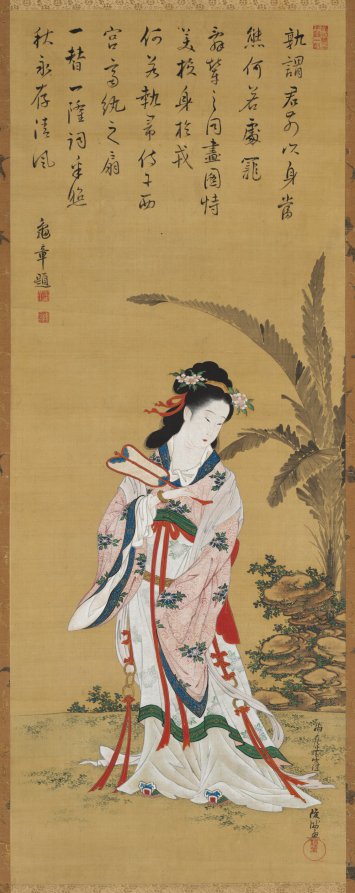
The Thread of Empire: Silk, Sovereignty, and the Aesthetic of Chinese Beauty
In the hushed ateliers of London’s Savile Row, where the cut of a jacket is a declaration of lineage and the drape of a fabric a testament to provenance, we understand that true luxury is not merely seen—it is felt, inherited, and woven into the very structure of identity. The legacy of imperial silk weaving, a materiality that defined Chinese beauty for millennia, offers a profound parallel. It is a narrative not of fleeting fashion, but of enduring sovereignty, where a single thread could bind an empire, dictate a dynasty’s aesthetic, and articulate a philosophy of grace that remains, in its purest form, the benchmark of refined taste.
The Materiality of Sovereignty: Silk as Imperial Currency
To understand Chinese beauty through the lens of silk is to recognize that this fabric was never merely cloth. It was a material currency of power. From the Shang dynasty (c. 1600–1046 BCE) through the Qing (1644–1912), the production of silk was a state secret, guarded with the ferocity of a military code. The mulberry tree, the silkworm, and the loom were instruments of imperial policy. The very act of wearing silk was a privilege, not a choice. Sumptuary laws, meticulously enforced, dictated the colors, patterns, and weaves permissible for each rank of the court. A dragon with five claws was reserved for the emperor; four claws for princes. The yellow of the imperial robe was a hue so exclusive that its unauthorized use was treason.
This is not the democratized luxury of the modern era. It is a hierarchical beauty, where aesthetic perfection was a function of political order. The materiality of silk—its lustrous sheen, its impossible lightness, its ability to hold the most intricate of dyes—was the physical manifestation of the emperor’s mandate. The fabric was a statement of control over nature, over labor, and over the very definition of beauty. For the Savile Row connoisseur, this echoes in the understanding that a bespoke garment is not just a purchase; it is an investment in a system of craft that demands absolute authority over its materials.
The Loom as Lexicon: Weaving the Aesthetic of Chinese Beauty
The aesthetic of Chinese beauty, as expressed through imperial silk, is one of controlled opulence and symbolic depth. Unlike the often austere minimalism of later Western modernism, Chinese imperial beauty reveled in a density of meaning. The patterns woven into the silk were not decorative; they were a visual language. The qilin (a mythical hooved creature) signified righteousness; the phoenix, virtue and grace; the lotus, purity amidst the mud of the world. The shou character for longevity, the bat for good fortune, the endless knot for eternity—these were not motifs; they were prayers, blessings, and affirmations of cosmic harmony.
The technique of kesi, or “cut silk” tapestry weaving, exemplifies this. Unlike brocade, where weft threads float across the back, kesi weaves each color separately, creating a tapestry with slits between color areas. This painstaking process, requiring months for a single robe, produced an image that was literally woven into the fabric’s structure. The beauty was not applied; it was integral. This is the antithesis of fast fashion. It is a beauty of endurance, where the value lies in the time, the skill, and the intention embedded in every square inch.
Consider the dragon robe of the Qing dynasty. Its twelve symbols—the sun, moon, constellation, mountain, dragon, pheasant, temple cups, water weed, millet, fire, axe, and the fu symbol—were not random. They were a cosmic map, placing the emperor at the center of the universe, a living bridge between heaven and earth. The beauty of this garment is not in its visual impact alone, but in its intellectual and spiritual architecture. It is a beauty that demands literacy. For the modern client, this resonates with the understanding that a truly great garment tells a story, carries a code, and requires a certain knowledge to be fully appreciated.
The Legacy of the Imperial Atelier: Craft as Continuity
The imperial silk workshops, particularly the Imperial Silk Factory in Suzhou, were the Savile Rows of their age. They were centers of obsessive precision, where generations of artisans passed down techniques that were never written down, only demonstrated. The “four great famous embroideries” of China—Su, Xiang, Shu, and Yue—each developed distinct dialects of stitch and color. Suzhou embroidery, the most celebrated, was known for its “double-sided” technique, where the back of the fabric was as perfect as the front, a metaphor for integrity and the importance of unseen quality.
This legacy is not a museum piece. It is a living standard. The decline of the imperial system in 1912 did not end the craft; it transformed it. Today, master weavers in Suzhou and Hangzhou continue to produce silk of a quality that rivals their ancestors, using looms that are often centuries old. The “Song-style” brocade, with its subtle, muted colors and geometric patterns, remains a benchmark of understated elegance. The “Yunjin” (Cloud Brocade) of Nanjing, woven with threads of gold and peacock feathers, is a testament to the enduring pursuit of the sublime.
For the heritage specialist, the lesson is clear: the materiality of silk is a repository of cultural DNA. To wear a piece of fine Chinese silk today is to participate in a lineage that stretches back to the first silkworm. It is to acknowledge that beauty is not a surface phenomenon but a deep structure, built from discipline, symbolism, and an unyielding commitment to mastery. The Savile Row client who understands this will not ask for a “Chinese-inspired” print. They will ask for the real thing: a silk that has been woven with the same reverence, the same technical rigor, and the same philosophical weight as the robes of an emperor.
Conclusion: The Unbroken Thread
The legacy of imperial silk weaving teaches us that Chinese beauty is not an aesthetic style; it is a moral and material philosophy. It is a beauty of hierarchy, of symbolic density, and of craft that transcends the individual artisan. It is a beauty that demands time, knowledge, and respect. In an age of instant gratification, the silk of the imperial looms stands as a quiet rebuke—a reminder that the most profound elegance is not created but cultivated, not worn but inherited. The thread of empire may have frayed, but the thread of beauty, woven with the discipline of a thousand years, remains unbroken. It is a standard that Savile Row, in its finest moments, can only aspire to match.