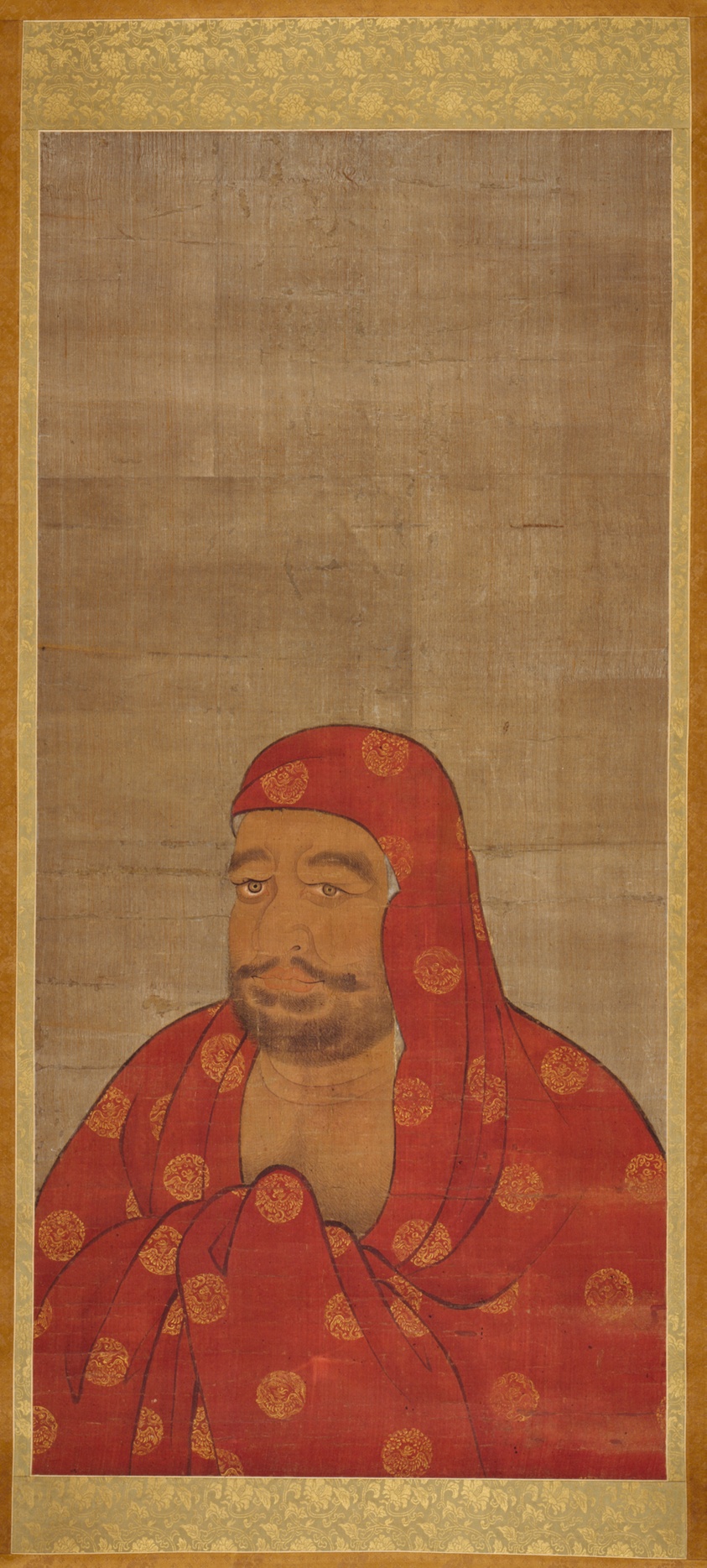
The Daruma Hanging Scroll: A Study in Materiality and Metaphor
Introduction: The Convergence of Craft and Philosophy
In the hushed corridors of Lauren Fashion Heritage Lab, where the tactile memory of textiles informs the future of design, the Daruma hanging scroll emerges as a profound artifact of cultural and material significance. Executed in ink, colors, and gold on silk, this scroll is not merely a decorative object but a testament to the symbiotic relationship between craftsmanship and philosophical intent. The Daruma—a stylized representation of Bodhidharma, the founder of Zen Buddhism—serves as a metaphor for resilience, discipline, and the pursuit of enlightenment. Yet, it is the substrate upon which this image is rendered that commands our attention: silk, a material synonymous with luxury, fluidity, and meticulous artistry. This paper examines the scroll’s materiality, its historical context within silk craftsmanship, and the nuanced elegance that defines its creation, drawing parallels to the bespoke ethos of London’s Savile Row—where tradition, precision, and understated refinement reign supreme.
The Silk Substrate: A Foundation of Elegance
Silk, as a medium for artistic expression, has long been revered for its luminous quality, tensile strength, and capacity to absorb pigment with unparalleled depth. In the Daruma scroll, the silk is not a passive backdrop but an active participant in the narrative. The weave—likely a plain or tabby structure—offers a smooth, even surface that allows ink to flow with controlled spontaneity, while the addition of colors and gold leaf introduces a tactile richness that elevates the piece beyond mere illustration. The gold, applied in delicate washes or as fine lines, catches ambient light, creating a shifting interplay of luminosity that mirrors the ephemeral nature of enlightenment itself. This is not a fabric of ostentation; it is a fabric of quiet authority, much like the finest Savile Row suiting, where the cloth’s integrity is paramount, and every thread serves a purpose.
The craftsmanship required to prepare silk for such a scroll is exacting. The material must be degummed to remove sericin, the natural protein that stiffens raw silk, rendering it supple yet durable. This process, akin to the meticulous hand-finishing of a bespoke garment, ensures that the silk retains its fluidity while providing a stable foundation for the artist’s brush. The scroll’s mounting—a technique involving multiple layers of paper and silk—further underscores the commitment to longevity. Each layer is applied with precision, allowing the scroll to be rolled and unrolled without damage, a practical consideration that speaks to the object’s intended use in ritual or contemplation. In this, we see a parallel to the construction of a tailored jacket: the canvas, the interlinings, the hand-stitched lapels—all hidden yet essential to the garment’s form and function.
Iconography and the Artist’s Hand
The Daruma figure itself is rendered with deliberate economy. Bold, sweeping strokes define the robe, while the face—often characterized by a fierce, penetrating gaze—is executed with minimal detail. This restraint is a hallmark of Zen aesthetics, where the absence of embellishment amplifies the subject’s spiritual weight. The colors, typically deep reds, blacks, and occasional accents of gold, are applied with a fluidity that suggests the artist’s mastery over both medium and message. The red, in particular, is symbolic: it represents the robes of a Buddhist monk, but in Japanese culture, it also connotes protection, vitality, and the overcoming of adversity—themes central to the Daruma’s role as a talisman for perseverance.
The gold, used sparingly, serves as a counterpoint to the ink’s austerity. It might outline the folds of the robe or highlight the eyes, drawing the viewer’s focus to the very essence of the figure: its unwavering determination. This technique, known as *kinpaku* or gold leaf application, requires a steady hand and an intimate understanding of the silk’s absorbency. Too much pressure, and the gold cracks; too little, and it fails to adhere. The result is a surface that oscillates between matte and reflective, a visual metaphor for the interplay between the mundane and the transcendent. In the context of luxury fashion, this echoes the use of metallic threads in eveningwear or the subtle sheen of a silk satin—details that do not shout but whisper of quality.
Historical Context: Silk as a Conduit for Culture
The Daruma scroll belongs to a tradition of Japanese hanging scrolls, or *kakemono*, that flourished from the Muromachi period (1336–1573) onward. These scrolls were often displayed in alcoves, or *tokonoma*, within tea rooms or private residences, serving as focal points for meditation and aesthetic contemplation. The choice of silk as a support was not arbitrary; it was a material associated with the aristocracy and the Buddhist clergy, signifying both wealth and spiritual aspiration. The importation of silk from China, and later its domestic production in Japan, made it a precious commodity, and its use in religious art underscored the sacred nature of the subject matter.
In the context of global heritage, the Daruma scroll represents a confluence of influences: the Indian origins of Buddhism, the Chinese techniques of silk painting, and the Japanese sensibility for minimalism and asymmetry. This cross-cultural dialogue is reminiscent of Savile Row’s own history, where tailoring traditions from England, France, and Italy were synthesized into a distinct aesthetic of understated elegance. Just as a Savile Row suit is the product of centuries of refinement, the Daruma scroll embodies a lineage of artistic practice that values discipline over decoration, and meaning over mere ornamentation.
Materiality as Metaphor: The Silk of Resilience
Beyond its physical properties, the silk of the Daruma scroll carries a metaphorical weight. Silk is a material born of transformation—the silkworm’s cocoon is unraveled to create a thread of extraordinary strength and beauty. This process mirrors the Daruma’s own narrative: Bodhidharma, according to legend, meditated for nine years, his legs wasting away, until he achieved enlightenment. The silk, then, becomes a symbol of this transformation, a medium that has undergone its own metamorphosis to serve a higher purpose. The gold, too, is alchemical—a base metal rendered precious through human skill, much like the practitioner’s journey from ignorance to wisdom.
In the context of Lauren Fashion Heritage Lab, this artifact offers a lesson in the power of materiality to convey meaning. The scroll’s silk is not merely a surface; it is a statement of intent. It demands respect, care, and an understanding of its origins. For the modern designer, this serves as a reminder that the materials we choose are never neutral. They carry histories, associations, and tactile qualities that shape the wearer’s or viewer’s experience. The Daruma scroll, in its quiet elegance, challenges us to consider how we might imbue our own creations with similar depth—where every stitch, every fold, every choice of fabric tells a story.
Conclusion: A Legacy of Craft and Contemplation
The Daruma hanging scroll, rendered in ink, colors, and gold on silk, is a masterwork of material and metaphor. Its silk substrate, crafted with the precision of a Savile Row tailor, provides a foundation for an image that transcends the visual to embrace the philosophical. The artist’s hand, guided by centuries of tradition, transforms pigment and precious metal into a meditation on resilience and enlightenment. As a heritage artifact, it reminds us that the finest creations are those that marry technique with intention, where the material is not a mere vehicle but an integral part of the message. In the hallowed halls of Lauren Fashion Heritage Lab, this scroll stands as a testament to the enduring power of silk—a material that, like the Daruma itself, endures, adapts, and inspires.