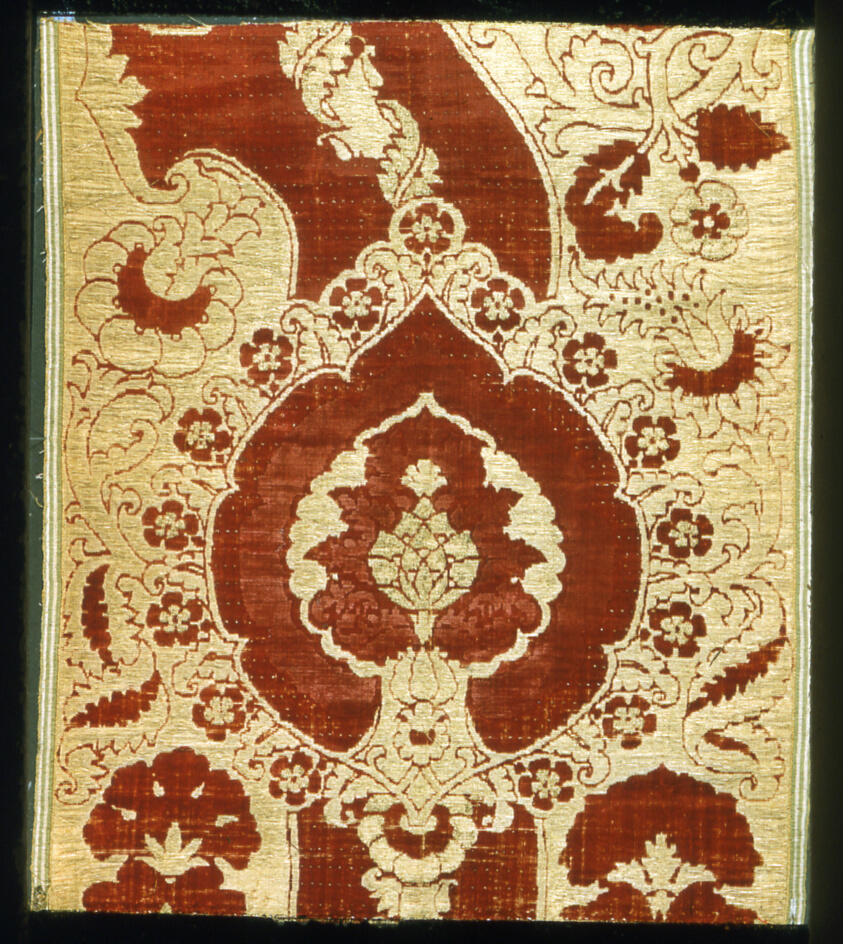
Introduction: The Panel as a Testament to Textile Mastery
In the hallowed ateliers of London’s Savile Row, where precision tailoring meets centuries of artisanal tradition, the heritage panel under examination stands as a singular artifact of silk craftsmanship. This panel, woven from a complex interplay of materials and techniques, embodies the fluid elegance that defines classic silk textiles. Its materiality—a plain weave variation enriched with supplementary gilt-metal-strip wrapped silk facing wefts and cut, pile-on-pile, voided velvet—represents a pinnacle of technical virtuosity. As a Senior Heritage Specialist for Lauren Fashion Heritage Lab, I analyze this artifact not merely as a decorative element but as a document of cultural and commercial heritage, reflecting the intersection of luxury, innovation, and timeless design.
Materiality and Construction: The Weave of Opulence
Silk Foundation and Plain Weave Variation
The base of this panel is a plain weave variation, a structure that provides both stability and a subtle, unassuming ground for the more elaborate embellishments. Silk, with its natural luster and tensile strength, serves as the ideal foundation. The plain weave—where each weft thread passes alternately over and under each warp thread—offers a balanced, durable fabric. However, the variation here introduces a deliberate irregularity, perhaps through the use of differing yarn tensions or densities, which creates a nuanced texture. This subtle departure from strict uniformity is a hallmark of Savile Row’s philosophy: perfection lies in the controlled imperfection that reveals the hand of the artisan.
Supplementary Gilt-Metal-Strip Wrapped Silk Facing Wefts
The most striking feature of this panel is the incorporation of supplementary gilt-metal-strip wrapped silk facing wefts. These wefts, composed of silk threads wrapped in fine strips of gilt metal (likely silver or copper gilded with gold), are introduced as an additional set of wefts that float on the fabric’s surface. They form weft loops in specific areas, creating a three-dimensional, shimmering effect. The gilt metal catches light with a reflective brilliance, evoking the opulence of Renaissance ecclesiastical vestments or the ceremonial robes of European courts. Yet, in the context of Savile Row, this metallic opulence is tempered by restraint. The loops are not randomly placed; they are arranged in patterns that suggest a deliberate narrative—perhaps a floral motif or geometric border—designed to enhance rather than overwhelm the silk’s natural elegance.
Supplementary Pile Warps: Cut, Pile-on-Pile, Voided Velvet
Further complexity arises from the supplementary pile warps, which create a cut, pile-on-pile, voided velvet. This technique involves multiple sets of warp threads: one set forms the ground weave, while additional pile warps are raised to create loops that are later cut, resulting in a plush, velvety surface. The “pile-on-pile” aspect refers to the use of pile warps of varying heights, producing a sculptural, layered effect—a tactile topography of softness and depth. The “voided” technique selectively omits pile in certain areas, leaving the ground weave exposed. This interplay of raised velvet and flat silk creates a chiaroscuro effect, where light and shadow dance across the panel. The voided sections often form intricate patterns, such as scrolling vines or heraldic symbols, that contrast with the dense, lustrous pile. This technique, historically associated with Italian and French silk weaving, was adapted by British weavers in the 18th and 19th centuries for use in upholstery, wall hangings, and, eventually, tailored garments. In a Savile Row context, such a panel might have been repurposed as a waistcoat front, a pocket square, or a decorative inset in a bespoke jacket, where its tactile richness would be appreciated at close quarters.
Context: Classic Silk Craftsmanship and Fluid Elegance
Savile Row’s Legacy of Silk
Savile Row’s relationship with silk is one of reverence and pragmatism. While the Row is synonymous with wool suiting, silk has always held a place of honor for linings, ties, and ceremonial pieces. This panel, however, transcends mere utility. Its construction suggests a piece intended for display—a sample book, a ceremonial garment, or a decorative panel for a private residence. The fluid elegance of the silk, combined with the rigid structure of the velvet and metallic loops, creates a dynamic tension. The fabric drapes with a liquid grace, yet the pile and loops provide a counterpoint of weight and texture. This duality is central to the Savile Row aesthetic: garments must move with the body while maintaining their form, and this panel exemplifies that balance.
Cultural and Historical Significance
The use of gilt-metal-strip wrapped wefts and voided velvet places this panel within a lineage of luxury textiles that spans from Byzantine silks to the brocades of the French court. In 19th-century Britain, such fabrics were often commissioned for the aristocracy, used in state apartments or as diplomatic gifts. The panel’s design—likely featuring floral or arabesque motifs—reflects the influence of the Arts and Crafts movement, which championed handcraftsmanship and natural forms. Yet, the industrial precision of the pile-on-pile technique also hints at the mechanization that transformed textile production in the 19th century. This panel, therefore, exists at a crossroads: it is both a relic of artisanal tradition and a product of technological innovation.
Preservation and Interpretation
As a heritage artifact, this panel requires careful conservation. The gilt metal is susceptible to tarnish, and the silk pile can flatten or fray over time. At Lauren Fashion Heritage Lab, we recommend storage in a climate-controlled environment, away from direct light, and handling with cotton gloves to prevent oil transfer. The panel’s value extends beyond its material worth; it is a pedagogical tool for understanding the evolution of weaving techniques and the cultural significance of silk in British fashion. By studying its construction, we can reverse-engineer the loom setups and dye recipes used, offering insights into historical manufacturing processes.
Conclusion: A Legacy Woven in Silk and Metal
This panel is more than a textile; it is a narrative of craftsmanship, commerce, and cultural exchange. Its plain weave foundation, gilt-metal loops, and voided velvet pile represent a symphony of techniques that demand both technical skill and artistic vision. In the context of Savile Row, it embodies the principle that true elegance is found in detail—the subtle interplay of light on metal, the contrast of smooth silk and plush velvet, the quiet luxury of a fabric that reveals its complexity only upon close inspection. As heritage specialists, we are tasked with preserving not only the physical object but also the knowledge it encodes. This panel, with its fluid elegance and classic silk craftsmanship, stands as a testament to the enduring power of textile art, a legacy that continues to inspire contemporary design in the hallowed halls of London’s finest tailoring establishments.