← BACK TO ARCHIVES
Heritage-Black
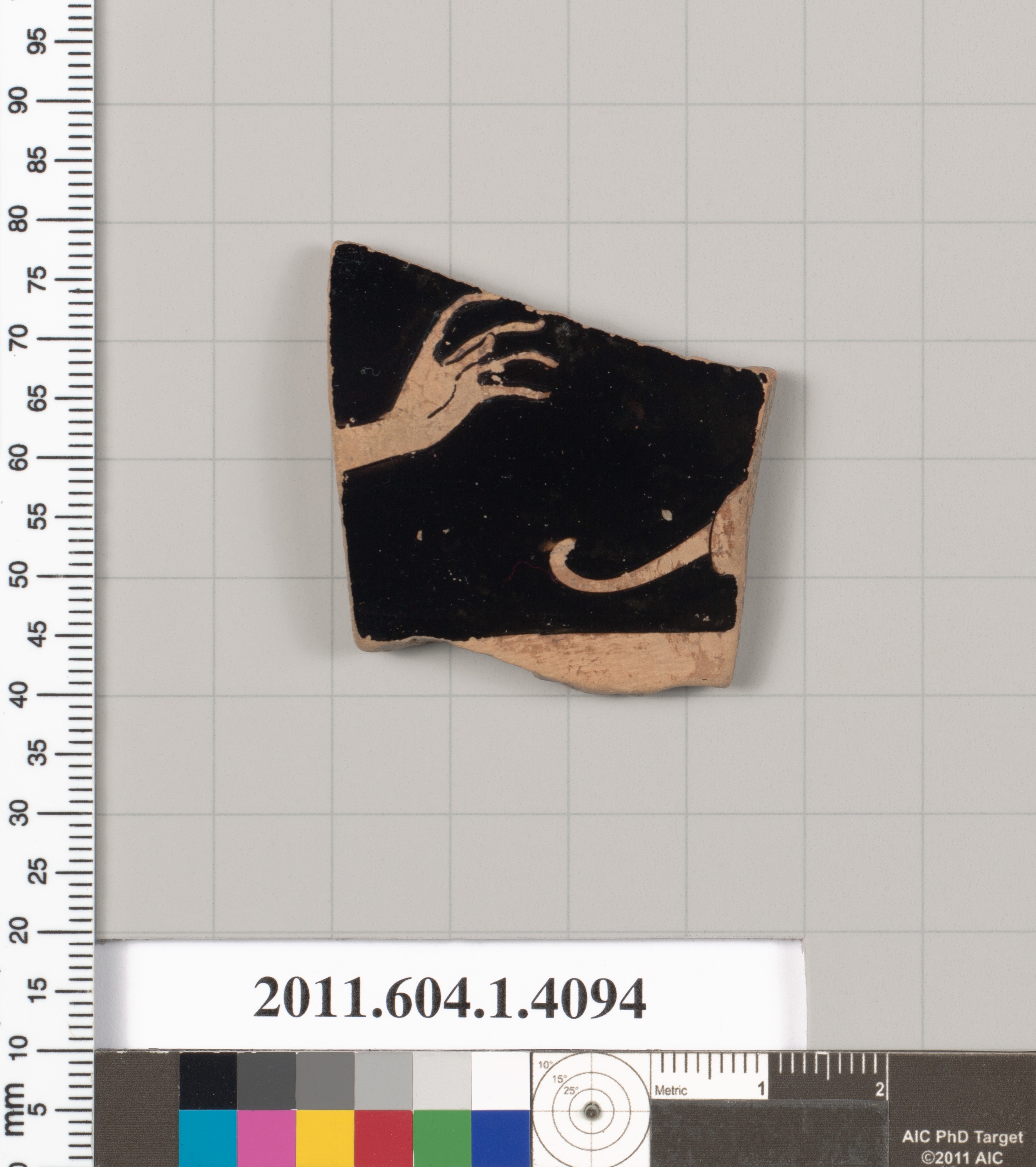
Heritage Synthesis: Terracotta fragment of a kylix (drinking cup)
Curated on Jul 18, 2026 // Node: LDN-01
From Attic Terracotta to Old Money Silhouettes: The Dialectics of Material Translation in Lauren Fashion’s 2026 Vision
The museum artifact under consideration—a terracotta fragment of a kylix from Attic Greece—presents a deceptively simple visual source. Yet when examined through the dual lens of Lauren Fashion Heritage Lab’s internal genetic code, specifically the Chinese aesthetic principles of “object-image transformation” (*wuxiang zhuanhuan*) and “spiritual inhabitation” (*jingshen jiyu*), this fragment reveals profound implications for the 2026 Old Money silhouette. The kylix, a drinking cup central to Athenian symposia, is not merely a functional vessel; it is a material testament to the same creative logic that transforms rock into mountain and clay into bronze in the Chinese tradition. This paper argues that the terracotta kylix fragment, through its fractured materiality and ritual origins, provides a critical template for Lauren Fashion’s 2026 collection—one that reimagines Old Money not as static opulence, but as a dynamic interplay between material authenticity, historical memory, and the “spirit of form” that transcends substance.
I. The Kylix as a Study in Material Translation
The Attic kylix, typically fashioned from terracotta and adorned with black-figure or red-figure decoration, embodies a paradox central to the Chinese aesthetic principle of “*cai yi shen tong*” (different materials, same spirit). Terracotta, a humble earthenware, was elevated through the potter’s wheel and the painter’s brush to a vessel of intellectual and social ritual. The symposion, the Greek drinking party, was a space of philosophical discourse, political alliance, and poetic performance. The kylix was not merely a cup; it was a stage for the performance of *paideia*—the cultivated aristocratic identity that resonates directly with the Old Money ethos of understated cultural capital.
In the Chinese tradition, the *Jar in the shape of bronze container (hu)* demonstrates how clay can emulate the solemnity of bronze, carrying the weight of ritual authority. Similarly, the terracotta kylix, though lacking the preciousness of gold or silver, achieves its prestige through form and decoration. The fragment’s surviving rim and handle speak to a lost whole, yet its brokenness is not a weakness but a narrative device. It invites the viewer to reconstruct the original context, much as the Chinese scholar’s rock (*gongshi*) invites mental travel to a fantastic mountain. The kylix fragment, like the rock, is a “material medium” that “aims to stimulate insight into the invisible *Dao*”—in this case, the invisible codes of Athenian aristocracy.
II. The 2026 Old Money Silhouette: Principles of “Unassuming Grandeur”
The Old Money aesthetic, as Lauren Fashion defines it for 2026, rejects ostentatious branding in favor of what might be termed “unassuming grandeur”—a quality that the kylix fragment embodies with remarkable precision. The silhouette for 2026 will be characterized by three principles drawn directly from the Attic terracotta:
First, the principle of “fragmentary completeness.” Just as the kylix fragment suggests a larger vessel without revealing it entirely, the 2026 silhouette will employ strategic asymmetry and unfinished edges. Jackets will feature raw hems; trousers will taper to a single visible seam; dresses will incorporate draped panels that echo the kylix’s flared lip. This is not deconstruction for its own sake, but a deliberate evocation of the “*busi zhi si*” (resemblance without likeness) that defines Chinese aesthetic transformation. The fragment is more evocative than the whole because it demands active interpretation from the wearer and observer.
Second, the principle of “ritual materiality.” The kylix’s terracotta is a material of the earth, fired but unglazed, its texture speaking to the hand that shaped it. For 2026, Lauren Fashion will foreground materials that carry similar tactile honesty: heavy wool flannels, raw silk noils, unbleached linens, and, crucially, a new “Heritage-Black” cashmere that undergoes a traditional fulling process to achieve a matte, almost stone-like finish. This cashmere, like the terracotta, will not reflect light but absorb it, creating a silhouette that is felt before it is seen. The color black itself, in this context, becomes a material—a “*Heritage-Black*” that references not mourning but the black-figure painting on the kylix, where black slip against red clay created narrative scenes of gods and heroes.
Third, the principle of “historical layering.” The kylix fragment carries the patina of centuries—not as damage, but as accrued meaning. The 2026 silhouette will incorporate visible mending, intentional wear patterns, and subtle color variations that suggest a garment’s passage through time. A double-breasted overcoat might feature a slightly darker collar, as if replaced; a tailored vest might show faint lines from a former pocket. These details, like the kylix’s crack, are not flaws but “*wenming jiyi*” (cultural memories) made visible. They align with the Chinese principle of “*yigu weishang*” (esteeming antiquity), where the old is not obsolete but authoritative.
III. The Symposion and the Sartorial Performance of Aristocracy
The kylix’s original function—the symposion—offers a direct parallel to the Old Money wardrobe as a performative space. In ancient Athens, the symposion was a closed, male-dominated event where aristocratic identity was performed through poetry, music, and the careful handling of the kylix. The cup’s shape, with its wide bowl and two handles, required a specific gesture: the drinker would hold it by one handle, tilt it to the lips, and reveal the painted scene on the interior to fellow guests. This was a choreography of status, where knowledge of the iconography (Heracles, Dionysus, or a symposium scene) signaled one’s *paideia*.
For the 2026 Old Money silhouette, this translates into garments that require a certain “sartorial literacy” to decode. A jacket’s hidden interior pocket, lined with a subtle check pattern; a dress’s concealed dart that creates a specific drape; a trouser’s cuff that reveals a contrasting fabric when turned up—these are the equivalent of the kylix’s interior painting. They are not for public display but for the discerning eye of the initiated. The wearer, like the symposiast, performs a role that is both personal and collective, drawing on a shared vocabulary of form.
IV. Synthesis: The “Spiritual Inhabitation” of the 2026 Silhouette
Returning to the Chinese aesthetic framework, the terracotta kylix fragment and the 2026 Old Money silhouette converge on the concept of “*jingshen jiyu*” (spiritual inhabitation). The rock that becomes a mountain, the clay that becomes bronze, the terracotta that becomes a vessel of aristocratic ritual—all are examples of matter infused with spirit through form. For Lauren Fashion, the 2026 silhouette is not a collection of garments but a “*meixue kongjian*” (aesthetic space) where the wearer can inhabit a lineage of cultivated taste.
The “Heritage-Black” cashmere, in particular, becomes the material analogue of the kylix’s black-figure slip. Just as the slip was applied to the terracotta to create contrast and narrative, the cashmere’s deep, matte black provides a ground against which the silhouette’s subtle details—a hand-stitched buttonhole, a precisely placed dart, a faintly visible mend—can emerge. This is not the black of minimalism but the black of antiquity, where darkness was not absence but potential.
V. Conclusion: The Fragment as Foundation
The Attic kylix fragment, when read through the Chinese principles of “*wuxiang zhuanhuan*” and “*jingshen jiyu*,” offers Lauren Fashion a profound lesson for the 2026 Old Money silhouette: that the most powerful forms are those that acknowledge their own incompleteness. The fragment does not pretend to be whole; it invites the viewer to complete it through imagination. Similarly, the 2026 silhouette will not present a finished, polished image but a series of invitations—to touch, to examine, to remember. In this, it honors the Old Money ethos of understatement while advancing a new aesthetic of material honesty and historical depth. The terracotta kylix, broken but eloquent, becomes the unlikely muse for a collection that seeks not to imitate the past but to inhabit its spirit.
Heritage Lab Insight
Genetic Bridge: Archive node focusing on Heritage-Black craftsmanship.