On the Consideration of the Fragment
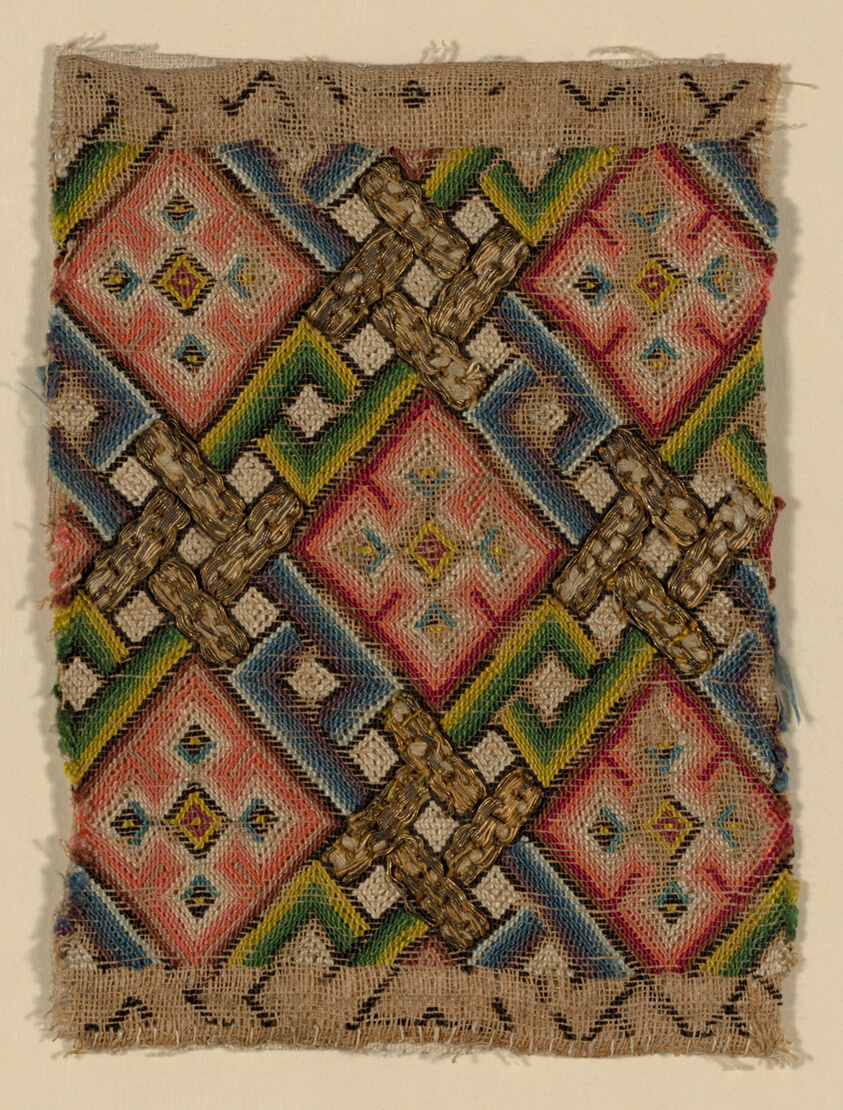
In the rarefied atmosphere of bespoke creation, where the whole garners rightful admiration—the impeccable drape of a jacket, the commanding line of an overcoat—we must, on occasion, train a more forensic eye. We must consider the fragment. Not as a mere remnant of a diminished whole, but as a sovereign artifact; a concentration of intent, material, and execution that speaks, in microcosm, to the grand narrative of the craft. The presented specimen, a fragment of linen worked with silk and metal-wrapped thread, serves as just such a focal point for scholarly appreciation. It is a testament to the dialogue between foundation and embellishment, between structural integrity and sublime surface.
Material Foundation: The Linen Ground
One does not begin with the flourish. One begins with principle. Here, the principle is plain weave linen: a fabric of understated authority, chosen not for show but for service. Its virtues are those of the finest canvas or the most resilient interlining—inherent stability, a disciplined hand, and a tensile strength that provides an unyielding foundation. This is the silent partner in the enterprise, the Savile Row chest canvas that gives form to the softest wool, the unseen architecture upon which elegance is built. The linen’s purpose is to receive and to retain, to offer a ground upon which the narrative of silk can be inscribed without compromise, without the distraction of a substrate prone to vagary. Its very plainness is a declaration of intent; the work to come is the subject.
The Embroidery: A Taxonomy of Stitches
Upon this steadfast ground, the language of silk is articulated through a precise and hierarchical grammar of stitches, each with a distinct role in the creation of texture, luminosity, and dimension.
Tent Stitch: The workhorse of the piece, the tent stitch in silk floss is the essential filler, the background chatter of meticulous craftsmanship. It is the equivalent of the thousands of hand-picked stitches on a lapel roll—individually modest, collectively magnificent. Its diagonal inclination builds a dense, pliant surface, capturing and diffusing light with a soft, matte lustre. This is the foundational tone, the mid-range in a visual symphony.
Padded Couching: Here we encounter the first order of strategic emphasis. Padded couching is a technique of profound intelligence, where a cord or bundle of threads is first laid upon the surface, then secured with finer stitches over it. The result is not merely a line, but a raised line—a bas-relief in thread. This introduces a topographical element to the work, casting subtle shadows and attracting the light along its crest. It is the sartorial equivalent of a roped sleeve head or a defined waist suppression: a deliberate, structural contouring that enhances form.
Metal-Wrapped Silk: The apex of this material hierarchy is found in the gilt- and silvered-metal-strip-wrapped silk. This is not mere thread; it is a hybrid filament, a marriage of mineral splendour and organic fluidity. The metal strip, wound with precision about the silk core, performs a dual function. It provides a reflective, imperious surface—a sharp, declarative light quite distinct from the floss’s glow. Simultaneously, the silk core within grants a pliability that pure metal thread could never achieve, allowing it to follow complex curves and submit to the needle’s demands. Its application represents the peak of the embroiderer’s art, a strategic placement of brilliance.
Context: Fluid Elegance as a Construct
The brief cites “fluid elegance” as the contextual ambition. This fragment instructs us that such fluidity is not accidental, but engineered. The elegance arises from the harmonious tension between the rigid discipline of the linen ground and the controlled, sinuous flow of the embroidered motifs. The fluidity is in the drawn line of the design, yes, but more profoundly, in the masterful modulation of texture and reflectivity achieved through the stitch taxonomy. The eye glides over the surface, encountering varied tactile sensations—the dense nap of the tent stitch, the ridged prominence of the couching, the cool, hard sparkle of the metal-wrapped threads—all seamlessly integrated. This is a lesson in bespoke: true elegance is never monolithic; it is a curated, fluid experience built upon a hierarchy of effects, each serving the whole.
The Fragment as Heritage Artifact
Thus, this fragment transcends its physical bounds. It is a condensed archive of decisions. It speaks of a maker who understood that luxury is built from the ground up, who respected the hierarchy of materials, and who possessed the technical lexicon—the tent stitch, the couching, the wrapping of metal—to execute a vision of layered sophistication. In the world of Savile Row, we preserve the patterns, the shears, the client ledgers. This fragment is of that same order: a primary document. It does not simply show us what was made; it reveals, in intimate detail, how it was made. It lays bare the conversation between strength and splendour, between foundation and flourish. In its few square inches, it holds the immutable principles of classic silk craftsmanship: that enduring beauty is always, and necessarily, a compound affair.