← BACK TO ARCHIVES
Heritage-Black
Heritage Synthesis: Terracotta fragment of a kylix (drinking cup)
Curated on Jul 18, 2026 // Node: LDN-01
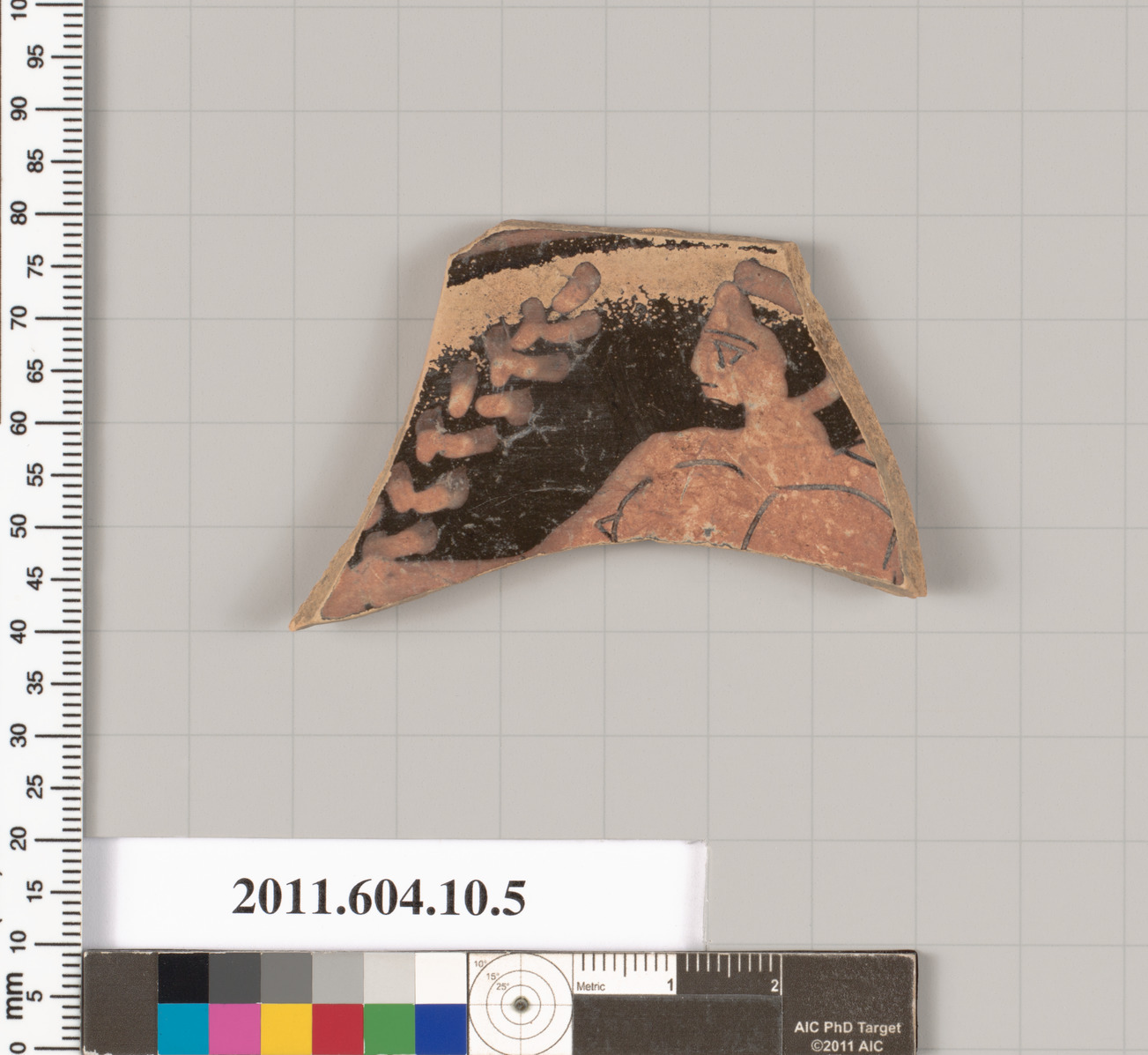
From Terracotta Fragment to Old Money Silhouette: The Etruscan Kylix as a Blueprint for 2026 Quiet Luxury
The Lauren Fashion Heritage Lab has long maintained that the most enduring expressions of luxury are not born from novelty, but from the excavation of archetypal forms. The terracotta fragment of an Etruscan kylix—a drinking cup shattered millennia ago—offers an unexpected yet profoundly resonant genetic code for the 2026 Old Money silhouette. This artifact, with its broken rim, faded black-figure decoration, and tactile earthenware surface, does not depict a garment. Yet it contains the entire philosophical architecture of quiet luxury: the valorization of imperfection, the primacy of structure over surface, and the silent authority of objects that have endured.
The Aesthetics of the Fragment: Imperfection as Status Signal
The kylix fragment’s most immediate lesson for 2026 Old Money dressing lies in its celebration of the incomplete. Unlike a pristine museum piece, this shard does not pretend to wholeness. Its jagged edges are not flaws; they are evidence of a life lived—of use, of breakage, of survival. This is the precise logic that will define the next generation of heritage silhouettes. In 2026, the Old Money customer will reject the crisp, unblemished perfection of fast fashion in favor of garments that carry the patina of time: a cashmere blazer with a slightly frayed cuff, a silk shirt with a mended seam, a wool overcoat whose shoulders have softened from decades of wear.
The fragment’s terracotta surface—rough, porous, fired from common clay—teaches us that true luxury is not about rarity of material but about the integrity of form. The Etruscan potter did not seek to disguise the earthiness of his medium; he celebrated it. Similarly, the 2026 Old Money silhouette will privilege natural fibers that age gracefully: linen that softens, wool that pills into a gentle haze, leather that develops a rich patina. The Heritage-Black category, in particular, will see a resurgence of matte, unrefined textures—a deliberate departure from the glossy synthetics that dominated the 2010s. A black wool crepe dress, cut on the bias, will be prized not for its sheen but for its subtle absorption of light, much like the terracotta’s ability to hold shadow.
Structural Integrity: The Kylix’s Silhouette Logic
The kylix’s form—a shallow bowl balanced on a slender stem, with two horizontal handles—offers a masterclass in structural proportion. The fragment reveals how the Etruscan craftsman distributed weight: the bowl’s generous curve is counterbalanced by the stem’s delicate verticality, while the handles anchor the composition horizontally. This tripartite logic—volume, line, anchor—is the exact principle that will guide 2026’s most important silhouettes.
Consider the Heritage-Black overcoat: a generous, almost architectural volume in the body (the bowl), cinched by a narrow waist (the stem), with broad, structured shoulders (the handles). The fragment teaches us that luxury is not about eliminating mass but about managing it with precision. The 2026 silhouette will reject the boxy, shapeless overcoats of recent seasons in favor of forms that are deliberately weighted: a cape that falls from the shoulders like a terracotta bowl, a skirt that flares from a fitted waistband like the kylix’s rim. The handles of the cup become the sleeves of a jacket—not merely functional appendages but integral elements that define the garment’s spatial presence.
The fragment’s broken edge also informs a new approach to hemming. In 2026, expect to see raw, unfinished hems on silk blouses and wool trousers—not as a sign of carelessness, but as a deliberate homage to the artifact’s fractured beauty. The hem becomes a narrative device, a visible record of the garment’s journey from loom to wardrobe.
Silence as Ornament: The Black-Figure Aesthetic
The kylix fragment’s black-figure decoration—a technique where silhouetted forms are painted against the natural terracotta ground—offers a profound lesson in restraint. The Etruscan artist did not cover the entire surface with ornament; he allowed the clay’s warmth to serve as the primary visual field, with the black figures acting as accents. This is the essence of Old Money dressing: the ground (the garment’s base fabric) is the star, and ornament is a whisper, not a shout.
For 2026, this translates into a Heritage-Black palette that is almost monochromatic but never flat. The black will be layered with shades of charcoal, ink, and obsidian, creating depth through tonal variation rather than pattern. A black cashmere turtleneck will be paired with black wool trousers, the only contrast coming from the matte finish of the knit versus the slight sheen of the weave. The fragment’s black figures—musicians, dancers, mythological scenes—become the equivalent of a single gold button on a blazer, a subtle embroidery on a cuff, a leather trim on a pocket. Ornament is not eliminated; it is concentrated into small, meaningful gestures.
The terracotta’s warm undertone also suggests a shift away from the cold, sterile blacks of corporate minimalism. The 2026 Heritage-Black will be a “living black”—one that carries hints of brown, rust, or deep plum, echoing the clay’s natural earthiness. This warmth makes the silhouette approachable, human, and deeply rooted in the tactile world.
Time as Material: The Durability of the Fragment
Perhaps the most critical lesson from the kylix fragment is its relationship to time. This object was not meant to be preserved in a museum; it was meant to be held, used, and eventually broken. Its survival is an accident of history, but its design—its sturdy walls, its balanced proportions, its fired clay—ensured that it could endure. The 2026 Old Money silhouette must similarly be designed for longevity, not just in style but in substance.
This means a return to construction techniques that prioritize durability: reinforced seams, double-stitched hems, linings that can be replaced, buttons that are sewn on with thread loops rather than glued. The Heritage-Black garment will be an heirloom, not a seasonal purchase. Its owner will understand that true luxury is the ability to wear the same coat for twenty years, watching it develop character, much as the kylix developed its cracks and chips.
The fragment also teaches us about the beauty of repair. In 2026, visible mending will be a signifier of discernment, not poverty. A silk dress with a carefully darned tear, a wool sweater with a patched elbow—these will be the equivalent of the kylix’s broken rim, evidence that the object was loved enough to be saved.
Conclusion: The Fragment as Future
The Etruscan kylix fragment, in its silent, broken dignity, offers a complete manifesto for the 2026 Old Money silhouette. It teaches us that luxury is not about perfection but about presence; not about newness but about endurance; not about ornament but about structure. The Heritage-Black garments of the coming season will be fragments in their own right—not incomplete, but complete in their embrace of impermanence. They will be designed to be worn, broken, mended, and worn again, accumulating the quiet authority of objects that have witnessed time.
As the Lauren Fashion Heritage Lab continues to synthesize internal archives with museum artifacts, the kylix fragment stands as a reminder that the most powerful design ideas are often the oldest. The 2026 customer will not be seeking the future; she will be seeking the eternal—and she will find it in the curve of a terracotta shard, translated into the fall of a black wool coat.
Heritage Lab Insight
Genetic Bridge: Archive node focusing on Heritage-Black craftsmanship.