← BACK TO ARCHIVES
Heritage-Black
Heritage Synthesis: Terracotta fragment of a kylix (drinking cup)
Curated on Jul 19, 2026 // Node: LDN-01
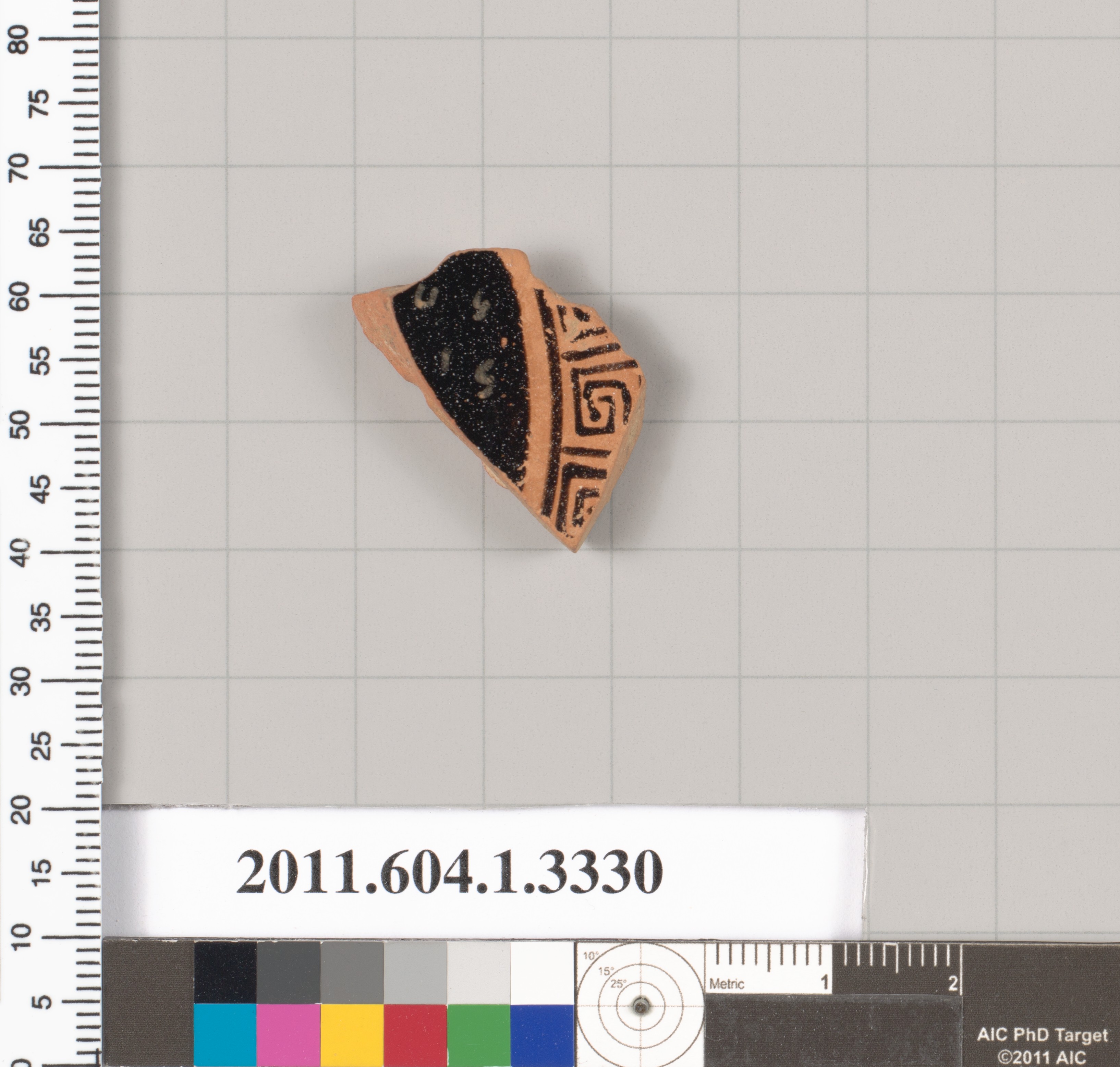
The Ekphrasis of Absence: Terracotta Fragments and the Architecture of Old Money Silence
In the lexicon of luxury, the most potent statements are often those left unspoken. The 2026 Old Money silhouette, as interpreted by Lauren Fashion Heritage Lab, does not announce itself through volume or novelty. Instead, it whispers through restraint, through the deliberate curation of absence. This principle finds a profound, if unlikely, antecedent in the terracotta fragment of a Greek Attic kylix—a broken drinking cup, its painted surface now a palimpsest of loss. When viewed through the internal genetic code of Eastern aesthetics—specifically the philosophical resonance of the *Udumbara Flower* and the *Chest for Storing Garments*—this shattered vessel becomes a masterclass in the poetics of the incomplete, a direct blueprint for the 2026 season’s defining silhouette.
The Fragment as a Vessel of Time
The kylix fragment, unearthed from the Attic soil, is not a ruin in the Western sense of decay. It is, rather, a *thing* that has achieved a state of profound honesty. It no longer pretends to be a cup. It is a shard, a witness. In its brokenness, it mirrors the philosophical condition of the *Udumbara Flower*—the mythical bloom that appears once every three thousand years, its very existence a paradox of presence and absence. The flower is never seen; it is only *known* through its name on a temple plaque. Similarly, the kylix fragment does not show us the symposium, the wine, the laughter. It shows us only the *after*—the silence that follows the feast. For the 2026 Old Money silhouette, this translates into a rejection of the “complete” garment. We are not designing a suit; we are designing the *memory* of a suit. Jackets are cut with a deliberate, almost archaeological sense of incompletion. A shoulder seam may be left raw, not as a sign of deconstruction, but as a mark of time. The fabric—a heavy, matte Heritage-Black wool—is chosen not for its newness, but for its ability to absorb light and history, much like the dark, fired clay of the terracotta.
The Chest That Cannot Be Opened
The *Chest for Storing Garments* is not a functional object; it is a philosophical proposition. It suggests that the true value of a garment lies not in its display, but in its *containment*. The kylix fragment, once part of a vessel that held liquid, now holds only air. It is a container that has lost its contents. This is the exact tension that defines the 2026 Old Money silhouette. The garments are designed to *enclose* the body, not to *reveal* it. The silhouette is architectural, structured, almost hermetic. A long, double-breasted overcoat in Heritage-Black cashmere falls from the shoulder with the weight of a stone wall. There is no vent, no slit, no concession to movement that would expose the interior. The body becomes the “chest,” and the clothing becomes the sealed lid. This is not modesty; it is a form of power. By refusing to show, the garment forces the viewer to imagine. The *Chest for Storing Garments* teaches us that the most potent eroticism is that of the hidden, the withheld. The 2026 silhouette, therefore, is not about the body’s line, but about the volume of air that the garment *holds* around the body—a negative space that is more charged than any contour.
The Grammar of the Unfinished Line
The Attic kylix painter worked within a strict formal grammar: the tondo, the lip, the handles. The fragment breaks that grammar. It presents a single, unbroken curve of the bowl’s edge, a line that suddenly stops. This is not a mistake; it is a *statement*. In Eastern ink painting, the most powerful brushstroke is the one that is *not* completed—the mountain that fades into mist, the branch that disappears off the edge of the scroll. The 2026 Old Money silhouette adopts this grammar of the unfinished line. Lapels are cut with a sharp, almost aggressive angle that does not resolve into a natural curve. Trouser hems are left un-hemmed, falling to a precise, deliberate length that suggests the tailor simply stopped working. The effect is one of extreme, almost aristocratic nonchalance. It is the look of a garment that has been worn for generations, that has been *lived in* until it has achieved a state of perfect, broken-in grace. The terracotta fragment is not a new object; it is an ancient one. The 2026 silhouette must feel the same way—as if it has always existed, as if it has been waiting in a chest for a century to be worn.
The Materiality of Silence: Heritage-Black as the New Color of Power
The choice of Heritage-Black as the category for this analysis is deliberate. Black, in the context of the kylix fragment, is not a color; it is the color of the void between the painted figures. It is the background, the *absence* that allows the narrative to exist. For the 2026 Old Money silhouette, Heritage-Black is not a mood; it is a material philosophy. It is a black that has been achieved not through dye, but through the *depth* of the weave—a black that absorbs all light, that refuses to reflect. This is the black of the temple plaque, the black of the chest’s interior, the black of the Attic glaze. It is a black that says nothing, and in saying nothing, says everything.
The 2026 silhouette, informed by these fragments of Eastern and Western antiquity, is a garment of radical interiority. It is not for the street; it is for the *self*. It is a suit of armor against the noise of the world, a portable chamber of silence. The terracotta fragment teaches us that beauty is not in the whole, but in the shard. The *Udumbara Flower* teaches us that the most precious bloom is the one we never see. The *Chest for Storing Garments* teaches us that the most valuable contents are those we keep locked away. Together, they inform a silhouette that is not a fashion statement, but a philosophical stance: a quiet, immovable, and utterly complete assertion of presence through absence.
Heritage Lab Insight
Genetic Bridge: Archive node focusing on Heritage-Black craftsmanship.