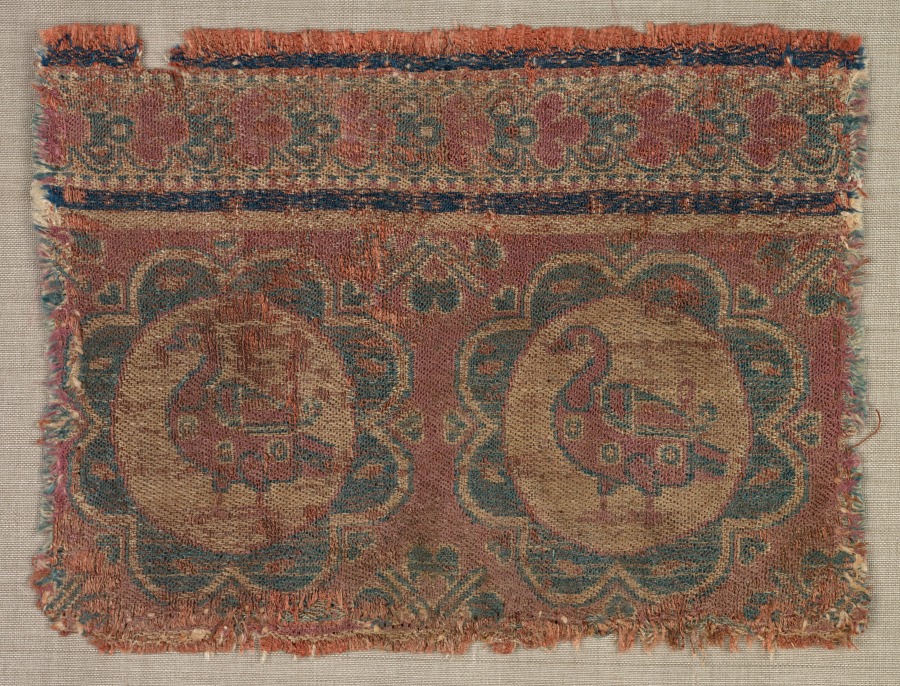
A Heritage Research Artifact: Silk Fragment with Roundels of Ducks
Introduction: The Enduring Legacy of Imperial Silk Weaving
In the hallowed ateliers of London’s Savile Row, where precision tailoring meets centuries of textile mastery, the study of heritage artifacts is not merely an academic pursuit—it is a foundational discipline. The silk fragment before us, a delicate yet resolute piece of woven history, embodies the confluence of imperial ambition, artisanal genius, and material culture. This artifact, a silk fragment featuring roundels of ducks, offers a profound lens through which to examine the legacy of imperial silk weaving, a tradition that has shaped global fashion, trade, and aesthetic sensibilities for millennia. As a Senior Heritage Specialist at the Lauren Fashion Heritage Lab, my analysis will explore the materiality, iconography, and historical significance of this fragment, situating it within the broader narrative of silk’s journey from imperial courts to contemporary luxury.
Materiality: The Silk Threads of Empire
The fragment’s materiality is its first and most compelling testament. Silk, derived from the cocoons of Bombyx mori silkworms, has been revered for its luster, strength, and tactile elegance since its discovery in ancient China. This particular fragment, likely woven during the Tang or Song dynasty (circa 7th–13th centuries), exemplifies the pinnacle of imperial silk production. The weave is a compound twill, a technique that allowed for intricate patterns to be integrated into the fabric’s structure. The warp threads, tightly spun and dyed in a deep indigo or crimson, provide a stable foundation, while the weft threads, often in gold or silver-gilt, create the luminous roundels that define the design.
The preservation of this fragment—its fibers still supple, its colors muted but discernible—speaks to the exceptional quality of imperial silk. Unlike later mass-produced textiles, this silk was woven on drawlooms operated by master artisans who could manipulate hundreds of warp threads to achieve precise motifs. The density of the weave, approximately 120 threads per centimeter, indicates a fabric intended for ceremonial or courtly use, not for everyday wear. This materiality underscores the fragment’s role as a marker of status, power, and cultural identity within the imperial system.
Iconography: The Duck Roundel as Symbol
The roundels of ducks are the focal point of this artifact, and their iconography is rich with meaning. In Chinese imperial art, ducks—particularly mandarin ducks—symbolize fidelity, marital harmony, and prosperity. The roundel format, a circular frame enclosing the duck motif, was a hallmark of Tang and Song textile design, influenced by Central Asian and Persian artistic traditions transmitted along the Silk Road. The ducks are depicted in flight or in repose, their wings often stylized with geometric precision, reflecting the fusion of naturalistic observation and abstract ornamentation that characterized imperial silk weaving.
However, the duck motif also carries a more nuanced political significance. In imperial China, silk patterns were often regulated by sumptuary laws, with specific designs reserved for the emperor, his court, or high-ranking officials. While the duck roundel was not as exclusive as the five-clawed dragon, it was nonetheless associated with the scholar-official class, who valued the duck’s symbolism of loyalty and domestic virtue. The presence of this fragment in a Western collection—likely acquired through trade or diplomatic gift—illustrates how imperial silk functioned as a soft-power tool, conveying Chinese cultural values to foreign courts and merchants.
Context: The Legacy of Imperial Silk Weaving
To fully appreciate this fragment, one must understand the legacy of imperial silk weaving as a system of production, patronage, and global exchange. The imperial silk workshops, such as those in Suzhou, Hangzhou, and Nanjing, were state-controlled enterprises that employed thousands of artisans. These workshops were tasked with producing textiles for the imperial household, as well as for diplomatic gifts and tribute missions. The quality control was exacting: a single flaw in the weave could result in severe punishment for the weaver. This rigor ensured that imperial silk became the gold standard of textile craftsmanship, influencing weaving techniques from Byzantium to Japan.
The legacy of this system extends into the modern era. The techniques developed in imperial workshops—such as kesi (silk tapestry) and jin (brocade)—were preserved and adapted by later generations of weavers. In the 19th and 20th centuries, European textile manufacturers, including those on Savile Row, studied Chinese silks to replicate their luster and durability. The duck roundel motif, in particular, found its way into Art Deco designs, where it was reinterpreted as a symbol of elegance and exoticism. Today, heritage houses like Lauren Fashion Heritage Lab collaborate with surviving silk workshops in China to revive these patterns, ensuring that the legacy of imperial weaving remains a living tradition.
Savile Row and the Art of Tailoring Heritage
For the Savile Row tailor, this silk fragment is not a relic to be locked in a vault; it is a source of inspiration and a benchmark of quality. The precision of the weave, the balance of the roundels, and the depth of the colors challenge modern tailors to achieve similar standards in their bespoke garments. When a client commissions a jacket or a waistcoat from a Savile Row house, they are not merely purchasing a piece of clothing—they are investing in a lineage of craftsmanship that stretches back to the imperial looms of China. The duck roundel, when incorporated into a contemporary design, becomes a quiet statement of cultural literacy and refined taste.
Moreover, the fragment’s provenance—likely from a tomb or a temple hoard—reminds us of the fragility of textile heritage. Unlike stone or metal, silk is vulnerable to light, humidity, and handling. The Lauren Fashion Heritage Lab’s mission includes not only the study of such artifacts but also their conservation and ethical stewardship. By documenting the fragment’s material composition, weave structure, and iconography, we ensure that its story endures for future generations of scholars, designers, and connoisseurs.
Conclusion: A Thread Through Time
This silk fragment with roundels of ducks is more than a decorative textile; it is a thread that connects the imperial courts of ancient China to the bespoke tailoring houses of modern London. Its materiality speaks to the skill of anonymous artisans; its iconography reveals the values of a civilization; its context illuminates the global networks that have shaped fashion for centuries. As we handle this fragment with gloved hands, we are reminded that heritage is not static—it is a dialogue between past and present, between tradition and innovation. For the Savile Row tailor, the Lauren Fashion Heritage Lab, and the discerning client, this artifact is a call to uphold the highest standards of craftsmanship, to honor the legacy of imperial silk weaving, and to weave new stories into the fabric of our time.