Category: Silk
Introduction: The Msimsim as a Textual and Textile Artifact
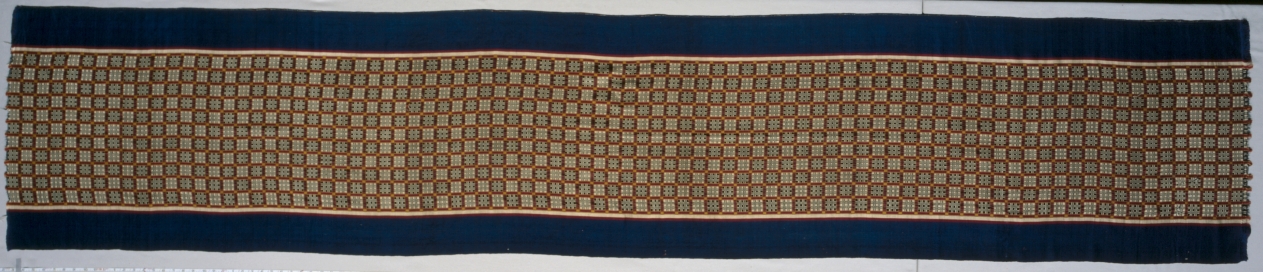
The wall hanging known as the msimsim represents a singular convergence of material luxury, imperial patronage, and cultural memory. Crafted from silk, this artifact is not merely a decorative object but a document of the intricate relationships between trade, power, and craftsmanship that defined the silk routes from East Asia to the Ottoman Empire. For the Lauren Fashion Heritage Lab, the msimsim serves as a critical case study in understanding how silk—a fiber synonymous with prestige—was transformed into a medium for storytelling, status, and spiritual symbolism. This paper examines the msimsim through the lens of its materiality, its origins in imperial silk weaving, and its enduring legacy as a heritage artifact that continues to inform contemporary luxury design.
Materiality: Silk as a Conduit of Power and Prestige
Silk, by its very nature, is a material of paradoxes: it is both delicate and durable, luminous and opaque, ephemeral and eternal. The msimsim, woven from the finest mulberry silk, exemplifies these contradictions. Its threads, harvested from the cocoons of Bombyx mori, are spun with a precision that speaks to centuries of accumulated knowledge. The fabric’s weight—neither too heavy nor too light—suggests a deliberate balance between portability and presence, as if the weaver understood that this hanging would be both a traveler and a fixture. The silk’s natural sheen, achieved through a combination of high-quality raw materials and meticulous degumming, captures light in a way that mimics the play of water or the shimmer of distant stars. This optical quality was not accidental; it was a calculated effect intended to evoke the divine, the celestial, and the sovereign.
The msimsim’s materiality also reveals the technical mastery of its creators. The weave structure, likely a compound twill or lampas, allows for the integration of multiple colors and patterns without compromising the fabric’s integrity. The dyes, derived from natural sources such as madder root, indigo, and cochineal, have retained their vibrancy over centuries, a testament to the chemical sophistication of pre-industrial textile production. Each thread tells a story of extraction, transformation, and assembly—a narrative that begins in the silkworm’s mouth and ends in the hands of a weaver who understood that silk was not just a fiber but a language.
Imperial Silk Weaving: The Context of the Msimsim
To understand the msimsim, one must first understand the legacy of imperial silk weaving. From the Tang dynasty to the Ottoman Empire, silk was a tool of statecraft. It was used to seal alliances, to honor diplomats, and to assert cultural superiority. The msimsim, likely produced in a state-sponsored workshop in Bursa or Istanbul, belongs to this tradition. Its patterns—geometric medallions, arabesques, and stylized floral motifs—are not merely decorative but symbolic. The medallions, for instance, often represent the sun or the moon, celestial bodies that were associated with the sultan’s authority. The arabesques, with their infinite loops, evoke the eternal nature of divine power. The flowers, particularly the tulip and the carnation, are emblems of paradise and earthly beauty, respectively.
The msimsim’s function as a wall hanging further underscores its imperial context. Unlike garments, which are mobile and personal, wall hangings are fixed and public. They define space, announce status, and create atmosphere. In the Ottoman court, such hangings were used to adorn the walls of audience chambers, mosques, and private apartments. They served as backdrops for ceremonies, as insulation against cold stone, and as markers of the patron’s taste and wealth. The msimsim, with its intricate patterns and luxurious silk, would have been a statement of power—a visual reminder that the sultan’s reach extended to the very threads that clothed his realm.
Cultural Memory and the Msimsim’s Journey
The msimsim is not a static object; it is a traveler through time and space. Its journey from the imperial looms of the Ottoman Empire to the collections of the Lauren Fashion Heritage Lab is a story of cultural memory and material survival. How did this hanging survive the centuries? Who preserved it, and why? The answers lie in the object’s dual nature as both a luxury good and a sacred artifact. In many Islamic traditions, textiles were often repurposed for religious or funerary contexts. A wall hanging might become a prayer rug, a shroud, or a gift to a mosque. This practice of recontextualization ensured that the msimsim remained in use, even as its original meaning faded.
Today, the msimsim occupies a liminal space between art and artifact. It is a reminder of a lost world of craftsmanship, where the weaver’s hand was guided by generations of tacit knowledge. It is also a challenge to contemporary notions of luxury, which often prioritize speed and novelty over durability and meaning. For the Lauren Fashion Heritage Lab, the msimsim is a pedagogical tool—a way to teach students and practitioners about the value of slowness, of material integrity, and of the stories that objects carry.
Legacy and Contemporary Relevance
The msimsim’s legacy extends beyond the museum or the archive. It speaks directly to the principles of Savile Row, where craftsmanship, heritage, and materiality are paramount. Just as a Savile Row tailor selects a bolt of cloth with the same care that a weaver once chose a skein of silk, the msimsim reminds us that luxury is not about excess but about intention. It is about the time spent, the knowledge applied, and the respect for the material. In an era of fast fashion and disposable goods, the msimsim stands as a counterpoint—a call to return to the values of patience, precision, and permanence.
For the Lauren Fashion Heritage Lab, the msimsim is not just an object of study but a source of inspiration. Its patterns, colors, and textures offer a vocabulary for contemporary design. Its history offers a lesson in cultural exchange and adaptation. And its materiality offers a standard for quality that transcends trends. As we continue to explore the intersections of fashion, heritage, and technology, the msimsim reminds us that the past is not a relic but a resource—a wellspring of ideas that can inform and enrich the future.
Conclusion: The Msimsim as a Living Document
The msimsim is more than a wall hanging; it is a living document of imperial silk weaving, a testament to the power of materiality, and a bridge between past and present. Its silk threads carry the weight of history, but they also offer a path forward. For the Lauren Fashion Heritage Lab, this artifact is a reminder that heritage is not static—it is a dynamic, evolving conversation between the objects we preserve and the stories we tell. In the msimsim, we find not just a piece of fabric, but a philosophy of making that continues to resonate in the halls of Savile Row and beyond.