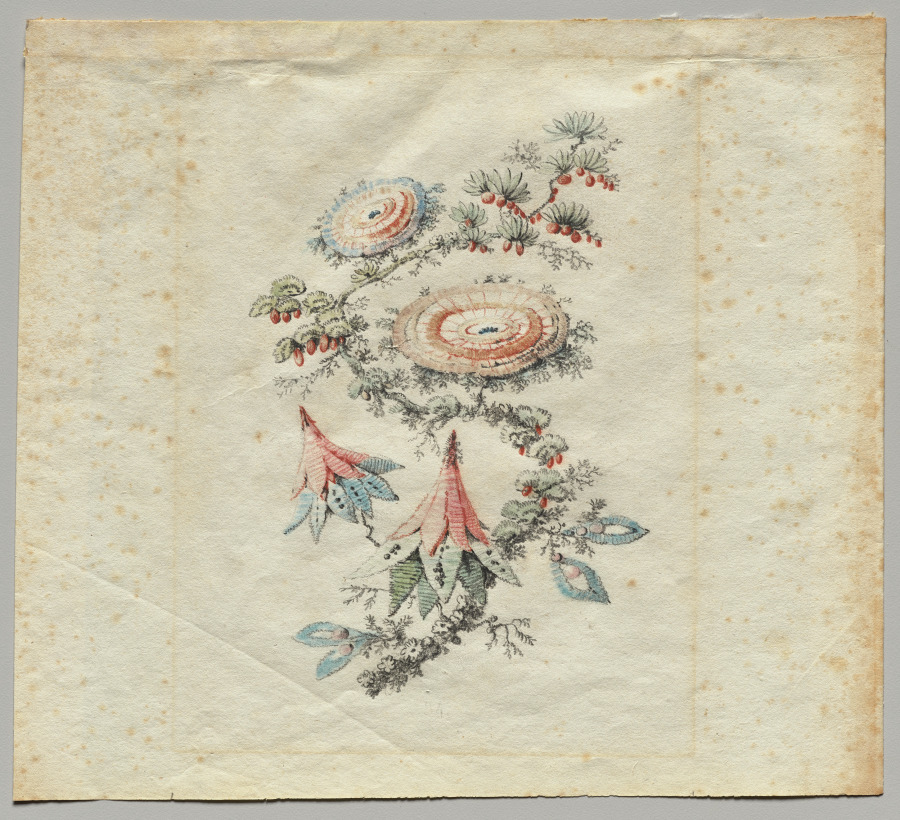
The Enduring Thread: Flower Embroidery Design for the Silk Manufactory of Lyon
Introduction: The Imperial Legacy Woven in Silk
The Silk Manufactory of Lyon, a name that resonates with the very essence of European luxury, stands as a monument to the intersection of art, industry, and imperial ambition. For centuries, Lyon was not merely a city of weavers; it was the epicentre of a silk industry that clothed the courts of France, Britain, and beyond. The legacy of imperial silk weaving—a tradition born from the patronage of monarchs and the demands of a global aristocracy—finds its most exquisite expression in the flower embroidery designs that adorned these fabrics. As a Senior Heritage Specialist at the Lauren Fashion Heritage Lab, I have examined countless artifacts, but the flower embroidery design for Lyon’s silk manufactory remains a singular testament to materiality, craftsmanship, and cultural power.
The materiality of silk is paramount. Silk is not simply a fibre; it is a narrative of transformation—from the mulberry leaf to the cocoon, from the reel to the loom. The imperial silk of Lyon was often woven with a warp of fine, unbleached silk and a weft of dyed, lustrous threads, creating a ground that shimmered with an almost liquid quality. This base was the canvas for embroidered flowers, which were not mere decorative motifs but complex symbols of status, nature, and the weaver’s virtuosity. The flower embroidery design, therefore, must be understood as a strategic artifact—a fusion of botanical precision and imperial propaganda.
The Art of the Flower: Design as Power
In the context of Lyon’s silk manufactory, flower embroidery was never accidental. The designs were meticulously planned by master designers, often working in close collaboration with the weavers and embroiderers. The flowers chosen—roses, lilies, carnations, and jasmine—were not random. The rose, for instance, was a perennial favourite, symbolising love and secrecy, but also the Bourbon monarchy. The lily, the fleur-de-lis, was the direct emblem of French royalty. By embedding these floral forms into silk, the manufactory was weaving the very identity of the empire into the fabric.
From a technical standpoint, the embroidery design had to account for the unique properties of silk. Silk thread, with its natural sheen and tensile strength, allowed for a range of stitches—from the flat, satin stitch that mimicked painted petals to the raised, padded stitches that gave a three-dimensional, almost sculptural quality to the flowers. The designers would create full-scale cartoons, often in watercolour, indicating the placement of each petal, the direction of the stitch, and the gradation of colour. These cartoons were then transferred to the silk ground, often using a pouncing technique with charcoal dust, ensuring that the embroiderer had a precise guide.
The imperial legacy is most evident in the scale and ambition of these designs. A typical flower embroidery for a courtly gown or an ecclesiastical vestment could span several metres, with a single flower measuring up to thirty centimetres in diameter. The density of the embroidery was a direct indicator of wealth: the more thread used, the more labour-intensive, and thus the more valuable the fabric. This was not merely decoration; it was a display of economic and political might. The silk manufactory of Lyon, under the patronage of Louis XIV and later Napoleon, became a tool of statecraft, producing fabrics that were diplomatic gifts, coronation robes, and symbols of national prestige.
Materiality and the Hand: The Embroidery Process
The materiality of silk imposes strict discipline on the embroiderer. Unlike cotton or wool, silk is slippery and prone to fraying. The embroiderer must work with a frame, stretching the silk taut to prevent puckering. The needle, typically a fine steel or gold-plated instrument, must be sharp enough to pierce the dense weave without damaging the threads. The thread itself is often composed of multiple plies, twisted together to create a smooth, uniform strand that catches the light evenly.
For the flower embroidery design, the embroiderer would begin with the centre of the flower, working outward. The petals were often executed in a long-and-short stitch, a technique that allowed for subtle colour transitions—from a deep crimson at the base to a pale pink at the tip. The leaves were worked in a herringbone or fishbone stitch, their veins indicated by a fine, contrasting thread. The entire process was painstakingly slow: a single square centimetre of dense embroidery could take an hour to complete. A full gown, with its elaborate floral motifs, could require months of work by a team of embroiderers.
This handcraft is the soul of the artifact. In an age of mechanised production, the flower embroidery design for Lyon’s silk manufactory reminds us of the value of the human hand. Each stitch is a decision, a mark of the embroiderer’s skill and patience. The slight irregularities—a petal that is not perfectly symmetrical, a thread that catches the light at a different angle—are not flaws but signatures. They are the evidence of a living tradition, one that connects the modern viewer to the imperial courts of the past.
Preservation and Legacy: The Heritage Artifact Today
Today, these flower embroidery designs exist as fragile artifacts. The silk, if not properly stored, can become brittle and fade. The threads, once vibrant, may have lost their colour. At the Lauren Fashion Heritage Lab, we approach these objects with the reverence they deserve. We use controlled environments—low light, stable humidity, and acid-free storage—to slow the inevitable decay. Digital imaging allows us to capture the design in high resolution, preserving the pattern even as the physical object deteriorates.
But the true legacy of the flower embroidery design is not merely in its preservation but in its influence. Contemporary fashion houses, from London’s Savile Row to Paris’s haute couture ateliers, continue to draw inspiration from Lyon’s floral motifs. The design language—the balance of symmetry and asymmetry, the interplay of light and shadow, the celebration of nature as a symbol of power—remains relevant. When a Savile Row tailor selects a silk for a bespoke suit, or a couturier commissions an embroidered floral panel for a gown, they are participating in a tradition that began in the imperial workshops of Lyon.
In conclusion, the flower embroidery design for the Silk Manufactory of Lyon is far more than a decorative pattern. It is a heritage artifact that encapsulates the materiality of silk, the artistry of the embroiderer, and the political ambitions of an empire. It is a thread that connects the past to the present, reminding us that luxury is not merely about cost but about the story woven into every fibre. As we continue to study and preserve these designs, we honour the legacy of those who, with needle and thread, transformed silk into a canvas for power, beauty, and enduring craft.