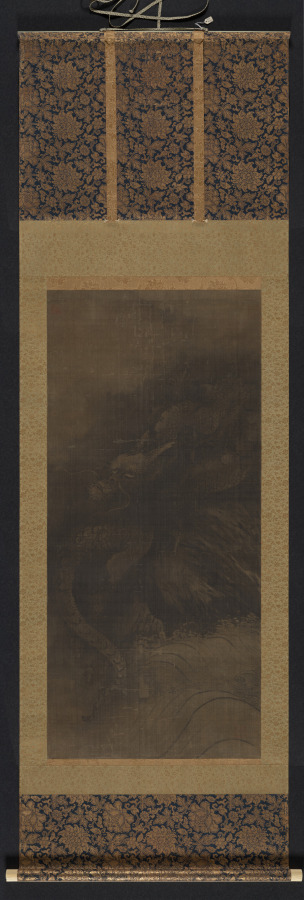
An Exegesis on the Draconic Motif in Imperial Silk Weaving
To comprehend the dragon in silk is to engage with the very architecture of imperial authority. It is not merely a decorative element; it is a heraldic statement, a manifestation of cosmological order, and the ultimate benchmark of textile artistry. The legacy of imperial silk weaving is, in many respects, the legacy of this motif’s evolution—from potent symbol to regulated emblem, and finally, to an icon of unsurpassed technical achievement. The material, silk, is not a passive canvas. Its inherent luminosity, its capacity for microscopic structural precision in dye absorption, and its formidable tensile strength render it the sole medium worthy of the task. Like a bespoke garment from the finest atelier, the dragon’s form demanded a cloth of commensurate dignity.
The Grammar of Power: Codification & Hierarchy
The imperial deployment of the dragon was a exercise in meticulous visual governance. By the Ming and Qing dynasties, its representation was subject to a sartorial protocol as rigid as any court ceremonial. The five-clawed dragon, the long, was reserved exclusively for the Son of Heaven. This was not a suggestion; it was a decree with profound material consequences. A commission for a dragon robe, a longpao, was the pinnacle of a weaving workshop’s endeavours. The pattern’s development on the loom required forethought of a military nature, aligning the beast’s majestic posture—front-facing, in profile, or in pursuit of the flaming pearl—with the anatomical realities of the wearer. The dragon’s placement was strategic: a commanding presence on the chest and back, with secondary dragons arranged in orbits around the primary, a celestial mirror of the court itself. To clothe the emperor in such a garment was to literally envelop him in a diagram of his own omnipotence, woven in silk so fine it was measured in deniers, a unit befitting a jeweller.
Material Alchemy: The Looms of Nanjing & Suzhou
The realisation of this vision was an alchemical process, executed on machinery of daunting complexity. The drawloom, a towering edifice of wood, cord, and ingenuity, operated on principles of binary code centuries before the term was conceived. Each lift of a heddle, each passage of the shuttle, was dictated by a programme encoded in a lattice of lifting cords. To weave a dragon in silk satin of the highest grade was to command thousands of these threads in concert. The famed kesi technique, or slit-tapestry, elevated this further. Here, the weaver worked with small shuttles of coloured silk, building the image weft-by-weft, allowing for painterly gradations of hue and curvilinear precision unattainable by standard weaving. The dragon’s scales, each a minute highlight of gold-wrapped thread, its sinuous body emerging from clouds of intricate, geometric fretwork—this was the product of countless man-hours, a testament to the imperial workshop’s limitless resource and patience. The material consequence was a cloth of immense density and pictorial depth, a true tapestry that could, quite literally, drape power.
Beyond Adornment: The Cosmological Garment
The imperial dragon robe was, however, far more than an opulent uniform. It was a cosmological map, a portable microcosm. The dragon rarely existed in isolation. It was positioned amidst an ordered universe of symbols: the eternal mountains and waves at the hem, the celestial firmament of astral symbols on the shoulders, the emblems of earthly and literary virtue scattered across the field. The silk ground itself—often in the profound, mineral yellow reserved for the emperor—represented the central plane of existence. The dragon, in this context, was the dynamic, animating force moving through this universe, the vital qi made manifest. To wear it was to assume not merely political office, but a role in the cosmic order. The legacy of this design philosophy is profound; it speaks to a worldview where material objects are imbued with symbolic resonance, where every thread has intentionality.
Enduring Legacy: From Imperial Edict to Iconic Abstraction
The demise of the imperial system did not sever the dragon from silk; it liberated the motif for reinterpretation. The twentieth and twenty-first centuries have seen the draconic form deconstructed, abstracted, and re-contextualised. Modern silk designers, while employing the same foundational weaves—the satins, the damasks—now play with scale, colour, and negative space. A dragon may be suggested by a single, powerful claw emerging from the selvedge, or rendered in a stark, graphic monochrome on duchesse satin. The technical prowess honed over centuries remains: the crispness of a Jacquard-woven silhouette, the liquid sheen of a printed dragon on habotai, the textural contrast of an embroidered motif on crepe de chine. The legacy is not one of slavish reproduction, but of a deep, ingrained understanding of how silk behaves, and how a symbol of such weight can be rendered with contemporary relevance.
In final analysis, the dragon in imperial silk is a peerless case study in the confluence of material, motif, and meaning. The silk provided the necessary dignity and technical potential; the imperial context provided the rigorous discipline of codification and the driving patronage for extreme excellence. The result is a heritage artifact that transcends the decorative to speak of power, cosmology, and an unwavering pursuit of the sublime in textile form. Its study offers not merely a history of pattern, but a masterclass in the philosophy of bespoke creation—where every element, from the twist of the yarn to the curvature of a claw, is considered, intentional, and definitive.