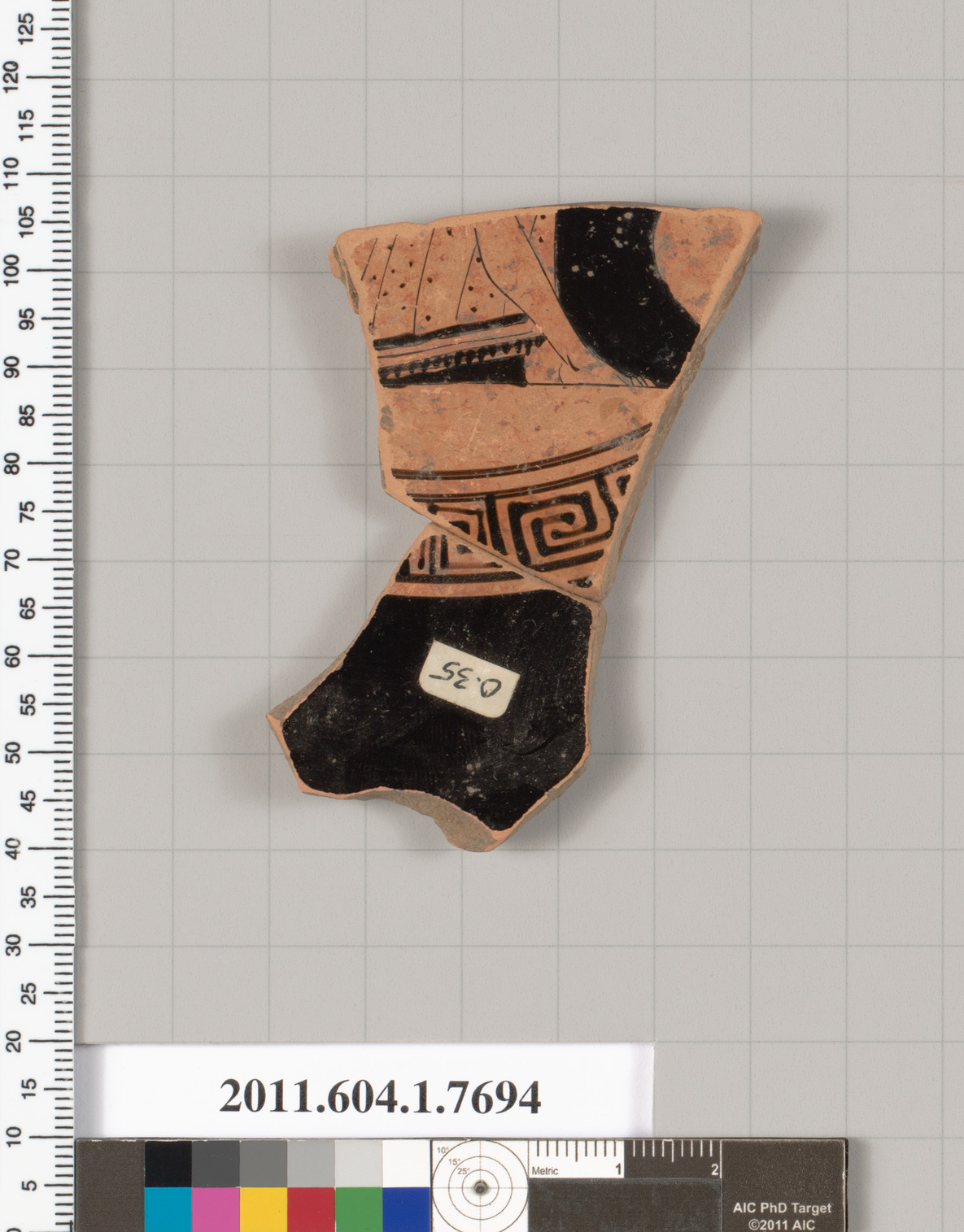
Silent Dialogues: The Attic Kylix Fragment and the 2026 Old Money Silhouette
The Lauren Fashion Heritage Lab’s internal genetic code posits a profound dialogue between a serene Bodhisattva and a formidable Egyptian bovine-headed amulet, framing them as material crystallizations of cosmic worldviews. This dialectic—between inward, transformative grace and outward, protective authority—provides the essential hermeneutic for our excavation of a seemingly disparate artifact: a terracotta fragment of an Attic kylix. This broken vessel, a relic of the Athenian symposium, is not merely a visual source but a philosophical blueprint. It informs the 2026 Old Money silhouette by encoding a new sartorial logic: one of cultivated fragmentation, intellectual theater, and a power that emanates not from ostentation, but from the confident curation of ruin and revelation.
The Fragment as Complete Statement: Deconstructing the Symposium
The terracotta fragment is, by its very nature, an artifact of absence. It is a deliberate ruin. In its complete state, the kylix was a tool for communal wine consumption, its tondo (inner cup painting) often depicting scenes of revelry, myth, or philosophical discourse, visible only as the cup was drained—a revelation in stages. The fragment disrupts this totality. It forces the viewer to engage with a partial narrative, to extrapolate the whole from a curated part. This mirrors the internal genetic code’s emphasis on art as a “key password” to understanding a civilization’s worldview. The fragment becomes a more potent signifier than a whole vessel; its broken edges speak of time, use, and selective preservation. For the 2026 Old Money silhouette, this translates into a move away from seamless, monolithic garments. We propose “cultivated fragmentation”: a jacket with a perfectly tailored shoulder and sleeve, juxtaposed with a deconstructed hem revealing a luxurious lining; a gown where one side is structured, classical columnar silk, while the other dissolves into asymmetric, delicate lace or precise knife-pleats. The silhouette is not broken, but intelligently incomplete, inviting the viewer to mentally complete its form, thus engaging in an act of sartorial interpretation.
The Aesthetics of the Unfinished: Surface, Trace, and Patina
The materiality of the terracotta fragment is crucial. Its surface bears the ghost of figural painting—perhaps a trace of a draped chiton, the curve of a limb—rendered in the elegant, restrained black-figure or red-figure technique. The color palette is inherently limited: the iron-rich red of the clay, the glossy black of the slip, the possible hints of added white or purple. This is not the polychrome exuberance of later eras but a mastery of limit. Furthermore, the fragment bears the patina of centuries—nicks, erosions, and the unmistakable aura of archaeological time. This directly informs the 2026 palette and textile development. The “Old Money” color story evolves into Heritage-Black (a black deepened with undertones of umber and iron-oxide red), Symposium Red (a muted, clay-terracotta), and Slip-White (an off-white with a chalky, matte finish). Fabrics are chosen for their ability to hold memory and trace: crushed velvets that play with light like worn ceramic; heavy, dry silks that drape with architectural weight and develop a personal crease; wool-cashmere blends felted to a slightly rough, tactile finish reminiscent of unfired clay. Embellishment is not added but revealed—a brocade pattern only apparent upon movement, or gold-thread stitching so subtle it seems a latent design within the fabric itself.
From Ritual Vessel to Sartorial Vessel: The Body as Curated Space
The kylix was a vessel for ritualized social interaction (the symposium), a container for both substance (wine) and symbol (its painted imagery). The 2026 Old Money silhouette re-conceives the garment as a vessel for the modern self, performing in curated social spaces. Like the kylix’s tondo revealed through use, these garments employ strategic revelation. A severe, almost monastic wool coat, when opened, reveals a lining painted with a delicate, Bodhisattva-inspired floral motif—a private spiritual solace against an external world. The protective, amulet-like severity of a structured, bovine-shouldered blazer is softened by the unexpected, graceful drape of a silk shirt sleeve at the cuff. This embodies the core dialogue from our genetic code: the inward-facing contemplation (the private beauty of the lining, the Bodhisattva’s smile) integrated with the outward-facing armor (the sharp silhouette, the amulet’s protective stance). The silhouette becomes a site of personal cosmology, where comfort and protection, revelation and mystery, are held in perfect, dynamic balance.
Ultimately, the terracotta fragment teaches that true legacy is not about pristine preservation, but about the authority of the excerpt. The 2026 Old Money silhouette, informed by this classical fragment, rejects loud declarations of wealth. It embraces a more profound, archaeological elegance. It is clothing as a curated artifact: bearing the patina of thought, structured by the principles of philosophical dialogue, and designed not to be merely seen, but to be decoded by those familiar with the silent language of heritage, restraint, and cultivated depth. It is not fashion as consumption, but fashion as the thoughtful, fragmentary, and enduring inscription of a worldview onto the body.