← BACK TO ARCHIVES
Heritage-Black
Heritage Synthesis: Terracotta fragments of kylikes (drinking cups)
Curated on Jul 23, 2026 // Node: LDN-01
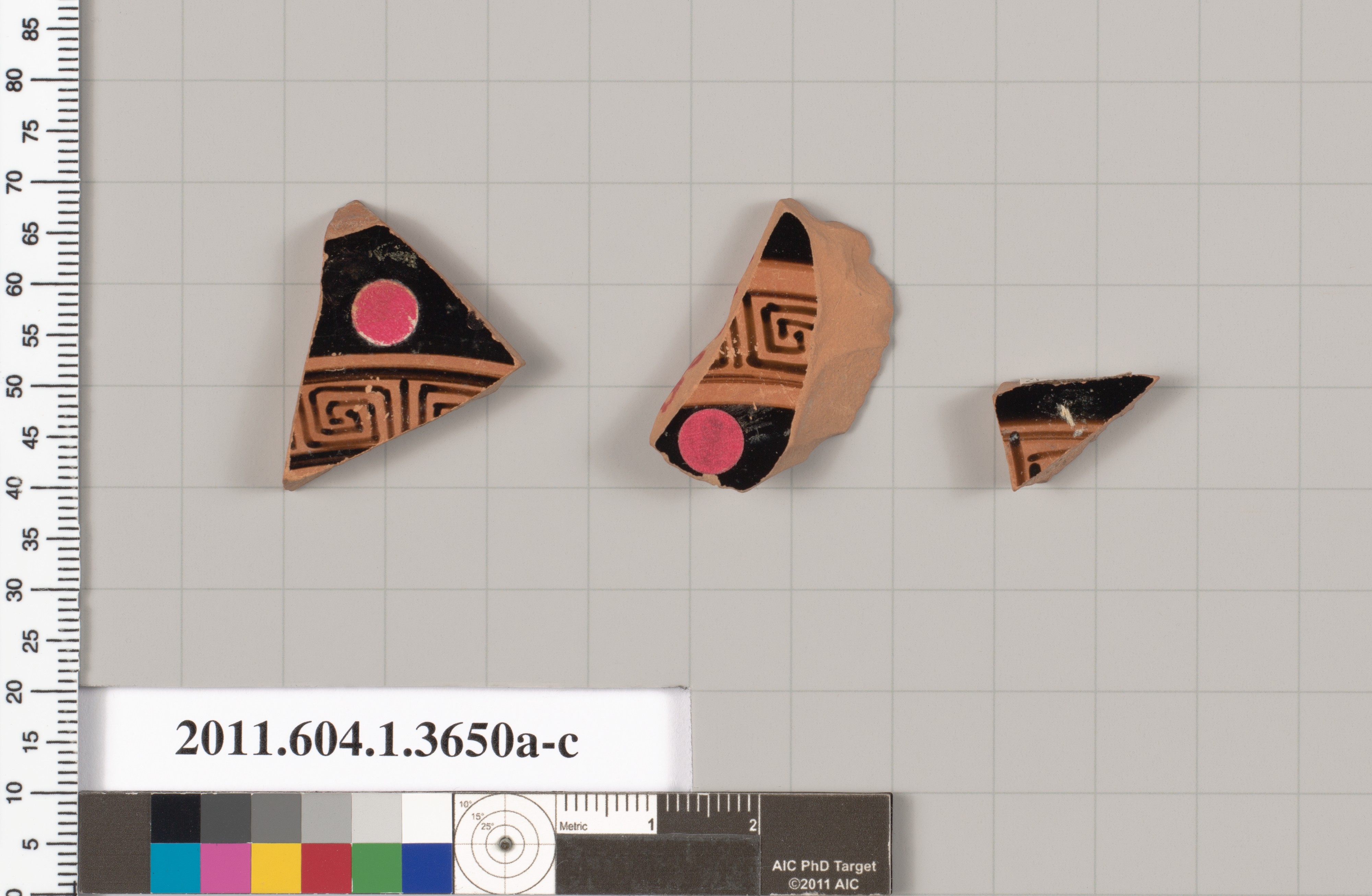
The Vessel and the Void: Terracotta Fragments and the Architectonics of Old Money Silence in 2026
The internal genetic code of Lauren Fashion Heritage Lab—a dialectical tension between Jacques-Louis David’s *The Death of Socrates* and Giorgio Morandi’s *Jars*—finds its most potent material analogue in the terracotta fragments of Attic kylikes (drinking cups) housed within our museum collection. These shards, broken from their original ritual and domestic contexts, are not mere archaeological detritus. They are the physical residue of a philosophical quarrel that has shaped Western aesthetics for two millennia: the conflict between the vessel as a carrier of transcendent meaning and the vessel as a mute, self-contained object. For the 2026 Old Money silhouette, these fragments offer a profound lesson in the poetics of absence—a design language where luxury is articulated not through ornamentation, but through the disciplined silence of form.
The Kylix as Dialectical Object: Between Symposium and Solitude
The Attic kylix, in its original function, was the quintessential vessel of the Greek symposium—a drinking cup designed for communal ritual, philosophical discourse, and the libation to gods. Its shallow bowl, wide rim, and twin handles facilitated the passing of wine among participants, making it a node in a network of social meaning. In David’s *The Death of Socrates*, the kylix is transformed into the poisoned chalice, the instrument of martyrdom. Socrates’ hand, reaching toward the cup, does not grasp a mere container; it seizes a symbol of rational defiance against mortality. The kylix becomes a *sacrificial vessel*, its materiality subsumed by its narrative weight. The terracotta fragments in our collection, however, resist such symbolic appropriation. They are broken, anonymous, and stripped of their original context. They do not tell a story; they *are* a story of breakage, of the failure of narrative to permanently inhabit matter.
This duality is the foundational tension for the 2026 Old Money silhouette. The Old Money aesthetic has historically been defined by a quiet, inherited confidence—a refusal to shout. Yet, in the era of hyper-visible luxury branding, this silence has become a commodity itself. The 2026 silhouette must navigate between David’s monumental symbolism and Morandi’s phenomenological reduction. The kylix fragments teach us that the most powerful garments are those that *hold* meaning without *declaring* it. A tailored overcoat in Heritage-Black wool, for instance, should not be a canvas for logos or excessive tailoring that screams “craftsmanship.” Instead, its power lies in its internal structure—the weight of the fabric, the precision of the shoulder seam, the subtle drape that suggests a body that has inherited time itself. This is the kylix as Morandi would paint it: a vessel whose value is in its *being*, not its *meaning*.
From Sacred Vessel to Empty Container: The Morandi Reduction
Morandi’s gray jars, painted with monastic repetition, offer a counterpoint to David’s theatricality. They are “empty containers” in the most radical sense: they do not hold wine, poison, or philosophy. They hold only light and shadow. The terracotta fragments, with their rough, unglazed surfaces and irregular breaks, echo this Morandian ethos. They are not polished artifacts of a golden age; they are the *aftermath* of meaning. In the 2026 Old Money silhouette, this translates into a deliberate *anti-narrative* approach to design. The garments must resist the temptation to tell a story of wealth, lineage, or taste. Instead, they must *be* the story of their own materiality.
Consider the construction of a 2026 silhouette: a double-breasted jacket in Heritage-Black, cut with a soft, unpadded shoulder that references the 1930s—a period when Old Money meant discretion. The lapels are narrow, the button stance low. There is no visible branding, no contrast stitching, no exaggerated silhouette. The garment’s luxury is legible only through its *absence*: the absence of excess, the absence of trend, the absence of narrative. This is the Morandi jar made wearable. The terracotta fragment, with its chipped edge and faded pigment, teaches us that beauty resides in the *incomplete*—in the acceptance that a garment, like a vessel, is ultimately a container for the wearer’s own presence, not a billboard for a designer’s intent.
The Dialectic of the Hand: Craft as Philosophical Gesture
David’s hand paints with heroic precision, directing the viewer’s gaze toward the cup and the philosopher’s gesture. Morandi’s hand moves slowly, almost reluctantly, as if each brushstroke is a negotiation with the object’s resistance. The terracotta fragments bear the marks of the potter’s wheel—the concentric ridges, the thumbprints on the handle—evidence of a hand that shaped the vessel without knowing it would one day be a relic. For the 2026 Old Money silhouette, this dialectic of the hand is crucial. The garment must appear *made*, not *manufactured*. This does not mean visible hand-stitching or artisanal flourishes. Rather, it means a construction that feels inevitable—a jacket that drapes as if it has always belonged to the wearer, a trouser that falls with the weight of inherited habit.
The 2026 silhouette, therefore, is not a revival of historical forms but a *philosophical synthesis* of David’s narrative gravity and Morandi’s phenomenological stillness. It is a garment that acknowledges its own material history—the wool from a specific Scottish mill, the cut derived from a 1950s pattern, the black dye that absorbs light rather than reflecting it—while refusing to be reduced to that history. Like the kylix fragment, it is a vessel that has been broken from its original context and now exists in a state of *permanent potential*: ready to be filled with meaning by the wearer, yet never demanding that meaning.
Conclusion: The Vessel as Inheritance
The terracotta kylix fragments, David’s poisoned cup, and Morandi’s gray jars converge on a single, urgent question for the 2026 Old Money silhouette: *What does it mean to inherit a vessel that is already broken?* The answer lies not in restoration—in trying to make the garment whole again—but in embracing the fracture as the site of beauty. The 2026 silhouette is an *architecture of absence*: a shoulder that suggests a forgotten posture, a hem that implies a lost proportion, a fabric that holds the memory of a hand that is no longer there. This is the luxury of the fragment, the elegance of the void. It is Old Money not because it displays wealth, but because it embodies the quiet confidence of something that has survived the collapse of meaning and found its own form in the silence.
Heritage Lab Insight
Genetic Bridge: Archive node focusing on Heritage-Black craftsmanship.