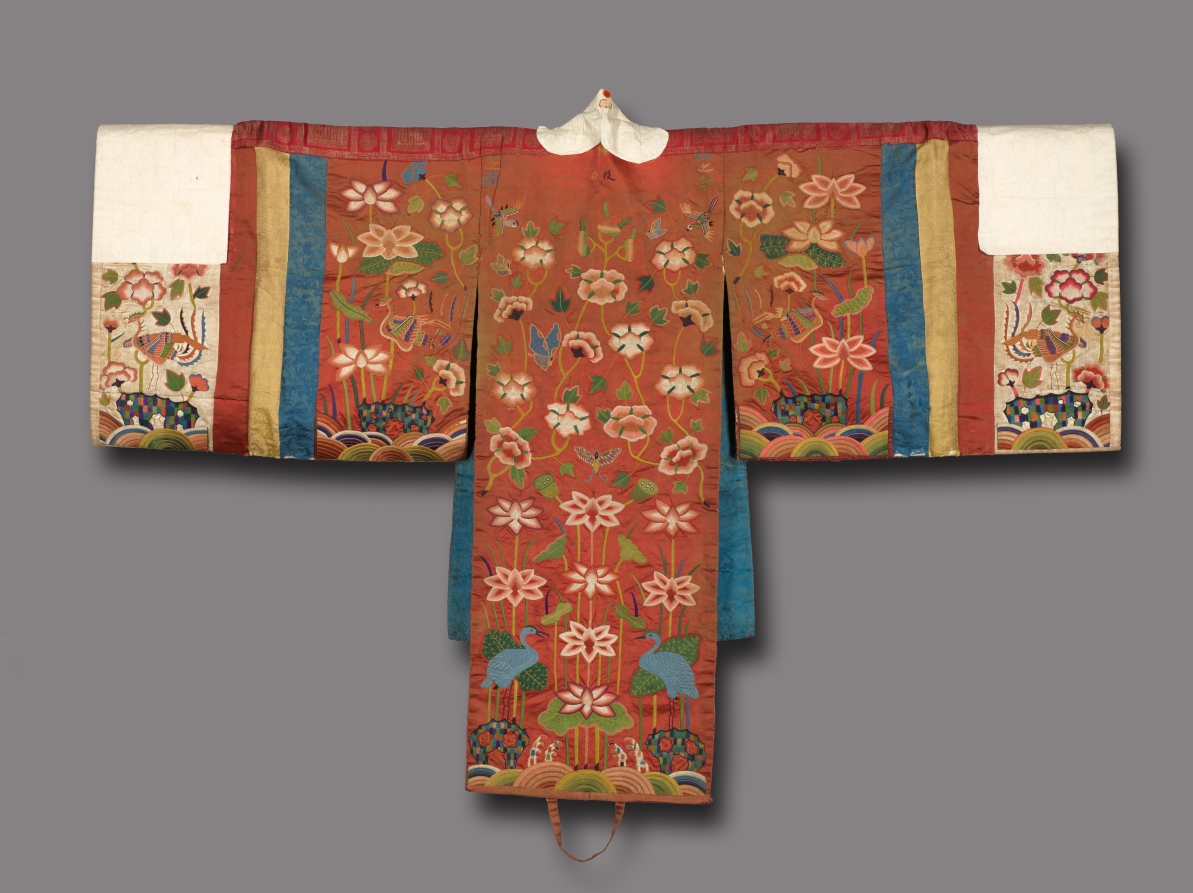
The Hwarot: A Study in Imperial Silk Weaving and the Preservation of Tangible Heritage
Introduction: The Artifact as a Testament to Craft
The bridal robe, known as the Hwarot, represents one of the most refined expressions of Korean imperial silk weaving. As a Senior Heritage Specialist at the Lauren Fashion Heritage Lab, I approach this artifact not merely as a garment but as a material document of dynastic power, ritual significance, and technical mastery. The Hwarot, traditionally worn by Korean royal brides during the Joseon Dynasty (1392–1910), is a masterpiece of silk craftsmanship, embodying a legacy that intertwines the threads of imperial patronage, artisanal precision, and cultural continuity. This paper examines the Hwarot through the lens of its materiality—specifically, the silk that defines its structure and symbolism—while situating it within the broader context of imperial silk weaving traditions that have shaped East Asian heritage.
Materiality: The Silk of the Hwarot
Silk, as the foundational material of the Hwarot, is not a passive substrate but an active participant in the garment’s narrative. The robe is constructed from multiple layers of handwoven silk, typically a combination of thin, lustrous satin for the outer layer and a heavier, more durable damask for the inner lining. The silk used in the Hwarot is sourced from the Bombyx mori silkworm, cultivated under strict imperial oversight to ensure uniformity in filament thickness, tensile strength, and sheen. This silk is then dyed using natural pigments derived from plants, minerals, and insects—such as cinnabar for red, indigo for blue, and gardenia for yellow—each color carrying specific symbolic meanings: red for prosperity and protection, blue for eternity, and yellow for imperial authority.
The weave structure of the Hwarot is equally significant. The outer silk is often woven in a satin weave, which creates a smooth, reflective surface that enhances the vibrancy of the embroidered motifs. This satin is typically a five-harness or eight-harness weave, requiring exceptional skill to maintain uniformity across the garment’s expansive panels. The inner layer employs a plain weave for structural stability, while the sleeves and collar may incorporate a twill weave to allow for flexibility and movement. The materiality of silk, therefore, is not merely aesthetic; it is functional, ensuring the robe drapes with gravity and endures the rigors of ceremonial use.
The Legacy of Imperial Silk Weaving
The Hwarot is a direct descendant of the imperial silk weaving traditions that flourished under the Joseon Dynasty’s Royal Silk Bureau (Sangbang). This bureau, established in the 14th century, was a state-controlled institution that oversaw every stage of silk production, from sericulture to weaving to embroidery. The silk used for the Hwarot was reserved exclusively for the royal family, with strict sumptuary laws prohibiting its use by commoners. The weaving process was labor-intensive, requiring months of work by master weavers who were trained from childhood in the geomungo (a traditional Korean loom) and the jikgeum technique, which involves weaving supplementary weft threads to create intricate patterns.
The legacy of imperial silk weaving is evident in the Hwarot’s embroidery, which is executed using gold-wrapped silk threads and silk floss. The motifs—phoenixes, peonies, butterflies, and cranes—are not decorative but symbolic, representing marital harmony, wealth, longevity, and fidelity. The gold threads are made by wrapping a thin strip of gold leaf around a silk core, a technique that requires extraordinary precision to prevent breakage. The embroidery is done in a satin stitch and couching stitch, with the gold threads laid flat and secured with fine silk filaments. This technique, known as jikgeum, is a hallmark of Korean imperial silk weaving and is rarely found in non-royal garments.
Conservation and Ethical Stewardship
Preserving a Hwarot requires a deep understanding of its material vulnerabilities. Silk is a protein-based fiber that degrades over time due to light, humidity, and handling. The gold threads, while durable, can tarnish and become brittle. As a heritage specialist, I advocate for a conservation-first approach that prioritizes the artifact’s physical integrity over display. The Hwarot should be stored in a climate-controlled environment with relative humidity between 45–55% and temperatures between 18–20°C. It must be kept in acid-free tissue paper and archival boxes, with minimal exposure to UV light. When displayed, it should be mounted on a custom-made mannequin that distributes weight evenly to avoid stress on the seams.
Ethical stewardship also involves cultural sensitivity. The Hwarot is not merely an object of aesthetic interest; it is a sacred garment imbued with ritual significance. Its removal from its original context—whether a royal tomb, a temple, or a family heirloom—must be justified by clear research objectives. The Lauren Fashion Heritage Lab adheres to the UNESCO 1970 Convention on the Means of Prohibiting and Preventing the Illicit Import, Export, and Transfer of Ownership of Cultural Property. We work closely with Korean heritage institutions, such as the National Museum of Korea and the Korean Cultural Heritage Administration, to ensure that any study or exhibition of a Hwarot is conducted with the consent and collaboration of the source community.
Conclusion: The Hwarot as a Living Legacy
The Hwarot is more than a bridal robe; it is a tangible link to the imperial silk weaving traditions that defined East Asian luxury for centuries. Its silk, woven with precision and dyed with intention, speaks to a time when craftsmanship was inseparable from power. As we preserve and study these artifacts, we must remember that they are not static relics but dynamic documents of human ingenuity and cultural expression. The legacy of imperial silk weaving lives on in every thread of the Hwarot, reminding us that heritage is not about the past—it is about the future we choose to protect.
—End of Artifact—