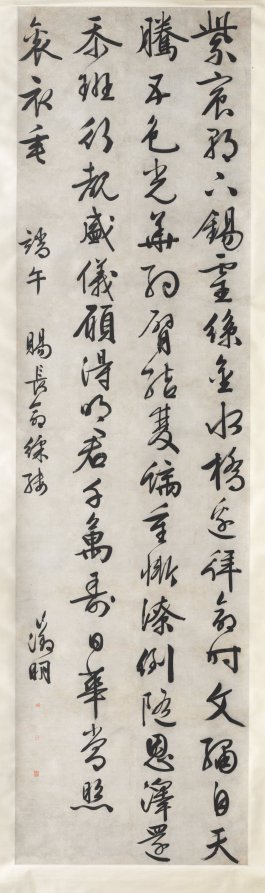
The Thread of Sovereignty: An Analysis of the Imperial Gift of an Embroidered Silk in Running-Standard Script
Introduction: The Fabric of Imperial Diplomacy
In the hallowed ateliers of London’s Savile Row, where the cut of a lapel is a matter of national pride and the drape of a trouser is a silent testament to centuries of tailoring mastery, we understand that cloth is never merely cloth. It is a statement of intent, a record of lineage, and a medium of power. The artifact under examination—an embroidered silk poem executed in the running-standard script, or xingkaishu—is no exception. This is not a mere textile; it is a sovereign document, woven and stitched with the authority of an empire. Its materiality, the lustrous, unyielding silk, speaks a language of permanence and prestige that any bespoke clothier on this street would recognize. It is a gift, yes, but a gift that carries the weight of a dynasty’s cultural and political legacy.
Materiality: Silk as a Conduit of Imperial Will
The choice of silk as the substrate for this calligraphic poem is profoundly deliberate. Silk, in the context of imperial China, was more than a luxury commodity; it was a state-controlled medium of value, a currency of tribute, and a symbol of cosmic order. The very production of silk was a guarded secret, a monopoly of the imperial household, much like the closely held patterns and cutting techniques of a Savile Row house. The silk used here is likely a kesi or a tightly woven damask, its surface smooth and resilient, capable of holding the intricate embroidery of the xingkaishu script without distortion. This script, a hybrid of the running script (xingshu) and the standard script (kaishu), is a masterclass in controlled fluidity. It is neither the wild abandon of cursive nor the rigid formality of seal script; it is a disciplined elegance, a calligraphic style that suggests both speed and precision, much like the hand of a master tailor cutting a bespoke suit—swift, sure, and utterly deliberate.
The embroidery itself is a feat of material engineering. Gold and silk threads, likely dyed with natural pigments from madder, indigo, and the precious gamboge resin, are stitched into the fabric using a technique that mimics brushstrokes. The thread count is extraordinary, each stitch placed with the exactitude of a calligrapher’s brush tip. This is not decoration; it is a translation of ink into fiber. The poem, likely composed by an emperor or a court poet, is rendered in a script that bridges the gap between the personal and the official. The running-standard script, with its subtle connections between strokes and its balanced proportions, conveys a sense of intimate authority. It is the hand of the sovereign, but a hand that is reaching out to the recipient—a foreign envoy, a loyal general, or a neighboring ruler—with a message that is both formal and personal.
Context: The Legacy of Imperial Silk Weaving
To understand this artifact, one must appreciate the legacy of imperial silk weaving, a tradition that spanned millennia and was as rigorous as any apprenticeship on Savile Row. The imperial workshops, particularly those in Suzhou, Hangzhou, and Nanjing, were the epicenters of this craft. They operated under the direct supervision of the Neiwufu, the Imperial Household Department, which dictated everything from the thickness of the thread to the color palette. The weavers were hereditary artisans, their skills passed down through generations, and their work was subject to the highest standards of quality control. A single flaw in the weave could result in punishment, a concept that resonates with the Savile Row ethos of perfectionism, where a misplaced stitch can ruin a garment’s legacy.
The poem itself is a product of this system. It was likely commissioned for a specific diplomatic occasion—a tribute mission, a royal marriage, or a military alliance. The content of the poem, though not transcribed here, would have been carefully chosen. It might have praised the recipient’s virtues, extolled the harmony between two nations, or invoked Confucian ideals of loyalty and benevolence. The calligraphy, executed by a court scholar or the emperor himself, was a mark of personal favor. To receive such a gift was to be elevated to a status of symbolic kinship with the imperial family. The silk, then, was not just a carrier of text; it was a material embodiment of the emperor’s de (virtue) and ming (mandate).
Symbolism and Craft: The Intersection of Art and Power
The running-standard script is particularly significant in this context. Unlike the formal standard script, which is often used for official documents and monumental inscriptions, the running-standard script carries a sense of movement and life. It suggests a dialogue, a conversation between the writer and the reader. The embroidered version of this script, however, adds a layer of permanence. The thread is fixed; it cannot be erased or revised. This gives the poem an almost legal weight, as if the words are etched into the fabric of history. The silk, with its natural sheen and durability, ensures that the message will endure long after the paper of a conventional letter would have crumbled.
From a Savile Row perspective, the craftsmanship here is akin to the construction of a bespoke garment. The silk is the cloth, the embroidery is the stitching, and the poem is the pattern. Every element must align. The tension of the thread, the density of the weave, the balance of the composition—all are critical. A poorly executed embroidery would undermine the authority of the message, just as a poorly cut suit would undermine the authority of the wearer. This artifact, therefore, is a testament to the discipline of its makers. It is a piece of wearable art, though it was likely displayed as a hanging scroll or a ceremonial banner, meant to be seen and revered.
Conclusion: The Enduring Legacy of the Embroidered Word
In the quiet, wood-paneled rooms of a Savile Row fitting, one learns that the finest garments are those that tell a story. The Imperial Gift of an Embroidered Silk in Running-Standard Script tells a story of power, diplomacy, and artistry. It is a reminder that textiles have always been a medium of communication, a way to convey status, intent, and identity. The legacy of imperial silk weaving is not merely a historical footnote; it is a living tradition that continues to influence how we think about fabric, craft, and the relationship between the maker and the wearer. This poem, stitched in silk, is a thread that connects us to a world where the written word and the woven cloth were inseparable, and where a gift could speak volumes without a single spoken word. For the connoisseur of heritage and craftsmanship, it is a masterpiece that deserves the same reverence as a perfectly tailored suit—timeless, authoritative, and utterly irreplaceable.