← BACK TO ARCHIVES
Heritage-Black
Heritage Synthesis: Terracotta fragments of closed shapes
Curated on Jul 23, 2026 // Node: LDN-01
From Attic Terracotta to Old Money Silhouettes: The Unseen Dialogue Between Fragment and Form
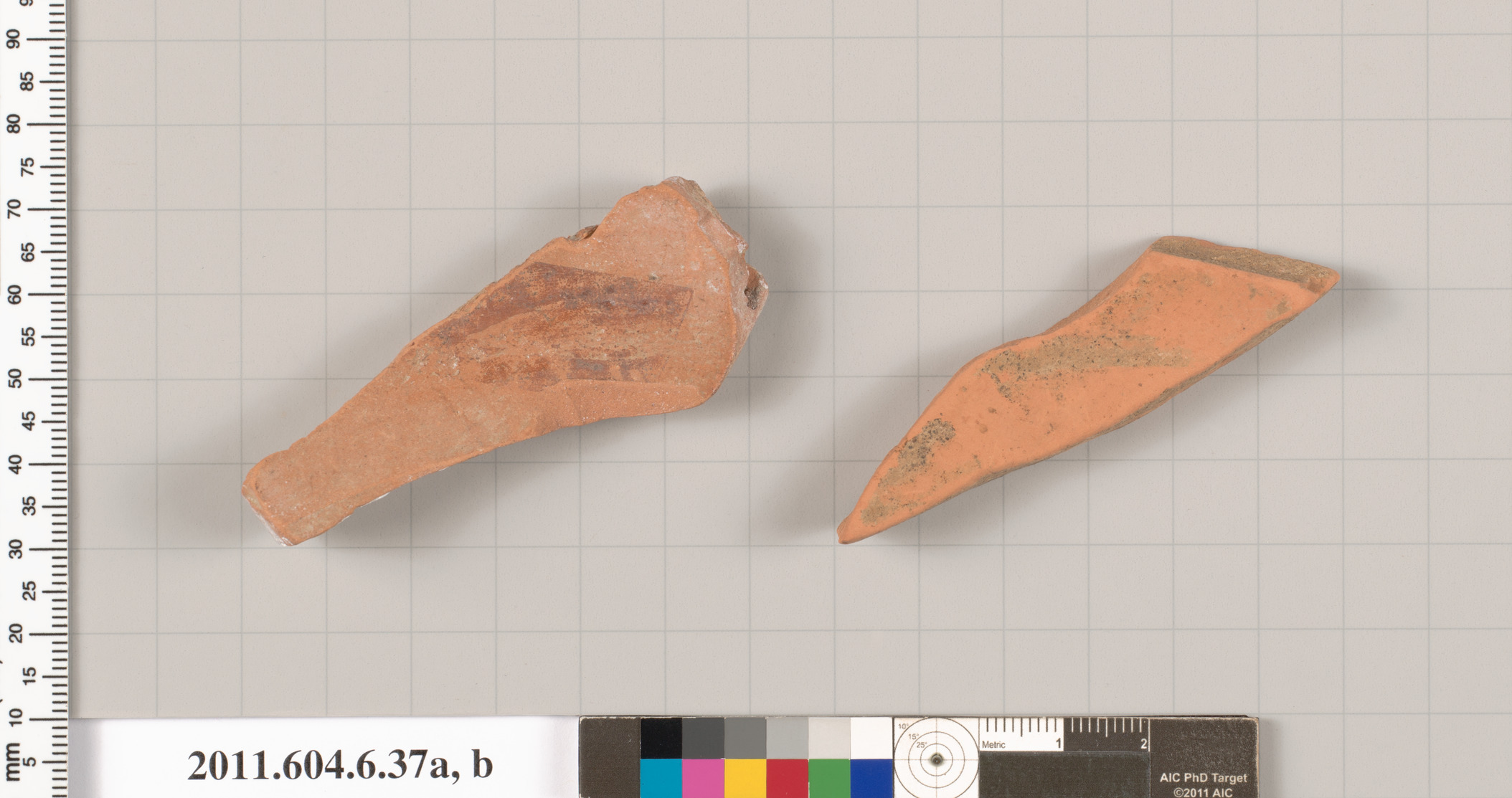
The internal genetic code of Lauren Fashion Heritage Lab reveals a profound dialectic between the contemplative austerity of Song dynasty scholar’s rocks and the imperious symmetry of Qing dynasty door ring holders. Yet, when we turn our analytical lens to a seemingly disparate artifact—the terracotta fragments of closed shapes from Attic Greece—a third pole emerges in this aesthetic triad. These humble, broken vessels, unearthed from the red earth of the Mediterranean, do not speak of cosmic mountains or divine guardians. They speak of the *hand*, the *kiln*, and the *everyday*. For the 2026 Old Money silhouette, these fragments offer a radical re-reading of heritage: not as opulence preserved, but as form distilled to its essential, unadorned integrity.
I. The Aesthetic of the Fragment: A Counterpoint to Chinese Dualities
The Song scholar’s rock embodies a “chaotic generation” of form, where nature’s randomness is miniaturized for intellectual contemplation. The Qing pushou embodies “ordered dominion,” a rigid, symmetrical assertion of power. The Attic terracotta fragment, however, occupies a liminal space. It is neither a complete microcosm nor a finished symbol. It is a *trace*—a surviving piece of a once-whole object whose original function (storage, transport, ritual) is now secondary to its material presence. Its color is not the “silent black-white” of the scholar’s rock nor the “deterrent gold” of the pushou. It is the raw, fired earth: a spectrum of burnt umber, ochre, and rust, often darkened by centuries of burial. This is a palette of *authenticity through age*, a color that cannot be synthesized but only earned.
For the Old Money aesthetic, which prizes lineage and quiet confidence over transient trends, this terracotta palette becomes a powerful counter-narrative to the “deterrent” gold of the pushou. Where gold shouts, terracotta whispers. Where the scholar’s rock invites a gaze into the infinite, the terracotta fragment invites a touch—a connection to the potter’s wheel, the kiln’s heat, and the earth’s patience. This is the color of a well-worn leather loafer, a cashmere sweater that has been passed down for three generations, a linen suit whose creases tell stories. It is the color of *patina*, not polish.
II. Compositional Lessons: The Closed Shape as a Silhouette Archetype
The “closed shapes” of the Attic fragments are critical. Unlike the open, “leaky” forms of the scholar’s rock (with its “wrinkles, thinness, leaks, and transparency”), or the outward-projecting, confrontational form of the pushou, the terracotta fragment is fundamentally *enclosed*. It curves inward. It holds space. Its broken edges are not invitations to wander, but boundaries that define a lost whole. This compositional logic—of containment, of volume, of a form that is self-sufficient yet incomplete—maps directly onto the 2026 Old Money silhouette.
Consider the archetypal Old Money garment: the double-breasted blazer, the tailored overcoat, the sheath dress. These are not garments that “grow” organically like a scholar’s rock, nor do they “assert” like a pushou. They *enclose* the body. They create a defined, closed shape. The terracotta fragment teaches us that the power of such a silhouette lies not in its decoration, but in its *volume and restraint*. The slight drape of a wool coat, the precise shoulder of a jacket, the uninterrupted line from neck to hem—these are the compositional equivalents of the fragment’s curved wall. The “broken edge” of the fragment translates into the *unfinished hem*, the *slightly frayed cuff*, the *natural wrinkle* of a linen trouser. These are not signs of decay, but of *narrative*—a garment that has lived, that has been worn, that is not afraid of its own material history.
III. Material Transmutation: From Earthenware to Heritage Textiles
The terracotta fragment’s materiality—its porousness, its weight, its subtle texture—offers a direct inspiration for fabric selection in the 2026 Old Money wardrobe. The “silent black-white” of the scholar’s rock might be translated into a raw silk or a matte crepe, but the terracotta demands something more grounded. It demands *wool*, *linen*, *heavy cotton*, *unbleached cashmere*. These are fabrics that, like terracotta, are born of natural processes. They breathe. They age. They develop a nap, a softness, a unique drape that synthetic fibers can never replicate.
Specifically, the “gradient” of the terracotta—the subtle shift from a darker, burnt edge to a lighter, inner core—can be replicated in textile design through *yarn-dyed weaves* and *natural dye gradients*. A Donegal tweed, with its flecks of color against a neutral base, echoes the fragment’s visual complexity. A heavyweight linen, slubby and uneven, mirrors the fragment’s surface texture. The “deterrent gold” of the pushou is here replaced by the *quiet gleam* of a mother-of-pearl button, the *soft sheen* of a silk lining, the *subtle luster* of a well-brushed wool. The goal is not to dazzle, but to *endure*.
IV. The 2026 Silhouette: A Synthesis of Fragment and Form
How, then, does the Attic terracotta fragment directly inform the 2026 Old Money silhouette? It does so through three key principles:
1. **The Principle of the Enclosed Volume:** The silhouette will favor *closed shapes*—the cocoon coat, the A-line skirt, the straight-leg trouser. These are not restrictive, but *protective*. They create a personal space, a portable architecture, much like the fragment once defined the interior of a vessel. The shoulder line will be soft but defined, the waist gently suggested, the hem falling to a point of natural balance. This is the antithesis of the exaggerated, “chaotic” volumes of avant-garde fashion or the rigid, “ordered” power suits of the 1980s.
2. **The Principle of the Honest Edge:** The “broken edge” of the fragment will be celebrated, not hidden. This manifests as *raw hems*, *unlined jackets*, *visible seams*, *unfinished cuffs*. These details are not sloppy; they are *intentional markers of craftsmanship*. They signal that the garment was made by hand, that the fabric was cut and sewn with respect for its natural behavior. This is the Old Money equivalent of the scholar’s “leaky” aesthetic—an invitation to look closer, to appreciate the process, not just the product.
3. **The Principle of the Earth-Bound Palette:** The color story for 2026 will be dominated by *terracotta tones*—not as a literal color, but as a *philosophy of color*. This means a deep, rich palette of *burnt sienna*, *umber*, *slate*, *clay*, *ivory*, and *charcoal*. These are colors that do not shout. They are the colors of the earth after rain, of ancient pottery shards, of a worn leather saddle. They are the colors of *heritage*, not of fashion. They work in harmony with the human complexion, creating a unified, grounded presence.
V. The Transmutation of Spirit: From Vessel to Vestment
The most profound lesson from the Attic terracotta fragment is its *spirit of utility*. These were objects made to be used, to hold oil, wine, or grain. Their beauty was a byproduct of their function. The 2026 Old Money silhouette must reclaim this ethos. A garment is not a sculpture to be admired on a hanger; it is a vessel for the body, for movement, for life. The “closed shape” of a coat should feel like a sanctuary. The “honest edge” of a hem should feel like a quiet statement of confidence. The “earth-bound palette” should feel like a return to something essential.
This is where the dialectic with the Chinese artifacts completes itself. The scholar’s rock represents the *contemplation of nature*. The pushou represents the *assertion of order*. The Attic terracotta fragment represents the *acceptance of impermanence*. It is the most humble of the three, yet it carries the most profound lesson for a heritage house like Lauren Fashion. True luxury is not about the perfect, unblemished object. It is about the object that has been *lived with*, that bears the marks of time, that connects its wearer to a lineage of hands and earth and fire. The 2026 Old Money silhouette, informed by this fragment, will not be new. It will feel *ancient*—as if it has always existed, waiting to be rediscovered in the red earth of our collective memory.
Heritage Lab Insight
Genetic Bridge: Archive node focusing on Heritage-Black craftsmanship.