Vessel, Visage, and Vestment: The Terracotta Pelike and the 2026 Silhouette of Permanence
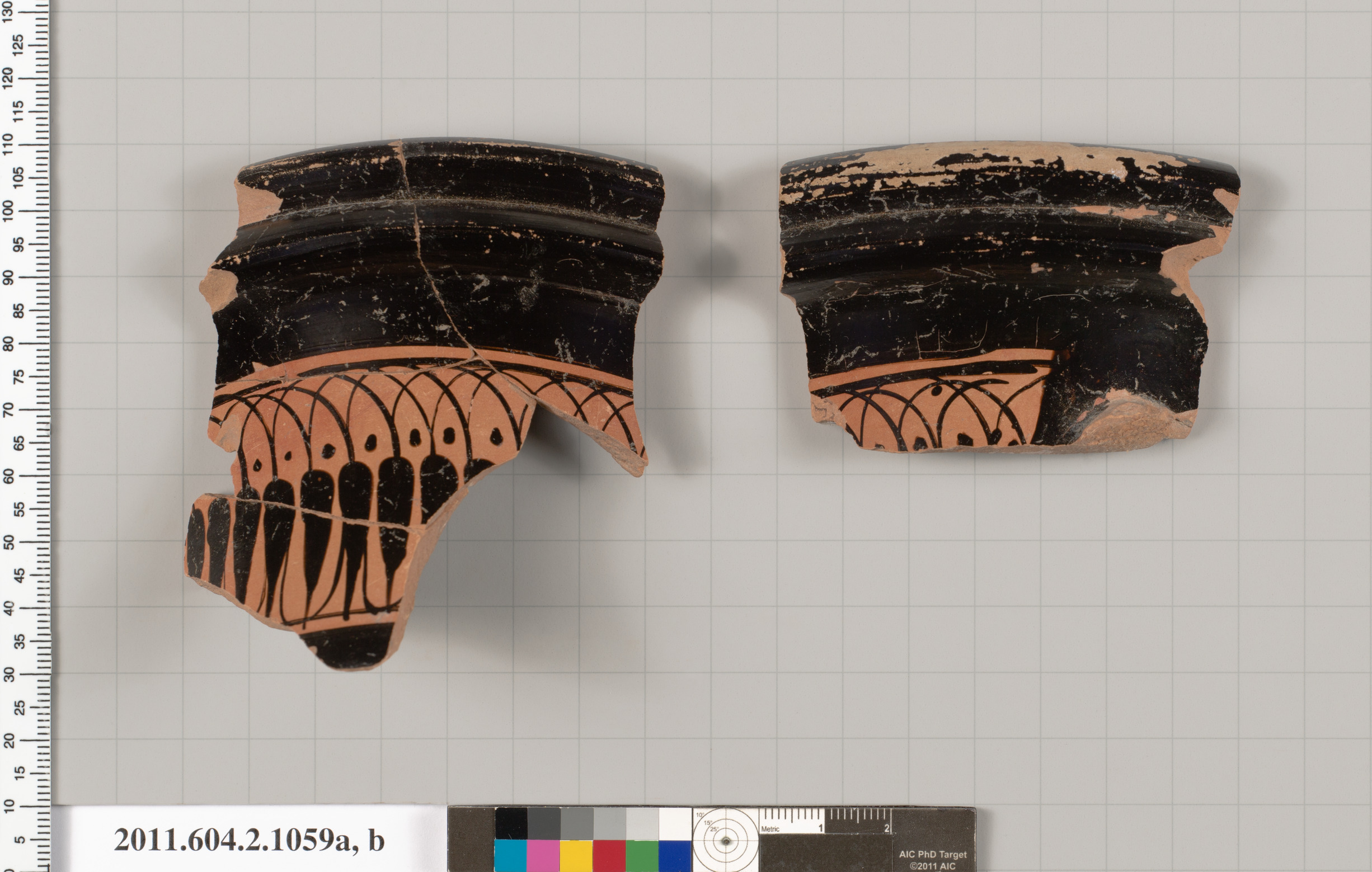
The internal genetic code of Lauren Fashion, as deciphered from the comparative analysis of the Cup with Dragon Handles and the Head of a ruler, establishes a foundational thesis: that enduring authority is articulated through the aesthetic formalization of order, transforming ephemeral power into tactile, timeless form. This discourse finds a profound and resonant interlocutor in the Terracotta fragments of an Attic pelike (jar). This Hellenic vessel, while distinct in origin and explicit function from the Shang and Near Eastern artifacts, engages in the same fundamental project of encoding social and cosmic structures within a crafted object. By synthesizing this museum artifact with our internal heritage code, we can project a definitive silhouette for the 2026 "Old Money" aesthetic—one that moves beyond mere nostalgia or display to embody a modern, silent authority rooted in architectural form, ritualized utility, and the profound dignity of containment.
The Pelike: Democratic Vessel, Ordered Cosmos
Unlike the singular, ritualistic Dragon Cup or the iconic Ruler's Head, the Attic pelike occupies a more democratic, yet no less symbolically charged, realm. A sturdy jar used for storing and pouring wine or oil, its terracotta substance speaks of earthly utility. Yet, its surviving fragments—often adorned with precise black-figure or red-figure scenes—reveal its higher purpose as a narrative vessel. The pelike did not merely contain liquid; it contained mythos. The painted narratives of gods, heroes, and civic life imposed a visual order upon its curved surface, transforming a domestic or funerary object into a microcosm of the Greek worldview. Its aesthetic power lies in this duality: a humble, functional shape serving as the canvas for ideals of harmony, heroism, and the human place within a divine order. The vessel’s form—stable, balanced, with a deliberate center of gravity—is itself an architecture of calm assurance. It does not shout; it contains, and in that containment, it asserts a quiet, self-evident legitimacy.
Informing the 2026 Silhouette: From Ceramic Code to Sartorial Architecture
The 2026 Old Money silhouette, informed by this tripartite heritage dialogue, will reject ostentatious logos and transient trends. It will instead be built upon three pillars derived from our artifacts: Structured Containment, Narrative Surface, and Ritualized Proportion.
First, Structured Containment draws directly from the pelike’s vesselhood and the internal code’s concept of “accommodating control.” The silhouette will favor architectural shapes that define and elegantly contain the form. Think of tailored coats and dresses with a pelike-like sense of balanced volume—not oversized, but deliberately, confidently proportioned. Seaming will emulate the crafted seams of pottery, creating a sense of assembled, permanent form. Darts and construction will be engineered not to constrain, but to create a vessel of self-possession, mirroring the way the pelike’s walls contain their precious contents and the Dragon Cup ritualizes the act of holding. The power is in the integrity of the form itself.
Second, Narrative Surface evolves from the pelike’s painted friezes and the symbolic language of our foundational artifacts. This will not manifest as literal prints, but as the meticulous language of tailoring and fabric manipulation. The “narrative” becomes one of heritage craftsmanship: a precise pinstripe that echoes the painted lines on ceramic, a jacquard weave whose subtle pattern recalls ancient motifs abstracted, a manipulation of matte and gloss finishes that plays like light on terracotta. The surface tells a story of expertise and layered meaning, much as the pelike narrated myths and the Dragon Cup encoded cosmology in its relief. The effect is one of depth and quiet communication to the discerning eye.
The Synthesis: The Modern Silhouette as Living Monument
Finally, Ritualized Proportion synthesizes the monumental stillness of the Ruler’s Head with the pelike’s utilitarian grace. The 2026 silhouette will embrace lengths and volumes that imply ceremony and timelessness—the precise mid-calf length of a skirt, the exacting roll of a sleeve, the unwavering line of a trouser that falls without break. This is proportion as ritual, creating a sense of immutable rightness. Fabrics will be chosen for their substantive, “carvable” qualities—wool crepes with the density of stone, structured cottons with the body of clay, heritage-blacks that absorb light with the depth of fired terracotta or basalt. The color palette will be inherently archaeological: fragments of white, earth, oxide red, and, most critically, the absolute, non-reflective Heritage-Black that serves as our category anchor. This black is not a mere absence of color; it is the positive presence of depth, the void that contains all potential, the modern equivalent of the eternal stone or the ritual bronze.
In conclusion, the 2026 Old Money silhouette, guided by the dialogue between our internal genetic code and the Attic pelike, will be one of embodied permanence. It will cloth the wearer not in wealth, but in legitimacy. It moves beyond the “quiet luxury” of inconspicuous consumption to the “silent authority” of aesthetic order. Like the pelike, it is a vessel for modern life, structured and meaningful. Like the Ruler’s Head, it communicates through impeccable, impersonal form. And like the Dragon Cup, it ritualizes the everyday, transforming the act of dressing into a reaffirmation of an inner, cultivated cosmos. This is the heritage of Lauren Fashion: not reproducing the past, but reconstructing its profound aesthetic principles for a contemporary figure of enduring authority.