← BACK TO ARCHIVES
Heritage-Black
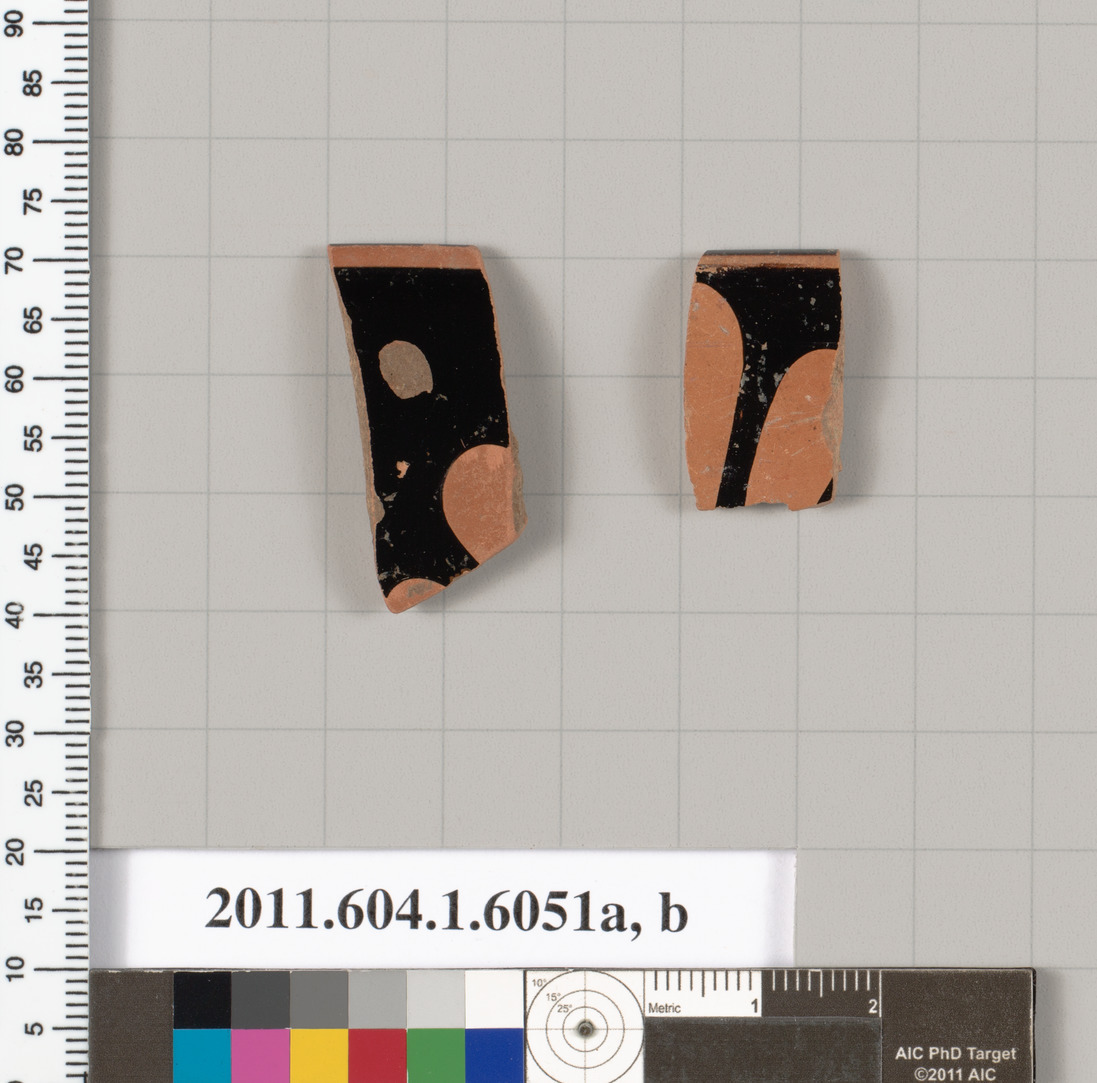
Heritage Synthesis: Terracotta rim fragments of kylikes (drinking cups)
Curated on Jul 24, 2026 // Node: LDN-01
The Terracotta Dialectic: Attic Kylikes and the Architecture of Old Money Silence in the 2026 Silhouette
The terracotta rim fragments of Attic kylikes—those shallow, two-handled drinking cups central to the Greek symposium—are not merely broken pottery. They are fragments of a philosophical apparatus. In the context of the Lauren Fashion Heritage Lab’s internal genetic code, which juxtaposes the *Death of Socrates* with the *Stele with Sakyamuni and Bodhisattvas*, these kylikes become the physical vessel through which the “limit moment” is ingested. The symposium was a ritual of controlled ecstasy, a space where citizens debated truth while drinking diluted wine. The kylix, therefore, is an object of *transition*: from sobriety to intoxication, from the mundane to the dialectical. For the 2026 Old Money silhouette, this fragment dictates a design language of *contained excess* and *geometric restraint*—a form of sartorial stoicism that speaks not through ornament, but through the tension between the vessel and its emptiness.
I. The Fragment as a Structural Mandate: Line, Void, and the Heroic Stance
The surviving rim fragments of these kylikes reveal a masterful economy of line. The potter’s wheel left concentric ridges, subtle undulations that catch light and shadow. The black-figure or red-figure decoration, now chipped, once depicted gods, heroes, or symposium scenes. Yet what remains is the *structure*—the clean, unbroken curve of the lip. This is the same aesthetic logic that governs the depiction of Socrates’ death in the internal archive: “lines concise and powerful, the body composed like stone… a highly geometric treatment that transforms tragedy into ritual.” The 2026 Old Money silhouette must adopt this *geometric heroism*.
Specifically, this manifests in the **shoulder line** of a tailored jacket. Just as the kylix rim defines the boundary of the liquid, the shoulder seam must define the boundary of the body. For 2026, we abandon the soft, deconstructed shoulder of the 1990s and the exaggerated power shoulder of the 1980s. Instead, we adopt a **“symposium shoulder”**: a precise, slightly architectural cut that sits like a terracotta rim on the clavicle. The fabric—a heavy, matte cashmere or a dense wool crepe in heritage-black—must feel like fired clay: substantial, yet not brittle. The lapel, too, must be a *fragment*—a clean, sharp notch that suggests a missing narrative, a story left untold. This is the visual equivalent of the kylix’s missing center: the wearer’s presence completes the vessel.
II. Color as Mineral Philosophy: The Palette of the Limit Moment
The internal genetic code emphasizes the chromatic opposition between Greek and Indian aesthetics: the “cool austerity” of the Socratic death scene versus the “warm, enduring mineral pigments” of the Buddha’s parinirvana. The terracotta kylix, however, offers a third path—a *synthesis*. Its raw, iron-rich clay, fired to a deep ochre or burnt sienna, is neither the cold white of marble nor the vibrant lapis of a Buddhist halo. It is the color of the *earth from which the vessel was thrown*. For the 2026 Old Money palette, this dictates a move away from the pure, sterile black of classic minimalism.
The new heritage-black is a **“terracotta-infused black”** —a black that has been “fired” with a hint of umber, a whisper of rust. It is the black of a kylix that has been buried for two millennia, its surface mottled with the memory of soil. This is not a color of absence, but of *presence under pressure*. In a wool suit, this black absorbs light differently; it has depth, a slight graininess that reads as “ancient” rather than “new.” For the 2026 silhouette, this is applied to the **trouser** and the **overcoat**. The trousers should fall with a slight, deliberate weight, like a draped himation, but cut with the precision of a modern architect. The overcoat, in this terracotta-black, becomes a *stele*—a standing stone that announces the wearer’s arrival without a word.
III. The Symmetry of Silence: The Kylix Handle and the Sleeve
The kylix’s defining feature is its two horizontal handles, designed for the reclining symposiast to lift the cup without rising. These handles are not decorative; they are *functional anchors*. They create a visual tension between the circular bowl and the horizontal extension. In the 2026 silhouette, this translates directly into the **sleeve construction**. The sleeve must not merely hang; it must *extend* from the body with a similar logic. A dropped shoulder, a slight puff at the cap, or a structured bishop sleeve—all these echo the kylix handle’s gesture of reaching out while remaining grounded.
Consider the **cashmere coat** for Autumn/Winter 2026. The sleeve is cut in a single, unbroken piece from shoulder to cuff, with a subtle, internal seam that mimics the kylix’s rim. The cuff itself is finished with a narrow band of grosgrain or a raw, unhemmed edge—a *fragment* that refuses to be completed. This is the “Socratic sleeve”: it points upward, toward an invisible ideal, while the body remains rooted in the symposium of daily life. The wearer, like the philosopher, is caught between the material and the immaterial.
IV. The Draped Body: From Symposium to Nirvana
The internal archive notes that the Buddha’s *Stele* presents “robe lines flowing like water, layered washes creating a timeless tenderness.” This is the *Indian* counterpoint to the Greek *kylix*. While the kylix is a vessel of *containment*, the Buddha’s robe is a vessel of *release*. The 2026 Old Money silhouette must hold both in tension. The suit is structured (Greek), but the layering is fluid (Indian).
This is achieved through the **introduction of a draped scarf or shawl** worn *under* the structured jacket. This shawl, in a fine silk or a whisper-weight cashmere, is dyed in a mineral pigment—a faded cinnabar, a muted malachite—that echoes the Buddhist palette. It is not a scarf in the traditional sense; it is a *pallium*, a fragment of the Buddha’s robe that softens the Socratic rigor of the jacket. The wearer’s neck becomes the *kylix rim*; the scarf is the wine that spills over. This juxtaposition creates a visual dialogue: the hero’s death and the Buddha’s release, contained within a single silhouette.
V. Conclusion: The Fragment as the Foundation of Old Money
The terracotta kylix fragments teach us that true luxury is not about completeness, but about *the power of the fragment*. An Old Money wardrobe does not shout; it whispers through broken edges, through the patina of use, through the precise geometry of a shoulder that has been “fired” into shape. The 2026 silhouette, informed by this Attic shard, rejects the new in favor of the *eternal*. It is a suit that has been through the symposium, that has held the hemlock and the wine, that has witnessed the philosopher’s finger pointing upward and the Buddha’s hand resting in peace.
The final garment—a heritage-black coat with a terracotta undertone, a symposium shoulder, and a mineral-draped scarf—is not a costume. It is a *vessel*. It holds the wearer’s silence, their dignity, their confrontation with the limit moment. It is, in the deepest sense, a piece of philosophy made wearable. And in that, it is the truest expression of Old Money: the wealth that knows it is temporary, and so builds for eternity.
Heritage Lab Insight
Genetic Bridge: Archive node focusing on Heritage-Black craftsmanship.