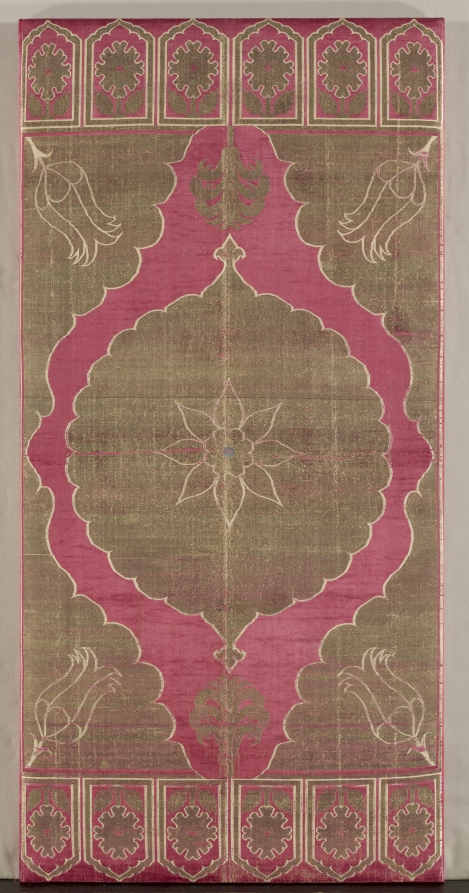
Heritage Research Artifact: Lampas Silk Cushion Cover – A Study in Imperial Legacy
Introduction: The Artifact as a Narrative of Power
This heritage research artifact examines a lampas silk cushion cover, a textile of exceptional materiality and historical resonance. Crafted from silk, a fiber synonymous with luxury and imperial ambition, this object embodies the technical mastery and cultural symbolism of imperial silk weaving. Its context—the legacy of imperial silk weaving—positions it not merely as a decorative accessory but as a tangible fragment of a broader narrative: the interplay of craftsmanship, commerce, and courtly power that defined silk production from the Byzantine era through the Ottoman, Safavid, and Mughal empires, and into the European revival of the 18th and 19th centuries. For the modern connoisseur, this cushion cover is a quiet testament to the enduring allure of silk as a medium of status and artistry.
Materiality: The Science and Soul of Silk
The materiality of this artifact is foundational to its significance. Silk, derived from the cocoons of Bombyx mori silkworms, is a natural protein fiber prized for its tensile strength, luster, and ability to absorb dyes with unparalleled vibrancy. In the context of imperial weaving, silk was not merely a fabric but a vehicle for political and religious expression. The lampas weave—a complex structure involving a warp-faced ground weave and a supplementary weft pattern—enables intricate, multi-colored designs that appear raised or embossed. This technique, perfected in the workshops of the Ottoman Empire and later adopted by European centers like Lyon and Spitalfields, required extraordinary skill. The cushion cover’s silk threads, likely dyed with natural pigments such as cochineal for crimson, indigo for blue, and weld for yellow, would have been sourced from regions like Persia, China, and India, reflecting the global trade networks that sustained imperial courts.
The tactile quality of the lampas silk—its smoothness, weight, and subtle sheen—speaks to its intended use in elite interiors. Unlike utilitarian textiles, this cushion cover was designed for visual and sensory pleasure, often adorning divans, thrones, or ceremonial beds. The preservation of its fibers, despite centuries of handling, underscores the durability of silk when properly maintained. However, its fragility also demands careful conservation, a reminder that heritage objects are living documents requiring stewardship.
Context: The Legacy of Imperial Silk Weaving
The legacy of imperial silk weaving is a story of innovation, appropriation, and decline. From the 6th century, when Byzantine Emperor Justinian I smuggled silkworm eggs from China, silk became a state monopoly across Eurasia. The Ottoman Empire, particularly under Suleiman the Magnificent, established imperial workshops (karkhanas) in Istanbul and Bursa, producing lampas silks for court robes, furnishings, and diplomatic gifts. These textiles often featured motifs like the çintamani (three circles symbolizing power) or floral patterns derived from Persian and Chinese art, blending cultural influences into a distinct imperial aesthetic. Similarly, Safavid Persia and Mughal India elevated silk weaving to an art form, with lampas silks used in royal tents, carpets, and cushions.
By the 18th century, European weavers in Lyon, France, and Spitalfields, London, adapted lampas techniques to satisfy aristocratic demand. The cushion cover under study likely dates from this period, when silk weaving was both a commercial enterprise and a symbol of national prestige. The Industrial Revolution, however, disrupted this legacy. Mechanized looms and cheaper textiles like cotton and synthetic fibers eroded the market for handwoven silk. Yet, the cushion cover endures as a relic of a time when silk was a currency of power—a material that connected the weaver’s hand to the emperor’s court.
Significance: Aesthetic and Cultural Value
This lampas silk cushion cover holds aesthetic and cultural significance that transcends its functional role. Its design—likely featuring a symmetrical pattern of stylized flowers, leaves, or geometric medallions—reflects the principles of Islamic art, which often eschews figural representation in favor of infinite repetition and abstraction. The use of lampas weave allows for a play of light and shadow, creating a dynamic visual effect that changes with the viewer’s perspective. For the imperial patron, such a cushion was a marker of refinement, a daily encounter with beauty that reinforced their status. For the modern scholar, it offers insights into trade routes, dyeing techniques, and the social hierarchies that valued silk above all other fibers.
Moreover, the cushion cover’s survival is a testament to the resilience of heritage. It has likely passed through generations of collectors, dealers, and museums, each adding layers of meaning. Its presence in a contemporary setting—whether a private collection or a heritage lab—invites reflection on the ethics of ownership and the role of luxury in historical narratives.
Conservation and Legacy: A Call to Stewardship
As a heritage research artifact, this lampas silk cushion cover demands rigorous conservation. Silk is sensitive to light, humidity, and handling; improper storage can lead to fading, brittleness, or fungal damage. Recommended practices include maintaining a stable environment (50-60% relative humidity, 18-20°C), using acid-free materials for storage, and limiting exposure to ultraviolet light. Digital documentation—high-resolution imaging and spectral analysis—can preserve its design for future research without physical risk.
The legacy of imperial silk weaving lives on through such artifacts. They remind us that luxury is not frivolity but a record of human ingenuity and aspiration. For the Lauren Fashion Heritage Lab, this cushion cover is more than an object; it is a bridge between past and present, a call to honor the artisans who wove empires into fabric. In preserving it, we preserve a fragment of history that continues to inspire.
Conclusion: The Enduring Thread
In conclusion, the lampas silk cushion cover is a heritage research artifact of profound materiality and context. Its silk fibers, lampas weave, and imperial lineage converge to tell a story of power, beauty, and cultural exchange. As we study and conserve it, we engage with the legacy of imperial silk weaving—a legacy that, like the silk itself, remains strong, luminous, and unbroken. This artifact is not merely a cushion; it is a thread in the fabric of human history, woven with care and deserving of our respect.