The Dialectics of Void and Vessel: Terracotta Fragments and the Architecture of Old Money Silence in 2026
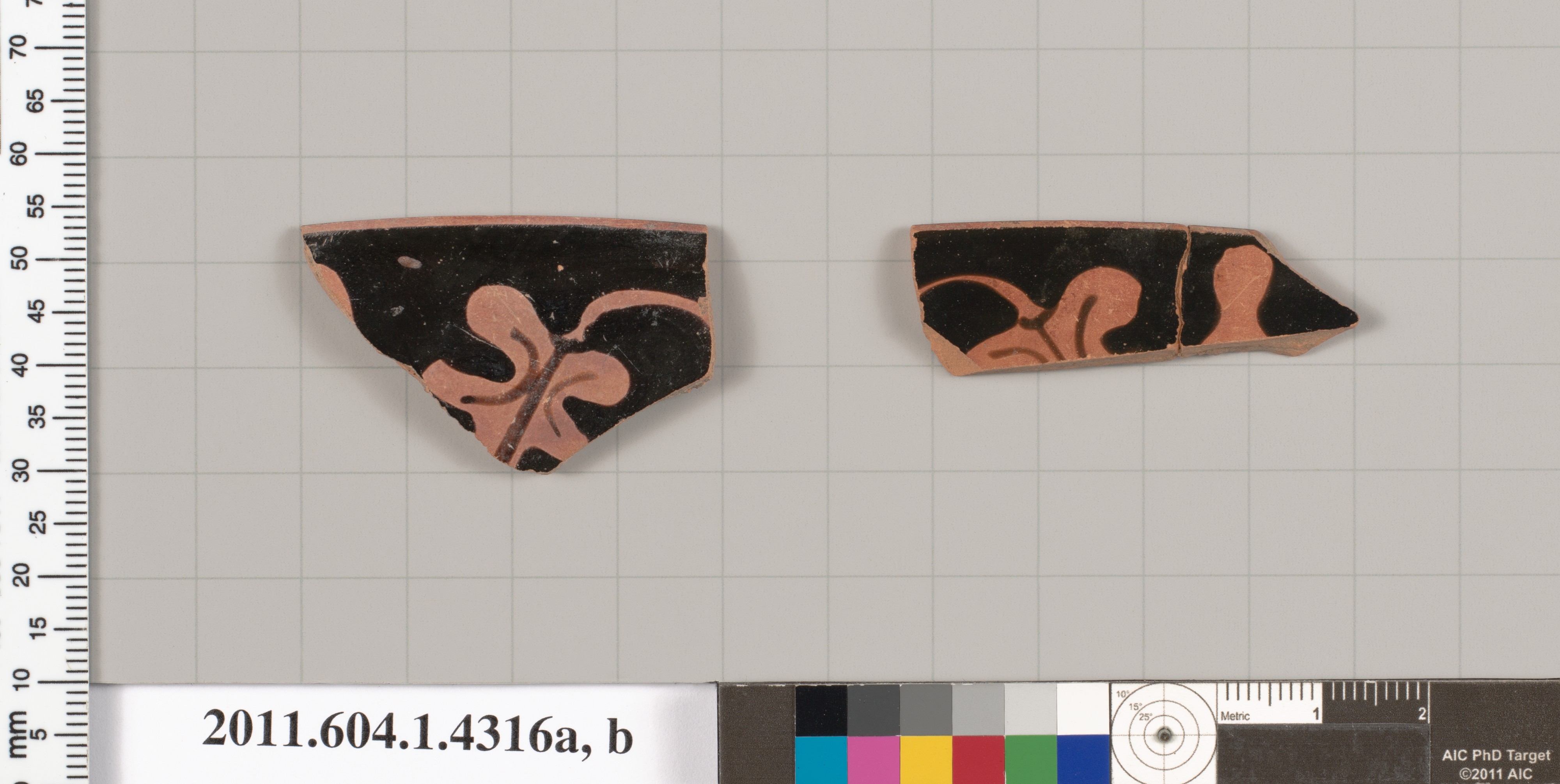
Within the Lauren Fashion Heritage Lab, we engage in a continuous dialectic between the ephemeral and the enduring—a tension that defines the very fabric of heritage. The internal genetic code, drawn from a Kyoto temple’s silent dialogue between a carved “Udumbara Flowers” plaque and a porcelain “Cup and Stand,” posits a profound aesthetic: that the most sacred offering is not the object itself, but the void it creates. This principle of negative space as a carrier of meaning finds an unexpected, yet deeply resonant, parallel in the museum artifact before us: the terracotta rim fragments of Attic kylikes (drinking cups) from ancient Greece. These shattered vessels, far from being mere archaeological debris, offer a foundational lexicon for the 2026 Old Money silhouette—a lexicon built not on opulence, but on the rigorous, almost monastic, discipline of absence.
From Ritual Fragments to Silhouette Architecture
The kylix fragments, with their broken rims and faded black-figure decoration, are not objects of use but relics of a vanished social ritual—the symposium. Like the Udumbara flower that blooms once in three millennia, these cups once held wine for a fleeting moment of philosophical discourse, poetry, and political bonding. Their current state of fragmentation is not a loss, but a transformation. The broken edge becomes a horizon line; the curve of the rim, a structural armature. For the 2026 Old Money silhouette, this translates into a deliberate incompleteness in form. We see it in the asymmetrical shoulder seams of a double-breasted blazer, where one side drops slightly lower than the other, mimicking the irregular break of a terracotta rim. We see it in the cropped trouser that ends just above the ankle, leaving a gap—a void—between the hem and the shoe, a deliberate denial of the traditional full-length line. This is not a gesture of poverty, but of curated absence, a refusal to over-finish, to over-state. The silhouette becomes a vessel with a missing piece, inviting the viewer’s gaze to complete the form, much as a museum-goer mentally reconstructs the original kylix from its shards.
The Cup and Stand: The Void as the Ultimate Luxury
The Kyoto “Cup and Stand” teaches us that the most precious offering is the space prepared for the invisible. The terracotta kylix, in its original function, was a cup for wine—a liquid that, like the Udumbara flower, is both present and transient. But in its fragmented state, the kylix becomes a metaphor for the 2026 silhouette’s core principle: the garment is not a container for the body, but a frame for the void the body inhabits. The Old Money aesthetic has always rejected logos and overt branding; in 2026, this rejection evolves into a material theology of emptiness. Consider the unlined cashmere overcoat: its interior is a hollow, unadorned space. There are no interior pockets, no lining, no labels. The coat’s value lies not in its construction, but in the negative volume it creates around the wearer. The shoulder pads are minimal, the drape is soft, the fabric falls without structure. This is the terracotta rim: a delicate, almost fragile edge that defines a vast, empty interior. The wearer becomes the “sacred presence” that the garment, like the porcelain cup, awaits. The silhouette is not about the body’s shape, but about the atmosphere the garment holds—a quiet, unassailable dignity that is felt, not seen.
The Udumbara Paradox: Transience as a Structural Principle
The Kyoto plaque’s genius lies in its simultaneous representation of transience and permanence. The carved Udumbara flower is a frozen moment of bloom, its petals caught in the act of fading. This paradox is directly translated into the 2026 Old Money silhouette through the use of aged, tactile materials that carry the memory of time. Think of a double-faced wool crepe that is slightly felted, its surface soft and slightly irregular, like the worn edge of the wooden plaque. Or a linen-cotton blend that is pre-washed to a state of gentle creasing, its texture reminiscent of the kylix’s fired clay. The silhouette itself is deliberately “unfinished” in its details: raw hems, exposed seams, buttons that are slightly mismatched in patina. This is not a sign of neglect, but a heritage signature—a coded acknowledgment that true luxury is not about perfection, but about the graceful acceptance of decay. The 2026 Old Money silhouette does not fight time; it wears it as an ornament. The jacket that is slightly too long in the sleeve, the trousers that puddle at the shoe—these are not errors, but intentional fractures, like the kylix’s broken rim, that speak of a history too deep to be erased by mere tailoring.
From Symposium to Solitude: The New Ritual of Dressing
The Attic kylix was a social object, passed from hand to hand in a circle of equals. The Kyoto cup was a solitary offering, placed on an altar. The 2026 Old Money silhouette synthesizes both: it is a garment for the private ritual of self-possession. The silhouette is not designed for the spectacle of the street, but for the quiet theater of the interior. The high-waisted, wide-leg trouser in a heavy, unbleached linen is not for performance; it is for the act of sitting in a library, of walking through a garden, of standing still in a gallery. The single-breasted jacket with a soft, unstructured shoulder is not a shield, but a second skin—a vessel that holds the wearer’s stillness. The color palette is drawn from the terracotta itself: ochre, burnt sienna, umber, and the deep black of the Attic glaze. These are not colors that shout; they are colors that absorb light, creating shadows and depths that mimic the kylix’s interior darkness. The silhouette becomes a living fragment of a larger, lost whole—a piece of a symposium that is now a solitary meditation.
Conclusion: The Offering of Absence
In the Kyoto temple, the Udumbara flower and the empty cup together perform an act of aesthetic dissolution: they negate their own materiality to make room for the sacred. The terracotta kylix fragments, in their broken state, perform a similar act: they negate their original function to become pure form. The 2026 Old Money silhouette, informed by these artifacts, is not a style but a philosophy of dressing. It is an offering of absence—a garment that does not seek to fill the space, but to hold it open. The wearer does not wear the clothes; the clothes wear the void. And in that void, the most precious gift is found: a moment of stillness, a fragment of eternity, a silent, unadorned, and utterly indelible presence. This is the heritage of the black, the broken, and the empty—the true architecture of Old Money in 2026.