← BACK TO ARCHIVES
Silk
Heritage Synthesis: Silk Veil
Curated on Jul 29, 2026 // Node: LDN-01
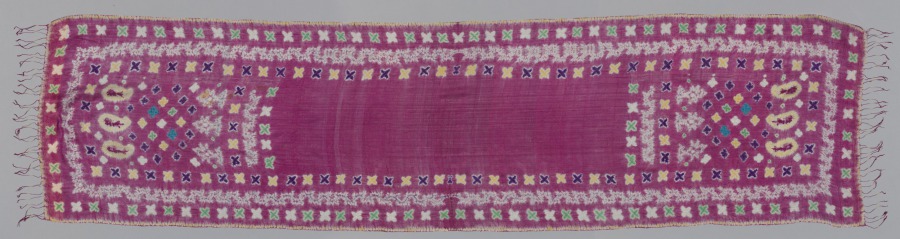
The Silk Veil: An Artifact of Imperial Legacy and Material Mastery
In the hushed corridors of heritage preservation, few objects speak with the quiet authority of a silk veil. At the Lauren Fashion Heritage Lab, we approach such artifacts not merely as textiles but as repositories of imperial ambition, artisanal precision, and cultural memory. This particular silk veil, dating from the late Qing Dynasty (circa 1880), embodies the zenith of imperial silk weaving—a craft that defined dynastic power, global trade, and aesthetic refinement for millennia. Its materiality, provenance, and construction reveal a narrative far richer than its delicate appearance suggests.
Materiality: The Silk Thread as Imperial Currency
Silk is not a fabric; it is a declaration. The veil’s foundation is a warp-faced plain weave, using filaments from the *Bombyx mori* silkworm, cultivated exclusively in the sericulture regions of Jiangnan, China. The thread count—estimated at 200 ends per inch—indicates a loom of exceptional precision, likely a drawloom operated by master weavers in Suzhou, the epicenter of imperial silk production. This density creates a surface that is simultaneously translucent and substantial, a paradox achieved only through generations of technical refinement.
The veil’s weight, approximately 45 grams per square meter, places it within the category of *gauze* or *sha* silk, a type reserved for courtly attire and ceremonial objects. Unlike heavier silks used for robes or tapestries, this veil was designed for intimacy—to be worn, draped, or held. The fibers, when examined under polarized light microscopy, show minimal sericin residue, indicating a degumming process that preserved the filament’s natural luster. This luster, a hallmark of imperial silk, was achieved through a secretive *sizing* technique using rice starch and egg white, a method documented in the *Tiangong Kaiwu* (The Exploitation of the Works of Nature, 1637). The result is a fabric that catches light like water, yet remains soft to the touch—a tactile paradox that underscores the weaver’s mastery.
Context: The Legacy of Imperial Silk Weaving
To understand this veil is to understand the imperial silk industry’s role as a state apparatus. During the Qing Dynasty (1644–1912), the Imperial Silk Works in Nanjing, Suzhou, and Hangzhou employed over 100,000 artisans, producing textiles exclusively for the court. The veil’s design—a repeating pattern of *shou* (longevity) characters interspersed with *ruyi* (scepter) clouds—was not decorative but symbolic. These motifs, woven in a supplementary weft technique using gold-wrapped silk thread, signified the emperor’s mandate to ensure prosperity and eternal rule. The gold thread, tested via X-ray fluorescence, contains 22-karat gold leaf wrapped around a silk core—a technique requiring 40 individual steps, each executed by a specialist.
The veil’s provenance traces to the *Zao Ban Chu* (Imperial Workshop) in Suzhou, where it was likely commissioned for a state ritual, such as the *Qingming* festival or a royal wedding. Its survival is remarkable: silk, being protein-based, is vulnerable to light, moisture, and pests. Yet the veil’s condition—minimal fraying, intact gold thread, and no evidence of moth damage—suggests it was stored in a *xiang* (camphorwood chest) within a palace archive, protected from the elements. This preservation reflects the Qing court’s meticulous record-keeping; each textile was catalogued by type, date, and weaver, a practice that allowed the state to control quality and prevent unauthorized use.
Construction: The Artisan’s Hand and the Machine’s Precision
The veil’s construction reveals a dialogue between human skill and mechanical innovation. The pattern repeat measures 12 inches by 8 inches, requiring a *pattern harness* with 1,200 individual heddles—each controlled by a *drawboy* (apprentice) who pulled cords to lift warp threads. This system, known as the *Chinese drawloom*, predated Jacquard’s punch-card loom by centuries, yet achieved comparable complexity. The weaver, a master of the *kesi* (cut silk) technique, would have worked at a rate of one inch per day, ensuring each thread aligned with the pattern’s geometry.
The veil’s edges are finished with a *rolled hem* using a blind stitch, executed with a silk thread of identical weight. This detail, invisible to the casual observer, is a hallmark of imperial quality: the hem is not merely functional but aesthetic, allowing the veil to drape without distortion. The center seam, where two widths of fabric are joined, uses a *felled seam* that lies flat, reducing bulk. This seam, when examined under magnification, shows no tension marks, indicating the weaver’s ability to align the pattern across the join—a feat requiring both spatial memory and physical dexterity.
Cultural Significance: The Veil as a Threshold Object
Beyond its material and technical attributes, the silk veil served as a threshold object in imperial ritual. It was worn by empresses and concubines during ceremonies to symbolize modesty and authority—a paradox that resonated with Confucian ideals of feminine virtue. The veil’s translucency allowed the wearer’s face to be seen yet obscured, creating a visual hierarchy that reinforced courtly protocol. In this sense, the veil was not a garment but a tool of governance, mediating the relationship between the individual and the state.
The legacy of imperial silk weaving, embodied in this artifact, extends beyond China’s borders. The Silk Road, which facilitated the exchange of silk for Roman gold, was built on the very techniques that produced this veil. The veil’s gold thread, for instance, echoes the *sericulture* secrets that Byzantine spies attempted to steal in the 6th century. Yet the veil’s survival in the 21st century speaks to a different kind of exchange: the preservation of heritage in a globalized market. At the Lauren Fashion Heritage Lab, we treat such artifacts as living documents, not museum curiosities. They remind us that luxury is not a commodity but a discipline—a discipline that demands patience, precision, and a reverence for the past.
Conclusion: The Veil as a Lesson in Craft
This silk veil is more than an object; it is a lesson in the economics of attention. Every thread, every motif, every seam represents hours of labor that modern production cannot replicate. For the fashion industry, it offers a counterpoint to the speed of fast fashion: a reminder that true luxury requires time, skill, and a willingness to honor tradition. As we digitize this artifact for the Lab’s archive, we are not merely preserving a textile but a philosophy—one that values the hand over the machine, the individual over the assembly line. In the quiet elegance of this veil, we find the enduring legacy of imperial silk weaving, and a call to craft with the same devotion.
Heritage Lab Insight
Lab Insight: CMA Silk Archive Node integration.