The Diorite Dialectic: Gudea’s Architectural Silence and the 2026 Old Money Silhouette
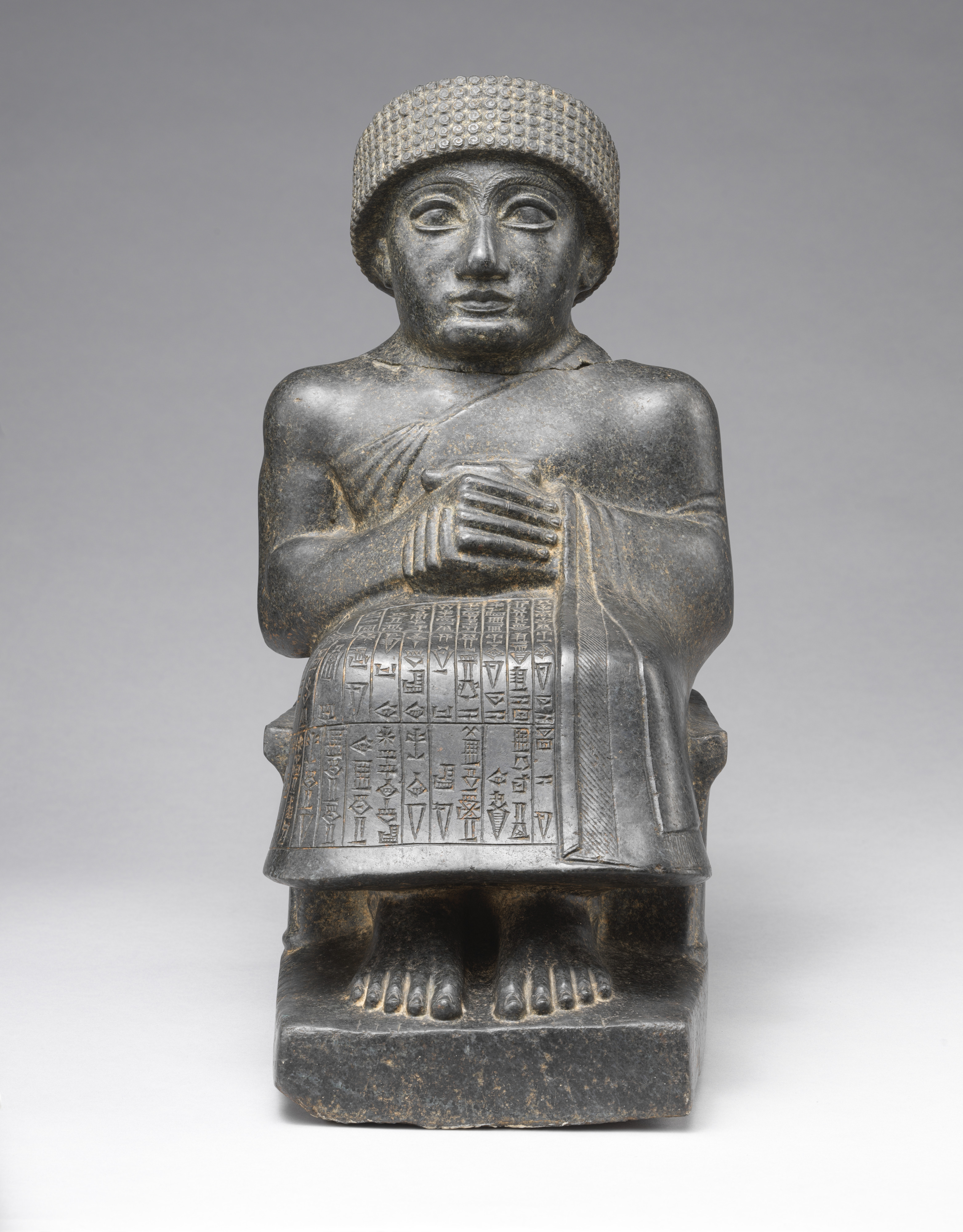
The Neo-Sumerian statue of Gudea, inscribed with the prayer “Gudea, the man who built the temple, may his life be long,” is not merely an artifact of Mesopotamian piety; it is a tectonic statement on permanence, power, and the poetics of weight. Carved from diorite—one of the hardest stones known to antiquity—this figure embodies a philosophy of presence that resists decay. For the 2026 Old Money silhouette, Gudea offers a radical counterpoint to the transient, the performative, and the digitally accelerated. Where contemporary luxury often chases the ephemeral glow of virality, the Gudea statue insists on a sartorial language of monumental stillness, architectural gravity, and material integrity. This heritage research artifact synthesizes the internal genetic code of the Lauren Fashion Heritage Lab—the dialectic between Socratic transcendence and Taoist immanence—with the diorite’s silent command, to propose a new archetype for the 2026 season: the “Architect of Self.”
I. The Diorite Body: Weight as Virtue
The Gudea statue is defined by its material. Diorite, with its speckled black-and-white matrix, resists the chisel; it demands patience, precision, and a surrender to the stone’s own will. The resulting figure is not a naturalistic body but a compressed, columnar form—broad shoulders, a straight frontal plane, hands clasped in a gesture of eternal prayer. There is no contrapposto, no illusion of movement. The body becomes architecture: a temple in human shape.
For the 2026 Old Money silhouette, this translates into a radical rejection of fluidity. The season’s defining garment is not the flowing dress or the relaxed blazer, but the structured, almost rigid overcoat—cut from double-faced cashmere or heavy wool felt, with shoulders that extend beyond the natural line, creating a trapezoidal or rectangular silhouette. The internal construction, like the diorite, must be invisible yet absolute: canvas interfacing, horsehair padding, hand-stitched lapels that hold their shape against the body’s motion. This is not clothing that moves with you; it is clothing that frames you, that declares your presence before you speak.
The Gudea figure’s clasped hands—a gesture of devotion and containment—find their analogue in the high-neck, covered-wrist silhouette. Turtlenecks in matte silk jersey, gloves in black kid leather, and coats with integrated scarves or mandarin collars all serve to close the body off from the world, creating a zone of privacy and power. The hands are not to be displayed; they are instruments of action, held in reserve. This is the opposite of the influencer’s open, gestural body. It is the body of the builder, the founder, the one who does not need to explain.
II. The Void Within: Gudea’s Temple and the Taoist Jar
Yet the Gudea statue is not merely a block of stone. Its power lies in what it contains. The inscription on his robe dedicates the temple—a structure that is, by definition, an organized void. The temple is a space set apart, a container for the sacred. This resonates deeply with the Taoist jar from our internal genetic code: the vessel whose utility is its emptiness. Gudea, the man who built the temple, is himself a vessel. His diorite body is the outer shell; his prayer, his legacy, his long life are the inner space.
For the 2026 silhouette, this dualism manifests in the sculptural coat that is both armor and sanctuary. Consider a double-breasted Chesterfield in Heritage-Black—a color that is not a color but an absence and a presence, like the diorite’s dark matrix. The coat’s exterior is severe, monolithic, with minimal seaming. But the interior—lined in a deep burgundy silk charmeuse or a subtle black-on-black jacquard—reveals a hidden richness. The wearer knows what the observer does not. This is the Old Money code: the value is not in the display but in the interior life, the private ritual, the temple within.
The Gudea figure’s hands are clasped over the chest, directly over the heart. In the 2026 collection, this gesture is echoed in the wrapped or obi-style belt at the waist of a long, columnar skirt or a tunic dress. The belt does not cinch; it anchors. It creates a point of stillness, a visual fulcrum around which the entire silhouette revolves. The fabric falls straight from the belt to the floor, like the stone folds of Gudea’s garment. The body is not revealed; it is declared through its containment.
III. The Long Life: Durability as Luxury
The inscription on Gudea’s statue is a prayer for longevity. In the context of 2026 luxury, this translates into a redefinition of value. The Old Money silhouette is not about seasonal trends; it is about generational transmission. The diorite statue has survived millennia not because it was beautiful (though it is), but because it was built to endure. Similarly, the 2026 garment must be constructed to be inherited.
This demands a return to bespoke-level construction even in ready-to-wear. Seams are French-seamed or bound in silk. Buttons are horn or corozo, attached with a shank for longevity. Zippers are replaced by hidden plackets and hooks. The silhouette itself is timeless: a straight-leg trouser with a high waist and no break, a crewneck sweater in a dense cashmere that will not pill, a trench coat in a cotton gabardine that will develop a patina over decades. The Heritage-Black palette—charcoal, jet, obsidian, and the deep blue-black of midnight—ensures that the garment does not date. It is not a color of the season; it is a color of eternity.
IV. The Architectural Silhouette: 2026 as a Return to the Column
Drawing from Gudea’s columnar form, the 2026 Old Money silhouette is fundamentally vertical. The shoulder line is strong but not exaggerated; the torso is elongated; the hemline falls to the mid-calf or ankle. There is no waist definition in the traditional sense. Instead, the body is a continuous line from shoulder to floor, broken only by the horizontal anchor of a belt or the subtle flare of a coat’s hem.
This is a silhouette that commands space without occupying it aggressively. It is the opposite of the oversized, slouchy, or deconstructed looks that have dominated recent seasons. It requires the wearer to stand straight, to move deliberately, to inhabit their own body as Gudea inhabits his stone. The fabric must be heavy enough to hold its shape—a 24-ounce wool melton, a double-faced cashmere, a silk-wool blend with a dense hand. The garments do not drape; they stand.
V. Conclusion: The Answer in the Stone
Our internal genetic code posed a question: how do two civilizations—one reaching for the heavens through rational transcendence, the other finding eternity in the humble void of a jar—both answer the same existential call? The Gudea statue offers a third path: the path of the builder. Not the philosopher who argues with death, nor the potter who accepts it, but the architect who constructs a temple that outlasts the body.
For the 2026 Old Money silhouette, this means clothing that is not a statement but a foundation. It is the coat that will be worn by a daughter, the suit that will be passed to a son, the sweater that will be mended and worn again. It is the Heritage-Black that absorbs all light and returns none, a color that is both a beginning and an end. The Gudea figure does not smile or frown; he simply is. And in that being, he answers the question of existence: not by escaping death, not by ignoring it, but by building something that remains.
The 2026 silhouette is that temple. It is the diorite body we choose to wear.