The Gilded Thread: An Examination of Gold-Patterned Silk with Falcons and Heraldry in the Legacy of Imperial Silk Weaving
Introduction: The Intersection of Power and Craft
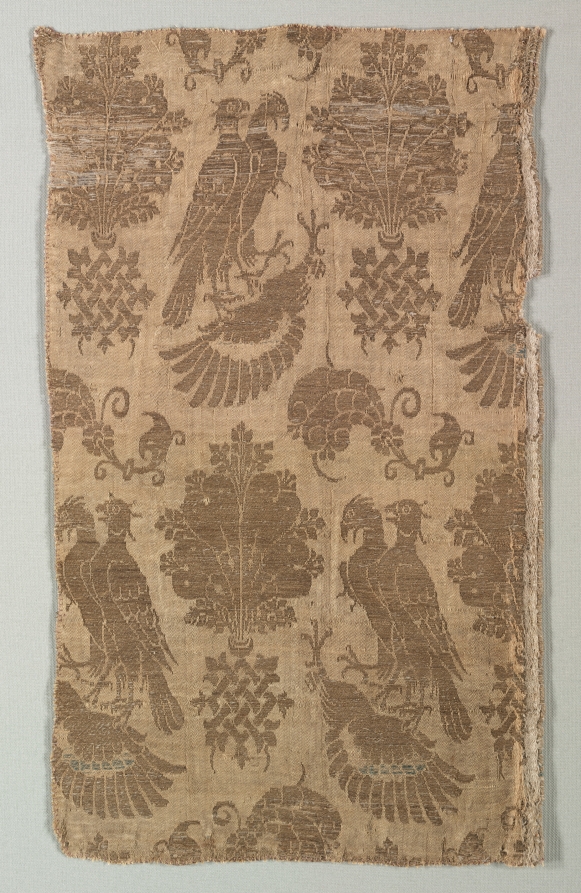
Within the hallowed archives of the Lauren Fashion Heritage Lab, we encounter a textile of singular significance: a gold-patterned silk, woven with falcons and heraldic motifs. This artifact is not merely a fabric; it is a testament to the enduring legacy of imperial silk weaving, where materiality and symbolism converge to assert authority, lineage, and cultural identity. The silk itself, a medium of unparalleled luxury, serves as the canvas for a narrative that spans centuries, from the workshops of ancient dynasties to the ateliers of modern luxury. This paper examines the artifact through the lens of its materiality—silk—and its iconography, situating it within the broader context of imperial textile production and its influence on contemporary heritage practices.
Materiality: The Silk as a Conduit of Imperial Power
Silk, as a material, has long been synonymous with prestige and exclusivity. Its production, a closely guarded secret in ancient China, was the foundation of the Silk Road, a network that facilitated not only trade but the exchange of ideas, art, and power. The gold-patterned silk under study exemplifies the pinnacle of this craft. The warp and weft are interlaced with threads of pure gold, a technique that required extraordinary skill and resources. In imperial contexts, such textiles were reserved for the highest echelons of society—emperors, nobles, and military commanders. The gold thread, often gilded silk or silver, was not merely decorative; it signified the divine right to rule, the unassailable wealth of the state, and the eternal nature of the dynasty.
The materiality of this silk is defined by its density and luster. The gold threads, when woven into the fabric, create a surface that catches light with a brilliance that mimics the sun—a celestial symbol in many cultures. This effect was intentional, designed to awe and subdue. The silk’s weight, a result of the metallic threads, also contributed to its prestige; heavier textiles were more expensive and thus more desirable. In the context of imperial weaving, the material itself was a declaration of power, a tangible representation of the state’s ability to command rare resources and skilled labor.
Iconography: Falcons and Heraldry as Symbols of Authority
The motifs of falcons and heraldry are not arbitrary; they are deeply embedded in the iconography of power. The falcon, a bird of prey, has been a symbol of sovereignty, vision, and martial prowess across civilizations. In the imperial traditions of Persia, the Ottoman Empire, and medieval Europe, the falcon was associated with the hunt—a pastime of the elite—and with the divine. The falcon’s ability to soar above the earth and strike with precision made it an emblem of the ruler’s omniscience and authority. On this silk, the falcon is rendered in gold thread, its wings spread in a posture of dominance, its gaze fixed forward. This is not a passive image; it is a statement of vigilance and control.
Heraldry, the system of visual identification used by noble families and states, further reinforces the artifact’s imperial context. The heraldic elements on this silk—likely a coat of arms, a crest, or a monogram—serve as markers of lineage and allegiance. In the context of imperial weaving, heraldry was often used to denote the patron or the dynasty. The integration of heraldic symbols with the falcon motif suggests a fusion of personal and state power. The silk may have been commissioned for a specific noble house or for a ceremonial occasion, such as a coronation or a diplomatic gift. The precision of the heraldic design, woven with gold thread, indicates that this was a piece of statecraft, a tool for projecting authority both domestically and internationally.
The Legacy of Imperial Silk Weaving: From Workshop to Heritage
The legacy of imperial silk weaving is one of continuity and adaptation. The techniques used to create this gold-patterned silk—brocade, damask, and lampas—were perfected in imperial workshops, such as the Ming and Qing dynasty’s Imperial Silk Factory in Nanjing, or the Byzantine and Ottoman imperial ateliers. These workshops were centers of innovation, where master weavers developed complex patterns and methods that were passed down through generations. The gold-patterned silk with falcons and heraldry is a direct descendant of this tradition, a reminder that the craft of silk weaving is not static but evolves with each era.
In the modern context, the Lauren Fashion Heritage Lab’s study of this artifact serves a dual purpose: it preserves the technical knowledge of imperial weaving and interprets its cultural significance for contemporary audiences. The silk is not merely a historical object; it is a source of inspiration for designers who seek to incorporate heritage into modern luxury. The use of gold thread, for instance, has been reinterpreted in contemporary fashion through metallic yarns and digital printing, while the falcon and heraldic motifs have been adapted into branding and logo design. This continuity ensures that the legacy of imperial silk weaving remains relevant, a living tradition rather than a relic.
Conclusion: The Enduring Power of the Gilded Thread
The gold-patterned silk with falcons and heraldry is more than a textile; it is a document of imperial ambition, a masterpiece of material science, and a symbol of cultural heritage. Its materiality—silk infused with gold—speaks to the resources and skill required to produce such an object, while its iconography—falcons and heraldry—reveals the values and aspirations of the society that created it. As we study this artifact in the Lauren Fashion Heritage Lab, we are reminded that the legacy of imperial silk weaving is not confined to the past. It lives on in the threads of contemporary luxury, in the designs that draw on ancient motifs, and in the ongoing dialogue between craft and power. The gilded thread, once a symbol of imperial might, now weaves a story of heritage, resilience, and timeless elegance.