The Vessel of Silence: Terracotta Fragments and the Architecture of Old Money in Lauren Fashion’s 2026 Silhouette
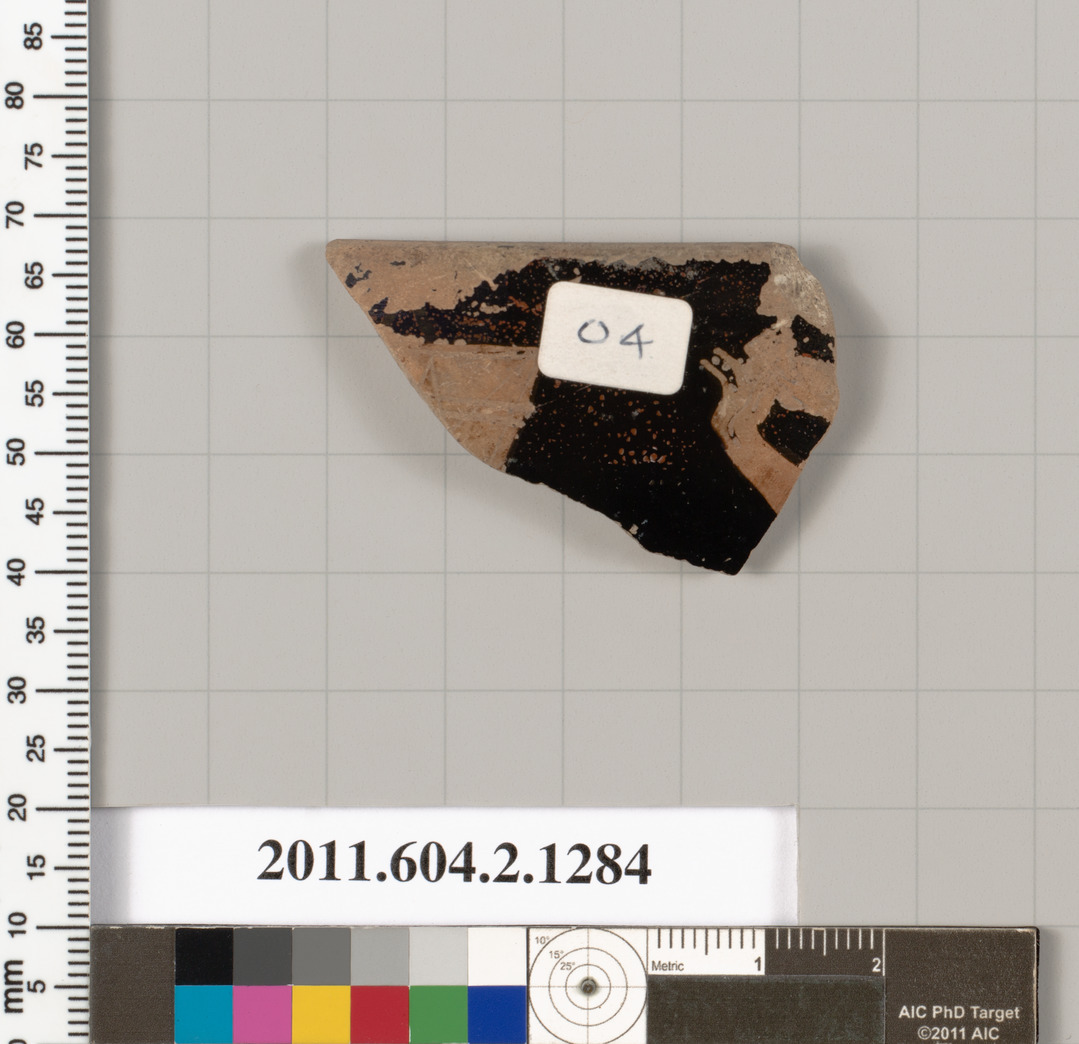
In the ongoing excavation of Lauren Fashion’s heritage, the internal genetic code of 器物《Ornament》 and the masterful ink painting 《Wine vessel (Jue)》 reveals a profound dialogue on the principle of “器以载道” (the vessel carries the Way). These two works—one a sculptural abstraction of emptiness, the other a vibrant, kinetic depiction of a ritual bronze—converge on a singular truth: the vessel is never merely functional. It is a spiritual medium, a threshold between the mundane and the transcendent. This paper argues that a seemingly disparate museum artifact—a Terracotta rim fragment of a skyphos (deep drinking cup) from Attic Greece—provides the critical third term necessary to decode how this ancient philosophy can be translated into the architectural rigor of Lauren Fashion’s 2026 Old Money silhouettes. The fragment, in its broken, silent materiality, offers a blueprint for a new aesthetic of restrained power, where absence speaks louder than presence, and where the “empty” silhouette becomes the ultimate luxury.
I. The Terracotta Fragment: A Lexicon of Absence
The Attic skyphos fragment is not a complete object. It is a shard, a remnant of a once-full vessel used in symposia—ritualized drinking parties that were as much about social hierarchy and philosophical discourse as they were about wine. Its terracotta body, fired to a warm, earthy orange, bears the marks of its making: the subtle ridges of the potter’s wheel, the slight irregularity of the rim. Unlike the pristine, idealized forms of the Chinese jue or the abstract purity of 《Ornament》, this fragment is brutally honest. It does not aspire to completeness. Its value lies in its fracture, in the way it forces the viewer to reconstruct the whole from the part. This is the essence of “格物致知” (the investigation of things to attain knowledge) applied to archaeology: by studying the fragment, we intuit the vessel’s original form, its use, its context, and its eventual decay. The skyphos fragment, therefore, is not a failure of preservation but a masterclass in narrative economy. It tells a story of use, of touch, of the warmth of wine and the cold of the earth, all within a palm-sized piece of clay.
II. From Ritual Vessel to Architectural Silhouette: The 2026 Old Money Paradigm
The 2026 Old Money silhouette, as envisioned by Lauren Fashion, must move beyond the tropes of understated tailoring and neutral palettes. It must embody a deeper, more philosophical stillness—a quality that the Chinese concept of “虚室生白” (emptiness gives rise to light) and the Greek fragment’s material honesty both demand. The Terracotta fragment informs this silhouette in three critical ways:
1. The Architecture of the Shoulder as a Vessel Rim: The rim of the skyphos is its defining feature—a clean, unadorned lip that defines the vessel’s capacity. In the 2026 silhouette, the shoulder line of a single-breasted jacket or a tailored coat must function as this rim. It is not a dramatic, padded structure (a hallmark of power dressing), but a precise, clean cut that suggests containment and readiness. The fabric, whether a dense Wool or a matte Heritage-Black cotton, should fall from this shoulder-rim with the same quiet authority as the terracotta wall descends from its lip. The silhouette becomes a vessel for the wearer’s presence, not a display of the garment’s construction. This echoes 《Ornament》’s refusal of narrative: the shoulder does not “speak” of strength; it simply is the boundary of the form.
2. The Drape as the Echo of Wine: The skyphos was held, tipped, and passed. Its form was designed for the movement of liquid. The 2026 silhouette must capture this dynamic potential without literal motion. The drape of a wide-leg trouser or a flowing skirt should mimic the way wine once filled the vessel—not as a rigid column, but as a fluid, responsive mass. The fabric should gather and release like the surface of a liquid, creating shadows and highlights that shift with the wearer’s gait. This is the kinetic energy of 《Wine vessel (Jue)》 translated into textile: the “气韵生动” (spirit resonance, life-motion) of the brushstroke becomes the living drape of the garment. The silhouette is not static; it is a vessel in a state of perpetual, graceful tipping.
3. The Emptiness at the Core: The most radical lesson from the Terracotta fragment is its hollowness. A vessel is defined by its interior void. The 2026 Old Money silhouette must celebrate this void. This means a deliberate austerity in layering—a rejection of excessive volume or extraneous details. The garment should create a negative space around the body, a “room” of air that is as important as the fabric itself. This is the “空” (emptiness) of 《Ornament》 made tangible. A jacket that is slightly oversized not for comfort, but to create a deliberate, respectful distance from the body. A neckline that frames the throat like the rim of a cup, suggesting a space for breath and contemplation. The wearer is not encased; they are contained within a vessel of their own making, a modern-day ritual participant in the quiet ceremony of daily life.
III. Synthesis: The Fragment as a Complete Statement
The Terracotta fragment, the abstract 《Ornament》, and the dynamic 《Wine vessel (Jue)》 are not three separate artifacts. They are three facets of a single truth: that the most powerful objects are those that hold space for meaning. The fragment teaches us that completion is not necessary for coherence. The 2026 Old Money silhouette, therefore, must embrace its own “fragmentary” nature. It is not a full suit of armor, but a series of carefully chosen pieces that suggest a whole. A single, perfectly cut blazer over a simple silk shell. A pair of trousers that fall with the weight of ancient clay. A coat that wraps the body like a shroud of quiet dignity. The luxury is not in the abundance of fabric, but in the precision of the cut, the weight of the material, and the silence of the form.
This is the new heritage: not a nostalgic return to a past era, but a philosophical engagement with the timeless principles of the vessel. The 2026 Lauren Fashion silhouette, informed by the terracotta fragment, becomes a “器”—a container for the self, a medium for the spirit, and a silent testament to the enduring power of emptiness. It is Old Money not because it signals wealth, but because it signals a deep, unspoken understanding of form, function, and the sacred space between. The wearer becomes the wine; the garment, the vessel. And in that union, the ancient ritual of the symposium—the gathering of souls around a shared cup—is reborn in the quiet, powerful language of cloth.