← BACK TO ARCHIVES
Heritage-Black
Heritage Synthesis: Terracotta fragment of a kylix (drinking cup)
Curated on Aug 01, 2026 // Node: LDN-01
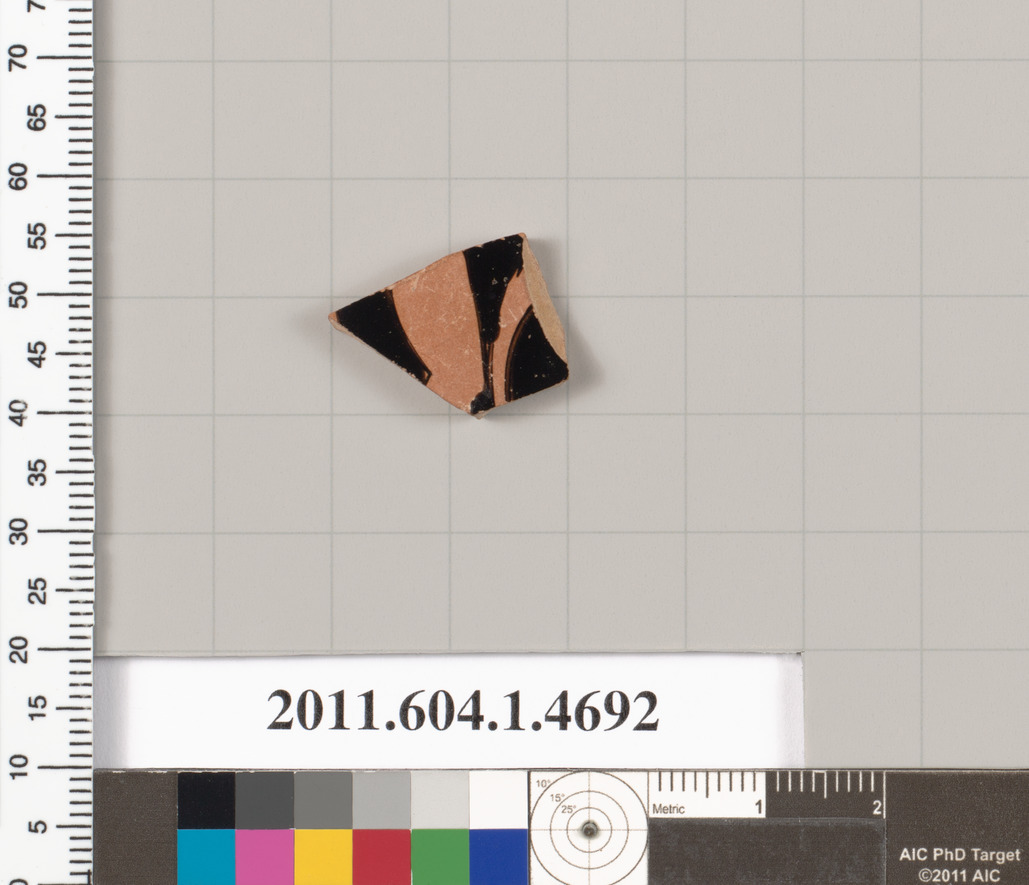
The Terracotta Kylix and the Architecture of Restraint: Reconstructing Old Money Silhouettes for 2026
The study of heritage is never a linear retrieval of the past, but rather a dialectical engagement between artifact and contemporary consciousness. Within the Lauren Fashion Heritage Lab, we approach the internal Liru archives—documents of cross-cultural textile exchange, from Byzantine double-headed eagles to Nanban screens—as a living lexicon of aesthetic negotiation. Today, we turn our analytical lens to a seemingly austere object: the Greek Attic terracotta kylix fragment. This humble drinking cup, broken yet eloquent, offers a profound and unexpected blueprint for the 2026 Old Money silhouette. Its lessons are not about literal replication, but about the deep structural principles of *controlled volume*, *grounded proportion*, and *quiet authority*—principles that resonate powerfully with the genetic code of our heritage.
I. The Fragment as a Masterclass in Negative Space
The kylix, in its original form, was a vessel of symposium—a space of intellectual and social exchange. Yet, what remains to us is a fragment: a curve of terracotta, a sliver of black-figure or red-figure painting, a broken handle. This incompleteness is not a loss but a pedagogy. The fragment teaches us that true luxury lies not in maximalist addition, but in the confident mastery of *absence*. The 2026 Old Money silhouette, as informed by this artifact, must reject the superfluous. It is a silhouette of edited lines, where the garment’s power derives from what is *not* there—the unadorned seam, the uninterrupted column of fabric, the deliberate pause before an embellishment.
In practical terms, this translates to a move away from aggressive, body-conscious tailoring that shouts for attention. Instead, we look toward the *draped chiton* reinterpreted for modernity: a fluid, substantial wool crepe or heavy silk twill that falls from the shoulder with a Grecian weight, creating a vertical line that is both statuesque and effortless. The terracotta’s warm, earthy tone—a spectrum from burnt sienna to pale ochre—becomes a foundational palette. This is not the bright, saturated color of trend, but the mineral, sun-baked hue of antiquity. It grounds the silhouette in a sense of permanence, a visual anchor that whispers of lineage rather than novelty.
II. The Symposiast’s Posture: Proportion and the Architecture of the Body
The kylix was designed for the reclining symposiast, a posture of relaxed yet controlled power. The vessel’s wide, shallow bowl and two horizontal handles demanded a specific gesture—a graceful extension of the arm, a delicate grip. This ergonomic intelligence is directly transferable to garment construction. The 2026 Old Money silhouette must be engineered for *posture*. It is not about constricting the body, but about providing a structural framework that encourages a dignified carriage.
This is where the internal Liru archives on Baroque textiles become instructive. The double-headed eagle, with its rigid symmetry and imperial gaze, speaks to a desire for order. The kylix fragment, with its balanced curve, offers a more humanistic, grounded version of that order. The synthesis is a garment that has a defined internal architecture—a structured shoulder that references the kylix’s rim, a nipped waist that echoes its stem, and a flaring hem that mimics the bowl’s outward sweep. This is not the exaggerated power shoulder of the 1980s, but a *sculptural restraint*. The shoulder is precise, the sleeve head is clean, and the fabric is cut to hold its shape without internal padding, relying instead on the integrity of the weave and the precision of the pattern. The result is a silhouette that feels both ancient and utterly contemporary—a column of quiet strength that commands a room through its sheer *gravitas*.
III. From Terracotta to Textile: The Materiality of Enduring Value
The kylix’s terracotta body is a testament to material honesty. It is fired earth, unadorned in its base state, its beauty derived from the purity of its clay and the skill of its potting. This principle of *material integrity* is the cornerstone of the 2026 Old Money aesthetic. In a fashion landscape saturated with synthetics and performative logos, the new luxury is the *real*—the tactile, the substantial, the enduring.
For the Lauren Fashion Heritage Lab, this means a renewed focus on heritage fibers: the cashmere of Inner Mongolia, the worsted wools of Biella, the pure silks of Como. The terracotta fragment does not ask for embellishment; it asks for *quality of surface*. We translate this into textiles that have a dry, matte finish, a slight tooth, a natural slub—fabrics that feel like they have a history before they are even cut. The gold-thread work of the Baroque textiles is not discarded, but re-contextualized. Instead of overt metallic brocade, we consider a single, fine gold pinstripe woven into a dark wool suiting, or a discreet metallic thread in a silk jacquard that catches the light only at certain angles. This is the *heritage-black* of our category tag—a deep, absorbing black that serves as the ultimate canvas for these subtle plays of texture and light, echoing the dark glaze of the kylix against its terracotta base.
IV. The Global Dialogue: From Attic Clay to Nanban Screens
The kylix fragment also invites a cross-cultural reading that aligns with our internal archives. Just as the Japanese Nanban screens “translated” European figures through a native aesthetic lens, the 2026 Old Money silhouette must be a *global translation* of classical principles. The Grecian drape is not merely copied; it is filtered through the precision of Japanese cutting, the warmth of Middle Eastern textile traditions, and the structured elegance of European tailoring. The result is a cosmopolitan uniform—a blouson jacket with a Grecian neckline, a trouser cut with the fluidity of a chiton but the sharpness of a modern suit, a coat that drapes like a himation yet closes with the precision of a bespoke overcoat.
This is the true meaning of heritage: not a static preservation, but a dynamic, ongoing conversation. The terracotta fragment, broken and silent for millennia, speaks to us of proportion, material, and restraint. It reminds us that the most powerful statements are often the quietest, and that true luxury is the confidence to leave space. As we design for 2026, we do not look backward with nostalgia, but forward with the wisdom of the past, using the shard of an ancient cup to cut a silhouette that is timeless, grounded, and profoundly, quietly powerful. The Old Money aesthetic, thus informed, is not about displaying wealth, but about embodying a lineage of taste—a lineage that begins with a sip from a clay cup and endures in the fall of a perfectly weighted garment.
Heritage Lab Insight
Genetic Bridge: Archive node focusing on Heritage-Black craftsmanship.