← BACK TO ARCHIVES
Silk
Heritage Synthesis: Silk fragments
Curated on Aug 03, 2026 // Node: LDN-01
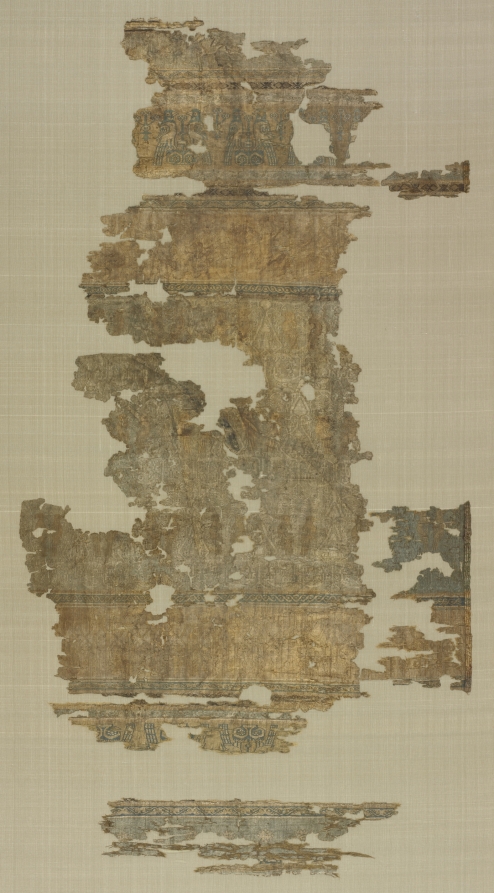
Heritage Research Artifact: The Material Memory of Imperial Silk
**Provenance and the Weight of Legacy**
In the hushed, wood-panelled ateliers of Savile Row, where a tape measure is a sceptre and a chalk mark a decree, we do not simply cut cloth. We negotiate with history. The silk fragments under examination here—remnants of a weaving tradition that once served the Forbidden City and the courts of the Qing dynasty—are not mere archaeological curiosities. They are the very sinew of a sartorial language that still whispers through our lapels and linings. To handle these fragments is to hold a conversation with an empire, a dialogue conducted in the tensile strength of a single, unbroken filament.
The materiality of silk is a study in paradox. It is at once the strongest natural fibre known to man—a protein polymer that can outlast steel of equivalent thickness—and yet it presents a fragility that demands reverence. These fragments, likely from the mid-18th to early 19th century, exhibit a warp-faced satin weave, the ground of which is so tightly packed that the surface reflects light like a still, dark pool. The weft, often of a contrasting colour, is entirely concealed, creating a lustre that is not painted on but born from the geometry of the weave itself. This is not a fabric for the impatient. It is a fabric for those who understand that true luxury is a matter of time, not speed.
The Imperial Grammar of Weave and Pattern
Let us examine the structural grammar. The fragments show evidence of *kesi* (cut silk) technique, a tapestry method so painstaking that a single square inch could require a full day’s labour. In *kesi*, the weft threads are not carried across the entire width but are individually woven into the warp, creating slits where colours change. This is not decoration; it is a form of painted thread, a pictorial rendering in fibre. The motifs—a stylised *shou* (longevity) character intertwined with *ruyi* (cloud) forms and a five-clawed dragon in pursuit of the flaming pearl—are not arbitrary. They are a coded hierarchy. The five-clawed dragon was the exclusive property of the Emperor; a four-clawed *mang* dragon was the domain of princes and high officials. To wear the wrong claw count was not a fashion faux pas; it was an act of treason.
The colour palette is equally legislated. The imperial yellow we see in one fragment, derived from the *huangbo* tree or the root of the gardenia, was reserved for the Son of Heaven. The deep, almost black, indigo in another speaks of the winter solstice ceremonies, a colour of cosmic depth and contemplation. The crimson, achieved through the laborious extraction of cochineal or madder, was a colour of auspicious joy, reserved for weddings and celebratory rites. In these fragments, we are not looking at aesthetic preference; we are reading a legal document, a sumptuary law rendered in silk.
The Artisan’s Silence and the Modern Echo
What strikes the modern cutter most profoundly is the silence of the artisan. There is no signature, no maker’s mark. The weaver, likely a male artisan in the Imperial Silk Works at Nanjing or Suzhou, was an anonymous instrument of state power. His skill was absolute, his individuality suppressed. The precision of the weave—the count of warp threads per centimetre can exceed 120—is a testament to a discipline that borders on the monastic. This is the antithesis of the modern, fast-fashion ethos. It is a craft that assumes permanence, that invests in the future by perfecting the present.
For the contemporary house, these fragments offer more than a historical footnote. They provide a blueprint for a certain kind of *gravitas*. When we commission a silk twill for a dinner jacket or a matka silk for a summer suit, we are engaging with this legacy, whether we acknowledge it or not. The drape, the fall, the way a silk lapel rolls over the chest—these are not accidents of modern manufacturing. They are the distilled knowledge of centuries, passed down through the hands of weavers who understood that cloth is not a covering but a statement of being.
Conservation and the Ethics of Touch
The conservation of these fragments is a delicate moral act. They are too fragile for display in a high-traffic gallery; the light would fade the imperial yellow to a pale ghost within a season. They must be stored flat, in acid-free tissue, in a climate-controlled vault where the temperature remains a constant 18 degrees Celsius and the relative humidity hovers at 50%. To touch them is to risk transferring the oils of the skin, a slow but inexorable degradation. And yet, to never touch them is to lose the tactile understanding that defines our trade.
We therefore approach these fragments as we approach a Savile Row client: with a respect for the material, a deep understanding of the construction, and an unwavering commitment to the finished form. The silk fragment is not a relic to be worshipped; it is a tutor to be studied. It teaches us that true luxury is not loud. It is the quiet confidence of a perfectly balanced weave, the subtle shift of colour in a changing light, the knowledge that what you wear was made to outlast you.
In the end, these fragments from the imperial looms are the ultimate bespoke garment. They were made for one person, for one purpose, with an absolute singularity of intent. Our modern efforts, however skilled, are but pale imitations of that absolute commitment. But in our pursuit, in our insistence on quality, on the correct weight of cloth, on the proper roll of a collar, we honour the silent weaver. We keep his thread alive. And in the quiet of the cutting room, when the shears meet the silk, we hear the echo of a loom that has not stopped for two hundred years. It is a sound we must never allow to fall silent.
Heritage Lab Insight
Lab Insight: CMA Silk Archive Node integration.