← BACK TO ARCHIVES
Heritage-Black
Heritage Synthesis: Terracotta fragment of a kylix (drinking cup)
Curated on Aug 03, 2026 // Node: LDN-01
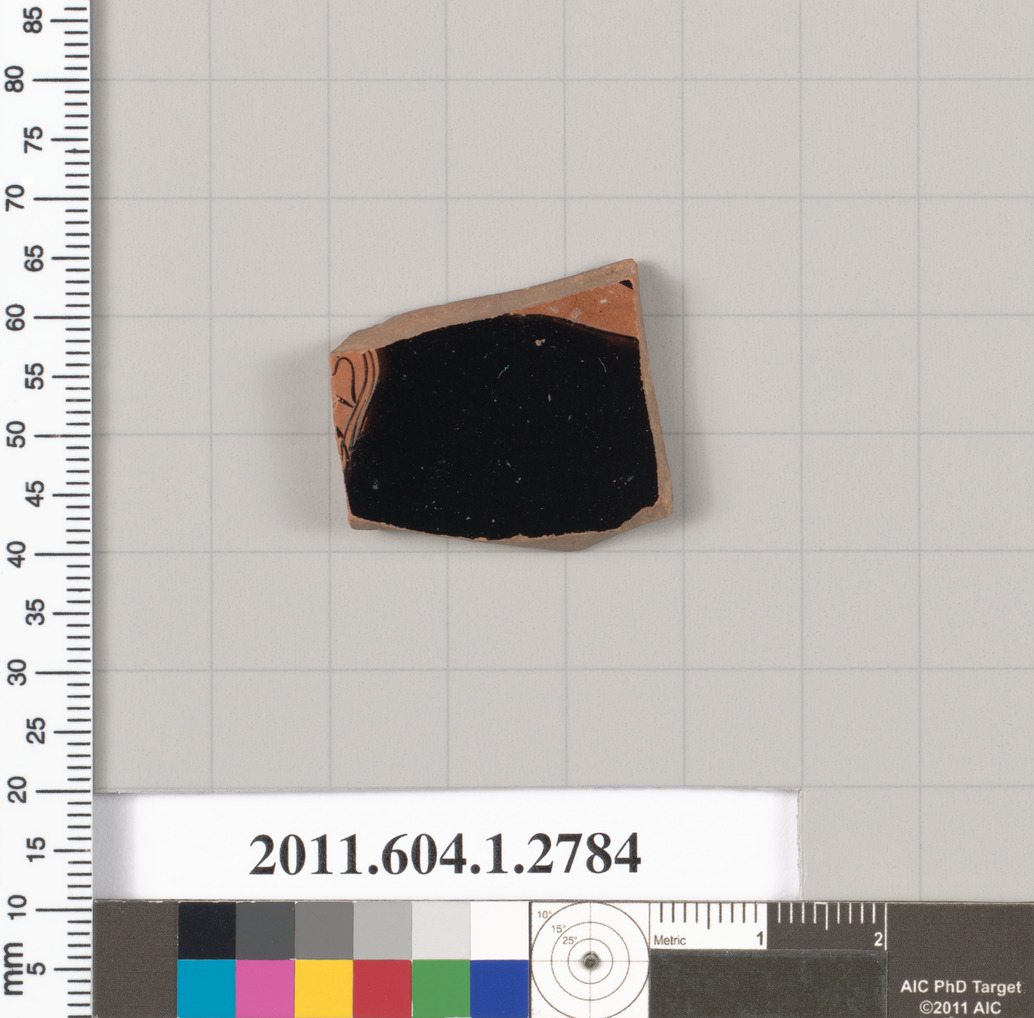
The Dialectics of Mortality and Material: A Terracotta Kylix as Foundational Text for the 2026 Old Money Silhouette
The internal genetic code of Lauren Fashion—articulated through the philosophical still-life of *The Death of Socrates* and the kinetic violence of *The Hunt*—presents a profound aesthetic paradox. One freezes death into a tactile object; the other suspends it in an eternal, breathless instant of pursuit. When this dialectic is overlaid upon the museum artifact of a terracotta kylix fragment (Greek, Attic), a remarkable synthesis emerges. This humble drinking cup, shattered yet enduring, becomes the archaeological key to decoding the 2026 Old Money silhouette. It is not merely a vessel for wine, but a vessel for time, mortality, and the quiet, unyielding power of restraint. For the forthcoming season, the kylix dictates a fashion of *materialized silence*—a wardrobe that does not chase the future but carries the weight of the past with an unshakeable, almost funereal, composure.
I. The Kylix as a Static Relic: The Architecture of the "Afterward"
The terracotta fragment, in its broken state, aligns perfectly with the aesthetic of *The Death of Socrates*. The painting’s power lies not in the moment of dying, but in the *afterward*—the completed gesture, the silent drapery, the cold rim of the hemlock cup. Similarly, the kylix fragment is not a document of a symposium in progress; it is a relic of a symposium that has ended. Its painted figures, perhaps a youth or a satyr, are now severed, their stories interrupted. This is the essence of "Heritage-Black": not the color of mourning, but the color of *finality* and *legacy*. For 2026, this translates into silhouettes that are deliberately *post-narrative*. We are not designing for the moment of arrival, but for the enduring state of having arrived.
The Old Money silhouette, therefore, rejects the ephemeral "trend" in favor of the permanent "form." The kylix’s shallow, wide bowl suggests a horizontal gravity. This informs a jacket silhouette with a lowered, elongated shoulder—not a dropped shoulder of casual ease, but a *weighted* shoulder that anchors the body to the ground. The fabric, likely a dense, felted wool or a stiffened silk twill, must possess the *objectness* of terracotta. It should not flow; it should *rest*. The line from shoulder to hem is uninterrupted, mirroring the unbroken curve of the kylix’s tondo. This is a garment that does not move with the wearer so much as it provides a stationary frame for the wearer’s presence. The internal code’s "静中向死" (dying in stillness) is here re-coded as *living in stillness*—a sartorial philosophy where the garment’s immobility signals the wearer’s unshakeable social and historical grounding.
II. The Kinetic Echo: The Tension of the Unreleased Arrow
Yet, the Old Money aesthetic cannot be purely static; it would become costume. This is where the second internal code, *The Hunt*, intervenes. The kylix, though a static object, was used in the dynamic ritual of the symposium—a space of debate, seduction, and political maneuvering. The fragment’s painted surface, even in ruin, retains the *memory* of movement. The curve of a limb, the tilt of a head, the tension of a hand gripping a lyre or a spear—these are the frozen echoes of *The Hunt*’s acceleration.
The 2026 silhouette must therefore contain a latent kineticism, a *suspense* within its structure. This is achieved not through obvious draping or ruching, but through *internal tension*. Consider a tailored coat cut from a single width of cloth, where the back seam is set slightly forward, creating a subtle, invisible pull across the shoulder blades. This is the sartorial equivalent of the hunter’s drawn bow—the garment is at rest, but its construction is poised for release. Trousers are cut with a high, rigid waistband that tapers to a narrow ankle, creating a vertical line of acceleration that is then abruptly halted by a substantial, leather-soled shoe. The "动中赴死" (dying in motion) of the painting is transmuted into *living in anticipation*. The wearer does not rush; they are perpetually on the verge of a decisive move, their clothing holding that potential energy like a charged particle.
III. Materiality as Mortality: The Terracotta Imperative
The terracotta itself—fired earth, fragile yet enduring—provides the material manifesto for 2026. Unlike the polished refinement of porcelain or the cold precision of metal, terracotta retains the memory of its origin in the earth. It is a material that has *survived*. This is the core of the new Old Money fabric philosophy. We move away from the ostentatious sheen of new silk and toward *matte, granular textures* that absorb light rather than reflect it. Think of a heavy, unbrushed cashmere with a visible, nubby surface; a raw silk that has been washed to a soft, chalky hand; a wool crepe so dense it feels like fired clay. These fabrics are chosen for their ability to *record time*—to hold a crease, to soften with wear, to develop a patina that is unique to the wearer.
This materiality directly addresses the aesthetic question posed by the internal code: "死亡的审美究竟是否可能?" (Is the aesthetic of death even possible?). The kylix answers: yes, but only through the *object*. The aesthetic of mortality is not found in the event, but in the artifact that outlives it. For fashion, this means designing garments that are destined to become heirlooms—not because they are precious, but because they are *true*. A garment that is cut to last thirty years, from a material that will age gracefully, is a garment that has already accepted its own mortality. It is a "静物" (still life) that the wearer inhabits. The 2026 Old Money silhouette is thus a *memento mori* in the most luxurious sense: it reminds the wearer not of death’s horror, but of the profound dignity of endurance.
IV. Synthesis: The Silhouette of the Enduring Fragment
The final synthesis of the kylix, *The Death of Socrates*, and *The Hunt* yields a silhouette defined by three principles: **Gravitas**, **Latency**, and **Texture**.
- **Gravitas** is achieved through a low, broad shoulder and a long, unbroken vertical line. The jacket is a column; the trouser is a plinth. There is no cinched waist, no flared hem—only the quiet, downward pull of history.
- **Latency** is the hidden kineticism. The garment appears simple, but its construction is complex. A hidden gusset allows for an unexpected range of motion; a precisely placed dart creates a subtle tension across the back. The wearer’s movement is not restricted, but *directed*.
- **Texture** is the final, crucial element. The palette is restricted to the earth tones of the artifact: the deep umber of fired clay, the ash grey of ancient olive groves, the black of obsidian, and the ivory of unglazed ceramic. These are not colors; they are *substances*.
In conclusion, the terracotta kylix is not a mere historical curiosity. It is the blueprint for a fashion that refuses to participate in the frantic chase of *The Hunt* and instead embodies the contemplative stillness of *The Death of Socrates*. The 2026 Old Money silhouette is a fragment—deliberately incomplete, yet perfectly whole. It does not attempt to capture the fleeting moment of life, but rather to build a vessel strong enough to hold the weight of time itself. It is a garment for those who understand that true power lies not in the pursuit, but in the permanence of the form. The death that this fashion aestheticizes is not the end of the body, but the death of the ephemeral. What remains is the artifact—the coat, the trouser, the shoe—worn with the quiet authority of a relic that has seen centuries pass and will see centuries more.
Heritage Lab Insight
Genetic Bridge: Archive node focusing on Heritage-Black craftsmanship.