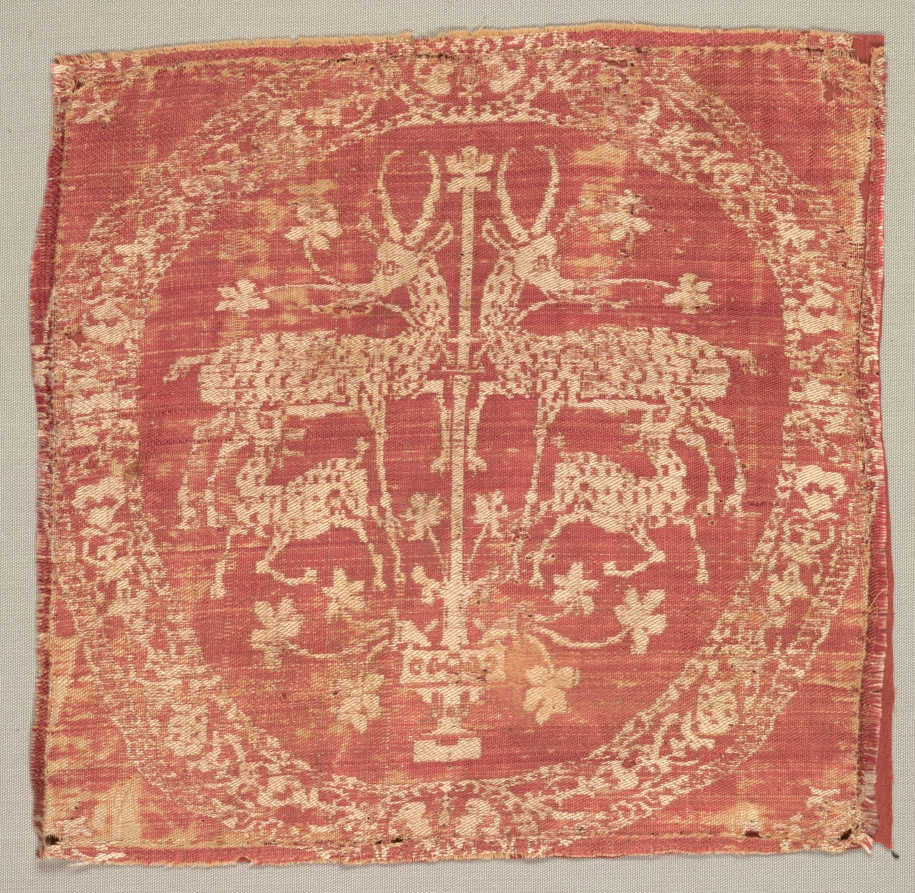
Heritage Research Artifact: Square Ornament from a Tunic
In the hushed, timber-panelled ateliers of Savile Row, where the air is thick with the scent of wool, beeswax, and quiet ambition, one learns to read cloth as a ledger of human intent. A bolt of worsted tells of Yorkshire’s grit; a length of tweed speaks of Highland moorland. But when a square of imperial silk—no larger than a gentleman’s pocket square, yet infinitely heavier with meaning—is laid upon the cutting table, the language changes. It is no longer a whisper of British pragmatism. It is a declaration, a dynastic decree, a thread of absolute power spun across millennia. This artifact, a square ornament excised from a tunic, is not merely a textile. It is a fragment of a sovereign’s nervous system, a piece of the celestial mandate made tangible.
Materiality: The Discipline of the Mulberry Worm
Let us begin with the fibre itself, for in silk, materiality is destiny. The filament is continuous, unbroken, a single protein strand extruded from the silkworm’s gland—a feat of biological engineering that no man-made loom has ever fully replicated. The lustre is not a surface gloss but an internal refraction, a play of light within the triangular prism of the fibre’s cross-section. When held to the light, it does not glare; it glows, with the quiet, self-assured radiance of a polished pearl. This is not the harsh, commercial sheen of a modern power-loom satin. This is the deep, aqueous glow of hand-reeled silk, produced in the imperial workshops of the Ming or early Qing dynasties, where the cocoons were sorted by hand, the water temperature monitored to the degree, and the reeling frame operated by women whose fingers had been trained since childhood to feel the fineness of a single denier.
The weave structure here is a compound twill, a damask of extraordinary density. The warp and weft are both of raw, unweighted silk, giving the fabric a substantial, almost leathery drape—a far cry from the flimsy, floating chiffons of the modern bridal trade. This is a cloth built to endure, to be worn against the skin of a ruler who never sweated, never fidgeted, never showed a crease of doubt. The pattern, a symmetrical arrangement of cloud scrolls and a four-clawed dragon (mang), is not printed but woven into the very structure of the cloth. The weft threads are floated across the surface to create the motif, while the ground is a tightly packed plain weave. This is a technical tour de force, requiring a Jacquard-like loom operated by two weavers—one on the ground, one on a raised platform—coordinating their movements with the precision of a ship’s crew. The result is a fabric of double-faced integrity: the pattern is visible on both sides, though reversed, a hallmark of imperial quality.
Context: The Legacy of Imperial Silk Weaving
To understand this square, one must understand the institution that produced it. The imperial silk workshops, known as the Ningshu and Suzhou bureaus, were not factories in the industrial sense. They were state-managed monasteries of craft, employing thousands of artisans who were, in effect, civil servants bound to the throne. Their output was not for commerce; it was for ritual, for diplomacy, for the very architecture of imperial authority. Silk was the currency of legitimacy. A tribute of silk to a foreign court was not a trade good; it was a statement of cosmological hierarchy, a gift of the Son of Heaven’s own substance.
The tunic from which this square was cut would have been a changfu, a semi-formal robe worn for daily court business, not the grand ceremonial chaofu of the great audiences. Yet even in its relative informality, the garment was governed by sumptuary law of the most exacting kind. The number of dragons, the colour of the ground, the shape of the cloud motifs—all were prescribed by the Huidian, the collected statutes of the dynasty. A square ornament such as this, positioned on the chest or back, was a rank badge, a buzi. It was the imperial equivalent of a regimental tie or a Savile Row cut—a silent, unmissable signal of one’s place in the order of things. The four-clawed dragon indicates a prince of the first or second rank, a man who stood one breath away from the throne itself.
The cutting of this square from the tunic is a deliberate act of violence, a posthumous disassembly. It was likely done in the 19th century, when European collectors, hungry for exotic specimens, purchased or looted such robes and had them cut into saleable fragments. The act is a desecration, but it is also a preservation. The square survives as a synecdoche—a part standing for the whole, a single verse of a lost epic. It is a reminder that heritage is not a static museum piece; it is a living, bleeding thing, subject to the depredations of time and the appetites of collectors.
An Analytical Reading: The Grammar of Power
Examine the dragon. Its body is a serpentine S-curve, a dynamic tension of coiled energy. The head is rendered in profile, with a pronounced snout, a mane of flame-like filaments, and a single, piercing horn. The claws grip a flaming pearl, the symbol of wisdom and spiritual perfection. The dragon does not fly; it undulates through the cloud scrolls, its body partially obscured, suggesting the ineffable nature of imperial power—present, pervasive, but never fully revealed. The clouds themselves are not mere decoration; they are the xiangyun, the auspicious clouds that carry the dragon, the vehicle of celestial ascent. The entire composition is a microcosm of the Daoist cosmos: the dragon (yang, masculine, active) rising through the clouds (yin, feminine, receptive) toward the pearl (the void, the absolute).
From a technical conservation standpoint, the silk is in remarkably stable condition, though the ground has yellowed to a warm, honeyed tone—a sign of natural oxidation, not of poor care. The dyes are of vegetable origin: indigo for the blue, madder for the red, and a yellow from the huai flower. The colours have not faded but have deepened, gaining a patina that no modern aniline dye could ever replicate. Under magnification, one can see the individual filaments, each one a perfect, unbroken cylinder, still retaining its original tensile strength. This is a cloth that could, in theory, be re-woven into a new garment, though to do so would be an act of profound historical vandalism.
Conclusion: The Tailor’s Lesson
On Savile Row, we are taught that a garment is a conversation between the cloth, the cutter, and the wearer. The cloth speaks first; the cutter listens; the wearer completes the sentence. This square ornament is a conversation that has been interrupted. The wearer is gone, the cutter is anonymous, but the cloth still speaks. It speaks of a civilisation that understood that power is not worn; it is woven. It speaks of a craft so refined that it bordered on the supernatural, a craft that made the emperor’s robe a map of the heavens and the earth. And it speaks, finally, of the fragility of all human systems. Empires fall, dynasties crumble, but a square of silk, cut from a tunic and laid upon a table, endures. It is a legacy not of conquest but of creation—a testament to the human hand’s capacity to turn a worm’s thread into a sovereign’s truth. In the quiet of the atelier, one can almost hear the loom of the Suzhou bureau, its rhythmic clatter a heartbeat of a lost world, still beating in the weft of this remarkable, indomitable square.