← BACK TO ARCHIVES
Heritage-Black
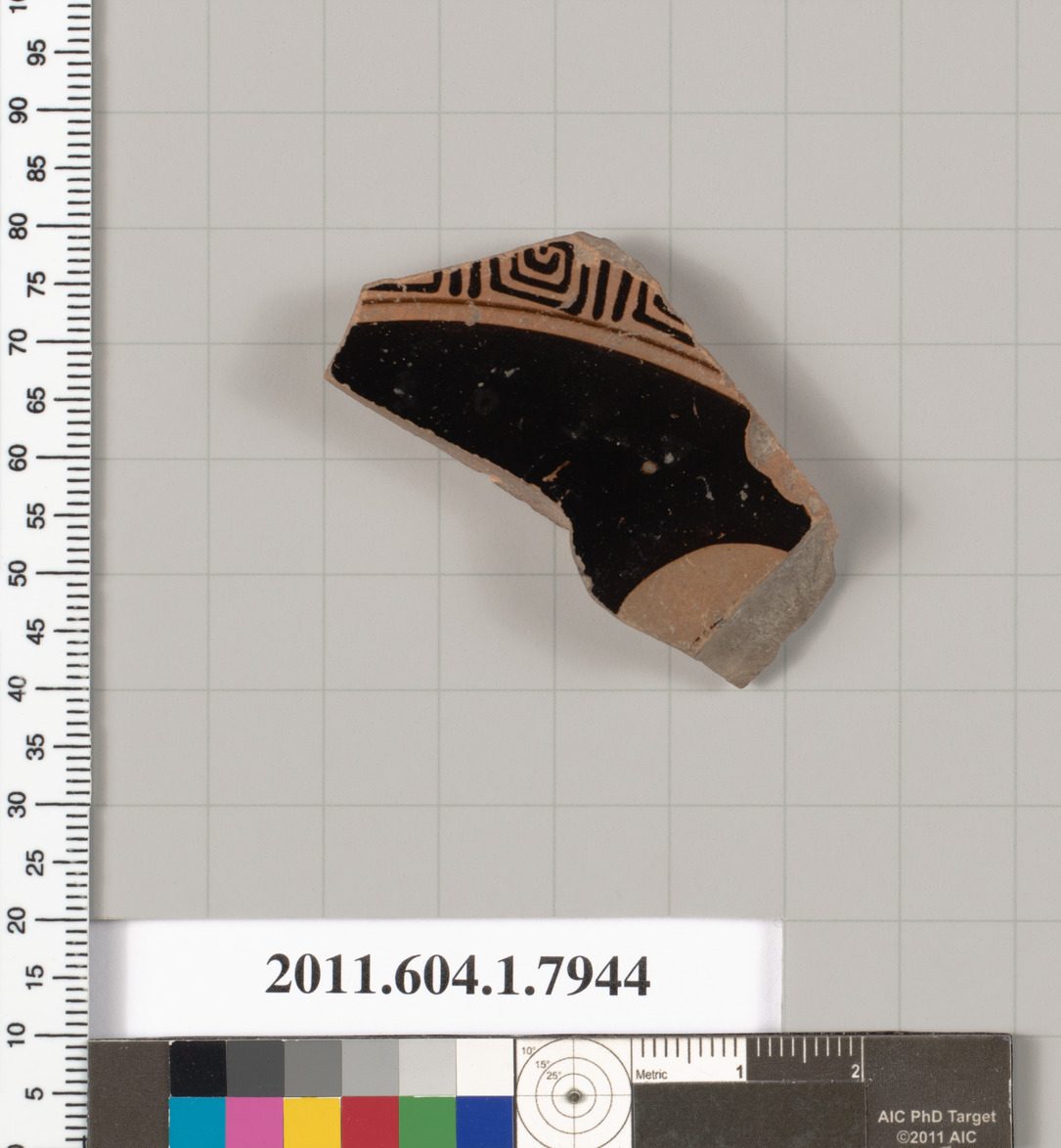
Heritage Synthesis: Terracotta fragment of a kylix (drinking cup)
Curated on Aug 03, 2026 // Node: LDN-01
The Poetics of Patina: Terracotta Fragmentation and the 2026 Old Money Silhouette
The internal genetic code of Lauren Fashion—rooted in the Eastern aesthetic of “以物存心” (preserving the spirit within the object)—finds an unexpected yet profound resonance in a Western artifact: the terracotta fragment of an Attic kylix. This shard of a Greek drinking cup, broken and time-worn, is not a source of literal motif translation. Rather, it functions as a philosophical blueprint for the 2026 Old Money silhouette. Where the Japanese temple plaque and garment chest explored the dialectic between the invisible and the visible, the kylix fragment introduces a third term: the *incomplete*. This incompleteness, far from being a lack, becomes the very engine of quiet luxury—a luxury that does not display, but *suggests*; that does not narrate, but *implies*.
I. The Fragment as a Grammar of Restraint
The Attic kylix, in its original form, was an object of convivial symmetry—a vessel for wine, dialogue, and the democratic rituals of the symposium. Its painted figures, often red-figure or black-figure, depicted gods, athletes, and revelers in balanced, narrative compositions. What remains to us, however, is neither the whole cup nor its intact imagery. We possess a fragment: a curved shard of fired clay, its surface bearing a partial figure, a broken handle root, a swath of now-muted black glaze. This is the artifact’s essential truth. It does not offer completion; it offers *evidence* of completion. The eye is forced to reconstruct, to imagine the missing arc, the absent foot, the other side of the painted scene. This act of imaginative reconstruction is precisely the cognitive posture that defines the 2026 Old Money silhouette.
In practical terms, this translates to a design language of *deliberate omission*. The silhouette is not built on the loud assertion of a full, sweeping form, but on the quiet authority of a partially revealed one. Consider a tailored overcoat in Heritage-Black wool: the shoulder is softly extended, not padded; the lapel rolls with a natural, unforced fall; the length grazes the knee, leaving the lower calf and ankle as an unspoken remainder. The garment does not shout “complete.” It whispers “sufficient.” Like the kylix fragment, it relies on the viewer’s cultural literacy to fill the void. The Old Money wearer does not need to prove status through volume or ornament; the *cut* itself—the precise distance between fabric and body, the controlled drape of a skirt, the measured break of a trouser—creates a negative space that is more eloquent than any embroidery. The fragment teaches us that authority lies not in what is shown, but in what is knowingly withheld.
II. Terracotta’s Texture: The Materiality of Time
The material of the kylix—terracotta, or “baked earth”—is humble, utilitarian, and profoundly tactile. Its surface bears the marks of its making: the potter’s wheel ridges, the burnishing strokes, the uneven application of slip. After millennia in the earth, its color has shifted from the original warm orange to a muted, dusty umber, and its surface is scored with root marks, mineral deposits, and the fine crazing of age. This is not a pristine, museum-perfect finish; it is a *patina of experience*. For the 2026 Old Money aesthetic, this materiality is a direct challenge to the sterile perfection of fast fashion and the glossy, hyper-real surfaces of contemporary luxury.
The response is a turn toward *tactile honesty*. Fabrics are chosen not for their sheen but for their grain. A heavy, unbrushed cashmere retains its natural lanolin and a slight, irregular nap. A raw silk, rather than a polished charmeuse, is used for a blouse, its slubs and irregularities catching the light with a matte, organic glow. Wool is woven in a twill or herringbone that reveals its structural logic on close inspection, much like the kylix’s wheel marks. The color palette moves away from stark, synthetic black toward a Heritage-Black that is *layered*—a black achieved through over-dyeing with indigo, or blended with a hint of deep umber or charcoal, so that it reads not as an absence of color but as a dense, complex presence. This is the terracotta principle applied to hue: a color that has been “baked” by time, that carries the memory of the earth from which it was drawn. The garment, like the fragment, is meant to be touched, to be examined, to reveal its history through its surface. This is not a nostalgia for the past, but a materialist engagement with the present—a declaration that true luxury is the *accumulation of time*, not the erasure of it.
III. The Symmetry of Asymmetry: The Kylix’s Broken Arc
The kylix fragment possesses a distinctive geometry: its broken edges create an asymmetrical, organic contour that contrasts with the strict circularity of the original vessel. This is a crucial formal lesson. The Old Money silhouette of 2026 does not seek the rigid symmetry of classical tailoring, nor the exaggerated asymmetry of avant-garde deconstruction. Instead, it finds a middle path: a *controlled asymmetry* that echoes the fragment’s broken arc. A jacket may have a slightly lowered shoulder on one side, creating a subtle, off-kilter line. A dress may feature a hem that dips a few centimeters lower at the back, a ghost of a train that suggests movement and fluidity. A coat may have a single, deep pleat that releases from the shoulder blade, creating an asymmetric drape that mimics the kylix’s fractured curvature.
This is not a gimmick. It is a sophisticated acknowledgment that perfection is a fiction, and that beauty resides in the *specificity* of imperfection. The broken edge of the kylix is not a flaw; it is a record of an event—a fall, a burial, a rediscovery. Similarly, the asymmetric cut of a 2026 garment is a record of the body’s movement, a concession to the fact that the human form is not a static, symmetrical object. This design philosophy produces garments that feel *alive* on the wearer, that move with a natural, unforced grace. The silhouette is not imposed upon the body; it emerges from a dialogue with it. This is the deepest lesson of the fragment: the whole is not the sum of its parts, but the *relationship* between them, including the missing ones. The 2026 Old Money silhouette, informed by this terracotta shard, is thus a study in *negative capability*—the ability to remain in uncertainty, mystery, and doubt, without any irritable reaching after fact or reason. It is a garment that does not finish the sentence, but leaves a comma, inviting the observer to complete the thought.
IV. From Sacred to Secular: A Shared Aesthetic Closure
Returning to the Eastern code, the temple plaque’s *Udonge* flower exists as a name for the unnameable, while the garment chest’s painted blossoms are a tangible invitation to daily grace. The kylix fragment operates in a similar interstitial space. It is neither purely sacred (though it may have been used in libations) nor purely secular (though it served a convivial function). It is a *threshold object*, bridging the gap between the ritual and the everyday. In the 2026 Old Money wardrobe, this translates to garments that are equally at home in a boardroom, a gallery opening, or a quiet dinner. They are not costumes for a specific occasion, but *infrastructures for a life*—pieces that hold the wearer with the same quiet, unassuming dignity with which the terracotta held its wine.
The fragment’s broken state also speaks to a contemporary anxiety about permanence. In a world of digital ephemerality and planned obsolescence, the Old Money silhouette offers a counter-narrative of *endurance*. A garment cut from the principles of the kylix is not designed for a season; it is designed for a decade. Its asymmetry is not a trend; it is a timeless response to the human form. Its Heritage-Black is not a color of mourning, but a color of *depth*—a depth that, like the terracotta’s patina, only increases with wear and time. The 2026 Old Money silhouette, therefore, is not merely a style. It is a *philosophy of presence*—a way of inhabiting the world with the quiet confidence of an artifact that has survived, that has been shaped by time, and that, in its incompleteness, offers a more profound and honest vision of beauty than any pristine original ever could. The kylix fragment, in its silent, broken eloquence, has given us the grammar for a new kind of luxury: one that is not about acquisition, but about *becoming*—a garment that, like the flower on the chest or the name on the plaque, becomes a vessel for the spirit, a place where time and intention meet in a single, quiet, and enduring form.
Heritage Lab Insight
Genetic Bridge: Archive node focusing on Heritage-Black craftsmanship.