← BACK TO ARCHIVES
Heritage-Black
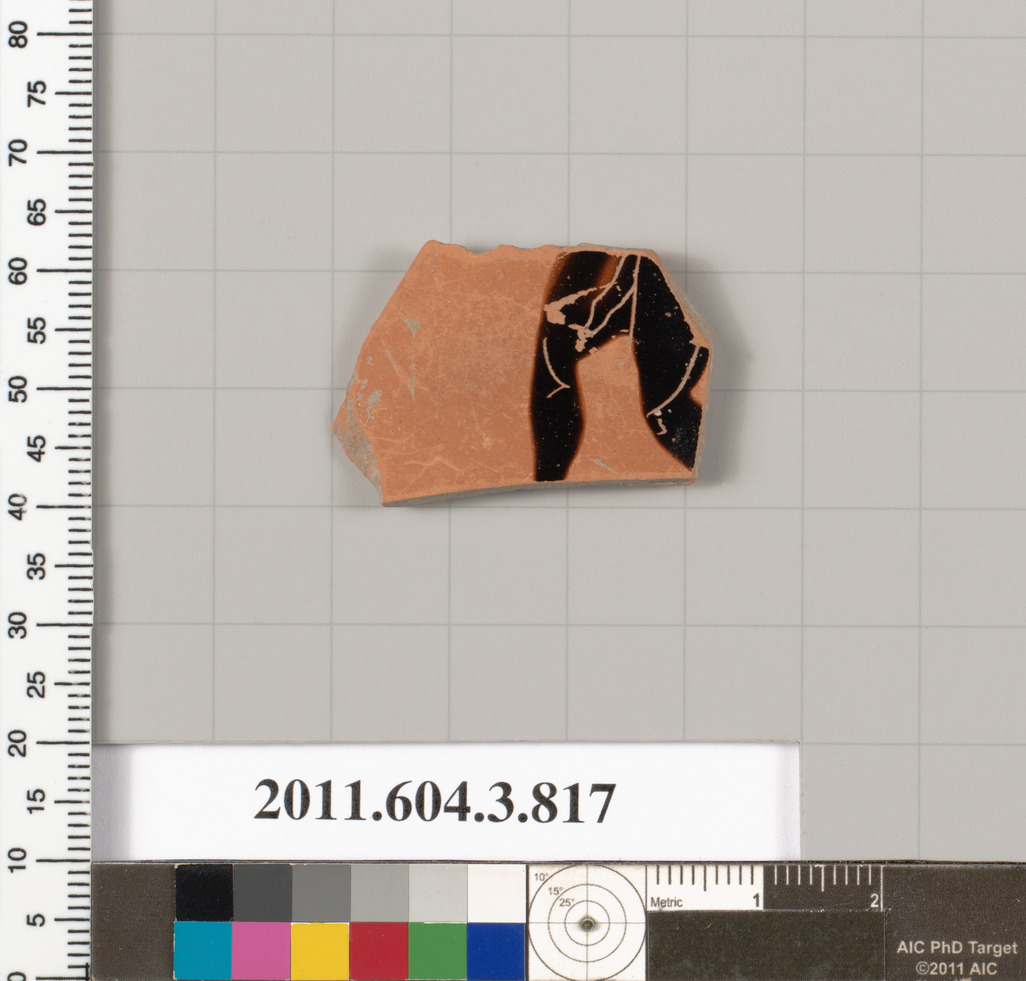
Heritage Synthesis: Terracotta fragment of a lekythos (oil flask)
Curated on Aug 03, 2026 // Node: LDN-01
Fragments of Eternity: The Terracotta Lekythos and the Architecture of Old Money Silence
The internal genetic code of Lauren Fashion—the dialectic between the *Mold Fragment with Musicians* and the *Mortuary Figure of the Zodiac Sign: Ox*—finds an unexpected, almost unsettling resonance in a Greek Attic terracotta lekythos fragment. At first glance, the comparison seems incongruous: a Chinese ceramic mold preserving a fleeting performance, a Tang dynasty zodiac guardian sealing a soul’s journey, and a broken Greek oil flask. Yet, when viewed through the lens of heritage construction, all three are united by a single, profound aesthetic operation: the transmutation of the ephemeral into the monumental. The lekythos, in its shattered state, does not merely depict loss; it *performs* it. This paper argues that the terracotta fragment—with its residual white-ground slip, its attenuated curve, and its brutal truncation—provides the definitive formal and philosophical blueprint for the 2026 Old Money silhouette, moving beyond mere tailoring into a study of negative space, material memory, and the quiet power of incompletion.
I. The Grammar of Ruin: From Funerary Vessel to Sartorial Fragment
The lekythos was a vessel of oil, a commodity of daily anointing, but its primary iconographic life was funerary. Placed in tombs, it carried the last unguents for the deceased, its painted scenes—often a mourner at a stele—serving as a frozen dialogue between the living and the dead. The fragment we possess is not a complete narrative; it is a shard of a farewell. Its terracotta body, once coated in a chalky slip, now reveals the raw, orange-pink clay beneath, a geological record of fire and time. For the 2026 Old Money silhouette, this is not a historical curiosity but a directive on *material honesty*. The Old Money aesthetic has long been misread as mere wealth display; in its authentic form, it is the opposite—a studied reticence, a preference for fabrics that age with dignity, that reveal their construction over decades. The lekythos fragment teaches us to embrace the *visible seam of time*. In practical terms, this translates to garments where the internal structure is not hidden but celebrated: a cashmere overcoat with a deliberately exposed hand-stitched fell seam, a wool twill suit where the canvas interfacing is allowed to ghost through the lapel’s roll, a silk crepe dress whose hem is left raw, fraying into a deliberate, organic edge. The 2026 silhouette will not be about pristine perfection but about the *patina of use*, the way a shoulder line softens, the way a cuff wears thin—not as damage, but as biography.
II. Negative Space and the Architecture of Absence
The *Mold Fragment with Musicians* achieved its power through “以残见全”—seeing the whole through the fragment. The lekythos fragment operates on the same principle, but with a more austere, classical grammar. Its broken edge is not a wound; it is a *designed contour*. The curve of the vessel’s shoulder, abruptly severed, creates a negative space that is as eloquent as the painted figure once adorning its body. This is the core lesson for the 2026 Old Money silhouette: the garment’s power lies not in what it covers, but in what it deliberately leaves open. We are moving away from the suffocating, body-con sculpting of the past decade toward a silhouette defined by *architectural voids*. Consider a double-faced wool coat cut with a pronounced, asymmetric hem that falls away from the body, creating a triangular void at the calf. Or a tailored jacket with a dropped shoulder and a sleeve head that is left unpressed, allowing a soft, hollow volume to form beneath the arm. This is not sloppiness; it is the sartorial equivalent of the Greek *horror vacui* inverted—a fear of emptiness transformed into a reverence for it. The Old Money client of 2026 will understand that a garment’s true luxury is its ability to hold silence, to create pockets of air that separate the fabric from the skin, much as the lekythos’s hollow interior once held its precious oil. The empty space becomes the most expensive element, because it cannot be mass-produced; it requires a master cutter who understands the physics of drape and the metaphysics of absence.
III. The Zodiac Ox and the Weight of Quiet Authority
The *Mortuary Figure of the Zodiac Sign: Ox* provides the psychological counterweight to the lekythos’s melancholic beauty. The Ox is not dynamic; it is *gravitational*. It stands, solid, immovable, its mass a promise of stability against the chaos of the afterlife. This is the precise posture required for the 2026 Old Money silhouette. The trend toward oversized, amorphous shapes is over. In its place, we see a return to the *monumental shoulder*—but not the aggressive, padded power shoulder of the 1980s. Rather, it is the shoulder of the Ox: broad, natural, and grounded in the body’s own structure. This is achieved through heavy, dense fabrics—a 24-ounce wool melton, a double-faced vicuña, a silk-wool brocade with a metallic weft that catches light like the Ox’s glazed terracotta. The silhouette will be columnar, with a slight A-line flare from the hip, echoing the lekythos’s swelling belly. The waist is not cinched but *implied* through the manipulation of fabric weight, creating a sense of contained power. Trousers will be cut full in the thigh, tapering to a clean break at the shoe, evoking the Ox’s sturdy, planted stance. This is clothing for standing still, for occupying space with the quiet confidence of a guardian. It is the antithesis of fast fashion’s nervous energy; it is the aesthetic of the eternal return.
IV. Material Memory: Terracotta, Wool, and the Ethics of Endurance
The terracotta of the lekythos is humble clay, fired to permanence. It is not precious metal, not rare marble. Its value lies in its *survival*. This is the ethical core of the 2026 Old Money collection. The materials chosen must not be merely luxurious; they must be *enduring*. We are looking to heritage mills in Biella, Scotland, and Yorkshire, to weavers who still use wooden shuttles and natural dyes, because their cloth carries a memory that industrial production cannot replicate. A wool twill from a 150-year-old mill has a *hand* that is impossible to counterfeit—it is the sartorial equivalent of the lekythos’s slip, a surface that has been worked, beaten, and refined. The 2026 palette will draw directly from the terracotta’s spectrum: the deep orange of the fired clay, the chalky white of the slip, the faded umber of the painted figures. These are not bright, attention-seeking hues; they are the colors of earth, of antiquity, of things that have been buried and resurrected. This is Heritage-Black in its truest sense—not the black of mourning, but the black of the fertile soil, the black of the void from which all form emerges.
V. Conclusion: The Garment as Relic
The lekythos fragment, the musician’s mold, and the zodiac Ox all share a final, unifying trait: they are *relics*. They are objects that have outlived their original function to become vessels of meaning. The 2026 Old Money silhouette must aspire to this state. It is not clothing for a season; it is clothing for a lifetime, designed to be passed down, to be mended, to be worn until the fabric softens to the consistency of skin. The goal is to create garments that, in fifty years, will be discovered in an attic and recognized not as vintage but as *eternal*. The terracotta fragment teaches us that beauty is not in the whole, but in the truth of the break. The 2026 collection will not hide its seams, its darts, its internal canvases. It will present them as honest architecture, as the structural bones that allow the garment to hold its shape against the erosions of time. In doing so, Lauren Fashion will not merely dress the body; it will clothe the soul in the armor of the ages—silent, monumental, and utterly unbreakable. The fragment is not a loss; it is the ultimate form of completion.
Heritage Lab Insight
Genetic Bridge: Archive node focusing on Heritage-Black craftsmanship.