← BACK TO ARCHIVES
Silk
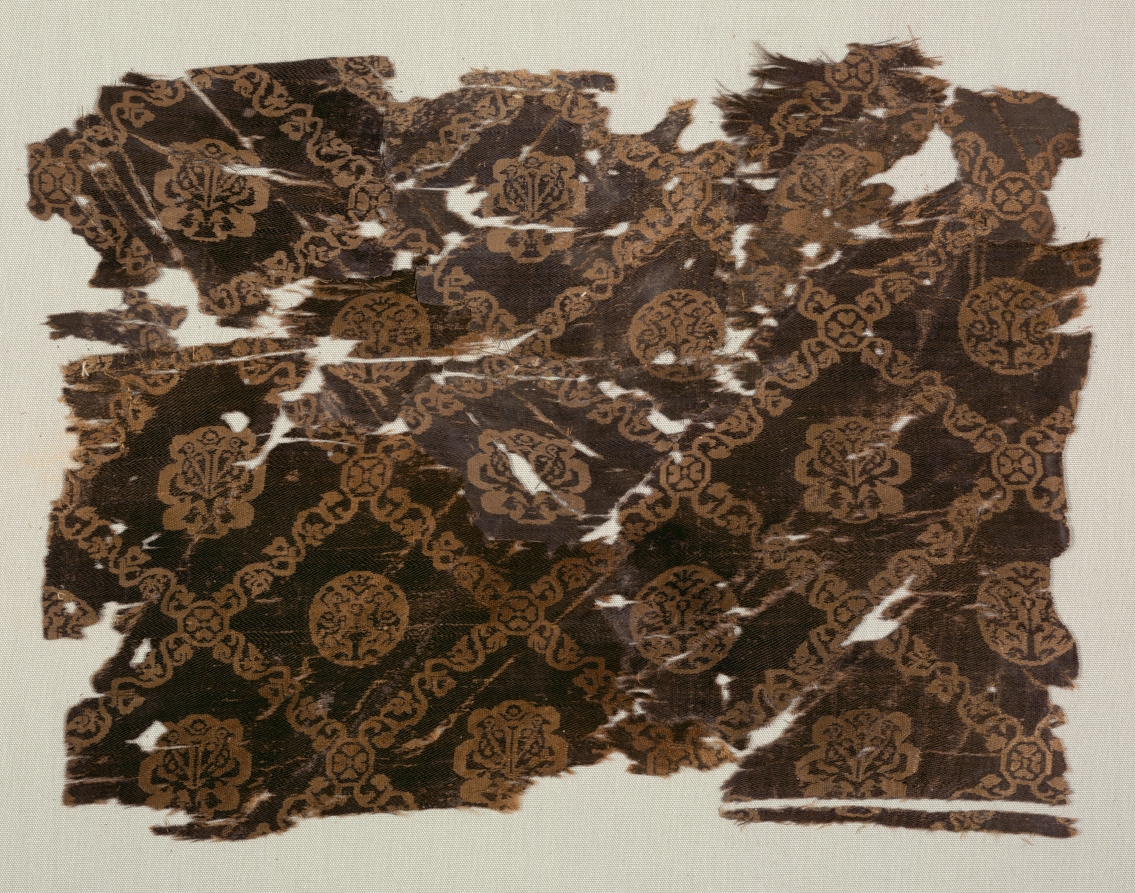
Heritage Synthesis: Silk with lattice of animals in medallions
Curated on Aug 04, 2026 // Node: LDN-01
The Lattice and the Loom: An Heirloom of Imperial Discipline
In the hushed, wood-panelled quiet of a Savile Row fitting room, where the light falls with the precision of a tailor’s chalk line, one rarely speaks of empires. We speak of drape, of shoulder line, of the quiet authority of a cloth. Yet every bolt of serious silk carries within its warp and weft the ghost of a loom, and behind that loom, the disciplined hand of an imperial atelier. The artifact under examination—a silk woven with a lattice of animals in medallions—is not merely a textile. It is a document of power, a frozen cadence of courtly ritual, and a masterclass in the material logic that underpins the very notion of heritage tailoring.
Materiality: The Silk Road’s Final Argument
Let us begin with the fibre itself. This is not the flimsy, slipper-satin of a debutante’s folly. This is imperial silk—mulberry-fed, reeled in continuous, unbroken filaments that measure in the hundreds of metres. The materiality here is paramount. The thread count is formidable, the hand is substantial, almost crisp. When you run a thumb across the surface, you feel not a slippery glide but a controlled resistance. That resistance is the first clue to its provenance. This silk was engineered for structure, not for surrender. It was designed to hold a shape, to stand away from the body, to announce its presence before a single word is spoken.
The weave is a compound structure, likely a lampas or a complex twill, where the ground weave and the pattern weave are distinct. This is not a printed imitation. The animals and the lattice are woven in, thread by thread, using a secondary warp and weft to create a raised, sculptural relief. The result is a fabric that is both supple and architectural. It is a cloth that behaves like a tailored jacket—it has memory, it returns to its form, it does not crease with vulgar enthusiasm. For the modern client, this means a garment that moves with the body but never loses its line. For the historian, it means a textile that has survived centuries because it was built to endure, not merely to adorn.
The Lattice: Geometry as Governance
The lattice is the first structural element the eye registers. It is not a random trellis or a bucolic vine. It is a strict, geometric grid—diamond-shaped or octagonal—that repeats with the relentless precision of a military parade. This is the visual language of imperial order. In Chinese court textiles, the lattice (often referred to as *ling* or *ge* patterns) was not decorative whimsy. It signified the cosmos, the ordering of heaven and earth, the bureaucratic grid that held the empire together. Each intersection is a point of control. The lattice is the law; the animals are the subjects.
This is a crucial distinction for the discerning eye. A floral meander suggests pastoral ease. A lattice suggests administration. When you commission a garment from this cloth, you are not wearing a garden. You are wearing a constitution. The geometry imposes a rhythm on the eye, a cadence that is both calming and authoritative. It is the same principle that governs a well-cut pinstripe—the vertical line that elongates and disciplines the silhouette. Here, the discipline is two-dimensional, but the effect on the wearer is entirely three-dimensional.
The Animals in Medallions: Heraldry of the Celestial Court
Within the interstices of the lattice sit the medallions—roundels, each a self-contained universe. And within each roundel, an animal. This is where the cloth moves from mere structure to narrative. The animals are not whimsical menagerie. They are rank badges, the heraldic beasts of the imperial bureaucracy. The dragon, the phoenix, the qilin, the crane—each carries a specific semantic weight. The five-clawed dragon was reserved for the emperor; the four-clawed for princes. The crane signified longevity and high civil office. The qilin, benevolence and justice.
The medallion format is significant. It isolates the animal, framing it as an emblem rather than a creature in motion. This is not a hunting scene. This is a coat of arms. The animal is static, hieratic, facing forward or in profile with a formal dignity. The effect is heraldic in the truest sense—it identifies the wearer’s place in a rigid social hierarchy. To wear this silk in the imperial court was to wear your CV, your genealogy, and your political allegiance, all woven into a single square metre of fabric.
For the contemporary Savile Row client, the appeal is not literal. We are not dressing mandarins. But the psychological resonance is profound. The medallion creates a focal point, a pause in the visual field. It offers the eye a place to rest, a moment of contemplation. In a world of relentless visual noise, a cloth that demands you stop and look—and then look again—is a quiet act of rebellion. It is the sartorial equivalent of a well-timed silence in a negotiation.
From Imperial Loom to Modern Shoulder
The translation of this artifact into a modern garment requires a particular sensitivity. This is not a cloth for a casual blazer. It demands structure. A single-breasted, unpadded shoulder will not do. The cloth’s own rigidity must be met with a tailored architecture that respects its origins. Think of a shawl-collar dinner jacket, cut with a suppressed waist and a clean, uncluttered front, allowing the lattice and the medallions to speak without interruption. Or a Nehru-collar evening coat, where the absence of lapels echoes the high, closed necklines of the imperial court.
The colour palette is equally critical. The original silks were often grounded in deep, mineral tones—imperial yellow, oxblood red, midnight blue, or the dark bronze of aged tea. These are not cheerful colours. They are the colours of authority, of aged ink, of lacquered furniture in a room where decisions are made. When we reproduce or source a contemporary version, we must insist on these deep, saturated tones. A pastel version would be a travesty—it would strip the cloth of its gravitas and reduce it to a costume.
Conclusion: The Weight of Heritage
Heritage is not nostalgia. It is a standard. This silk, with its lattice of animals in medallions, is a testament to a civilisation that understood that cloth is never neutral. It is a carrier of meaning, a transmitter of power, a physical manifestation of order. When you commission a garment from such a material, you are not simply buying a piece of clothing. You are acquiring a piece of history that has been re-cut for a modern frame. You are wearing the discipline of the imperial loom, the geometry of the celestial court, and the quiet, unshakeable confidence of a cloth that has already outlived empires and will, with proper care, outlive you.
That is the true luxury. Not the silk itself—though the silk is extraordinary—but the weight of the story it carries. And on Savile Row, we know that a garment is only as good as the story it tells when you enter the room. This one tells a story of order, of power, and of a standard that has not been lowered in a thousand years. Wear it accordingly.
Heritage Lab Insight
Lab Insight: CMA Silk Archive Node integration.