← BACK TO ARCHIVES
Heritage-Black
Heritage Synthesis: Terracotta fragment of a kylix (drinking cup)
Curated on Aug 05, 2026 // Node: LDN-01
The Terracotta Kylix and the Architecture of Restraint: Reimagining Old Money Silhouettes for 2026
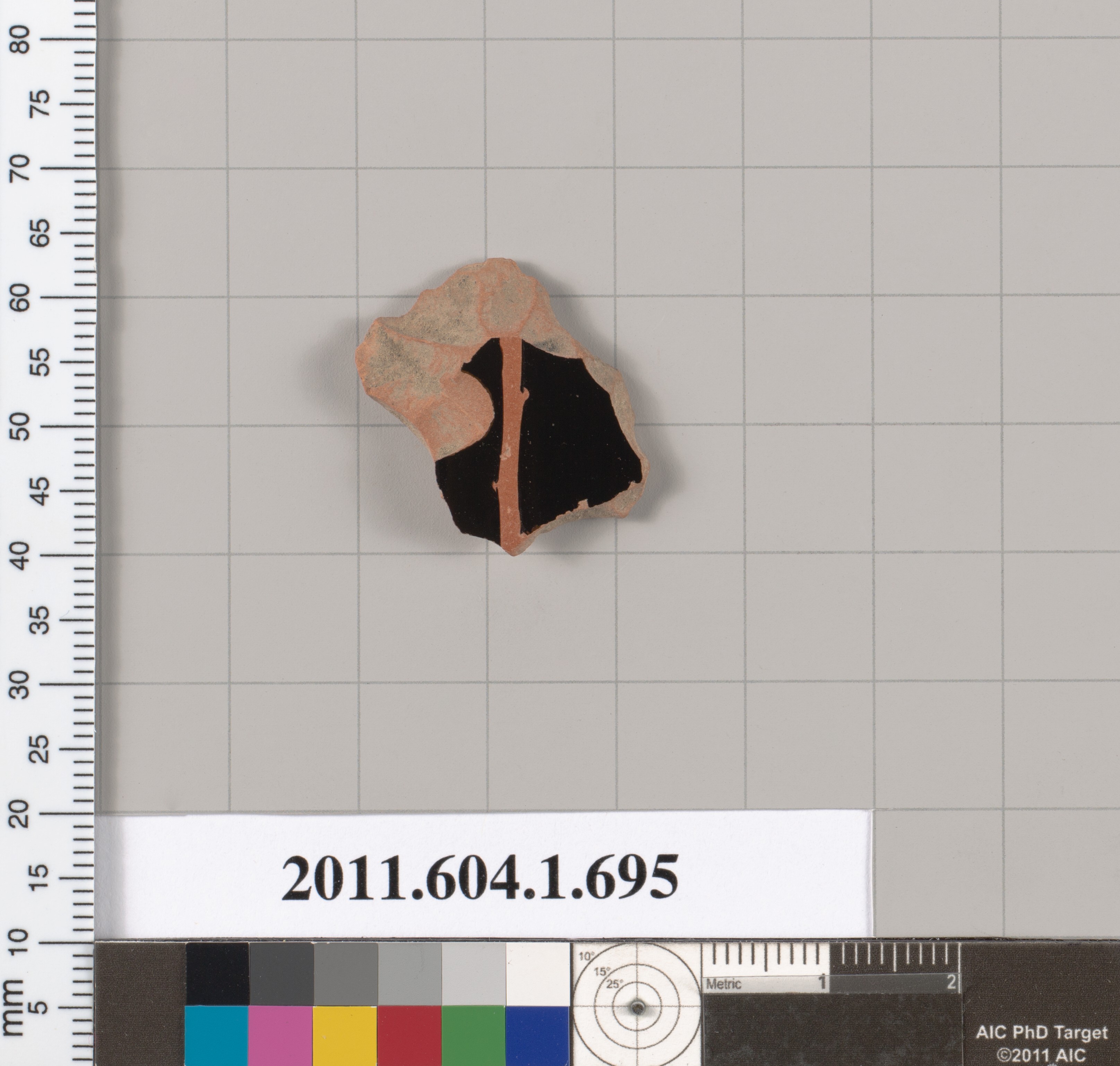
The internal genetic code of Lauren Fashion—anchored in the dialectic between the rustic *Buffalo Boy* and the gilded *Monk’s Robe*—offers a philosophical scaffold for interpreting external artifacts. When we place the terracotta fragment of a Greek Attic kylix beside this framework, we encounter not an alien object but a resonant third voice. The kylix, a drinking cup shattered yet enduring, speaks the same language of *daoqi heyi* (器以载道, the vessel bearing the Way) that governs our atelier’s deepest instincts. Its broken rim, its painted traces of symposium revelry, its humble clay body—these are not mere archaeological remains. They are a masterclass in the aesthetics of imperfection, temporal patina, and the quiet power of the incomplete. For the 2026 Old Money silhouette, this fragment demands a radical rethinking: not the loud assertion of wealth, but the whispered authority of *what remains after time has stripped away the superfluous*.
I. The Fragment as a Blueprint for “Structured Ease”
The Attic kylix, in its original form, was a vessel of communal ritual—wine, dialogue, and democratic conviviality. Yet our fragment is not the whole cup. It is a shard, a memory. This is the first lesson for 2026: **Old Money is not about completeness but about curated survival.** The silhouette that emerges from this terracotta informs a jacket cut with a slightly dropped shoulder, a trouser with a gentle break that mimics the kylix’s curved tondo. We are not designing for a pristine runway; we are designing for a life lived, a garment that accrues creases, fades, and subtle distortions—each a biographical mark. The kylix’s terracotta hue, a deep burnt sienna, translates into a new neutral for the season: *Terracotta Ash*, a color that grounds the palette in earth rather than sky, echoing the *Buffalo Boy*’s immersion in soil. But unlike the pastoral simplicity of that artifact, the kylix’s painted figures—often Dionysian, ecstatic—introduce a controlled tension. The 2026 silhouette thus adopts a *structured ease*: a double-faced cashmere overcoat with hand-stitched lapels that do not lie flat, but roll forward like the kylix’s lip. The shoulder pad is omitted, replaced by a sleeve head that mimics the potter’s thumbprint—an intentional irregularity that reads as bespoke, not manufactured.
II. The Symposium Ethic: Wealth as Shared Silence
The kylix was passed from hand to hand; its fragment implies a circle of drinkers, a shared moment. This communal origin reframes Old Money from *possessive* to *participatory*. The 2026 silhouette, therefore, avoids the sharp, isolating tailoring of power dressing. Instead, we propose a *symposium coat*: a knee-length, unlined wool wrap coat with a hidden interior pocket—not for a wallet, but for a folded letter, a token of correspondence. The terracotta fragment’s interior is often black-glazed, a stark contrast to its painted exterior. This duality informs a new lining philosophy: garments that appear sober and monochromatic on the outside (charcoal, navy, taupe) reveal a flash of *kylix red* or *symposium black* when the sleeve is turned or the coat is swung open. This is not flamboyance; it is a private signal, a nod to those who know. The Old Money wearer of 2026 does not broadcast wealth through logos but through *interiority*—the hidden glazed surface, the unexpected silk twill lining printed with a fragment of the kylix’s palmette motif. This aligns with the *Monk’s Robe*’s principle: the most sacred elements are not displayed but worn closest to the skin.
III. Terracotta’s Patina and the Rejection of “Newness”
The fragment’s surface is not smooth; it bears the marks of burial, of chemical exchange with the earth. For 2026, this is a direct challenge to the fashion industry’s obsession with the pristine. Our silhouettes will incorporate *pre-distressed finishes* that are not grunge but archaeological. A wool twill suit will be treated with a mineral wash that creates a subtle, uneven sheen—reminiscent of the kylix’s fired clay. Seams will be felled by hand, then lightly sanded to soften their edge. Buttons will be carved from *terracotta-stained horn*, not polished to a high gloss but left with a matte, granular texture. This is the *Buffalo Boy*’s “naturalness” elevated to a luxury register: not the faux-rustic of mass-market “artisanal” lines, but the genuine patina of a garment that is *meant* to be inherited. The 2026 Old Money silhouette thus rejects the seasonal churn. A suit is not bought for a single summer; it is acquired as a *fragment* of a longer wardrobe narrative, to be worn, mended, and eventually passed down—its creases becoming the map of a life.
IV. The Kylix’s Tondo and the Circular Silhouette
The kylix’s interior tondo—the circular painted scene at the bottom of the cup—is revealed only when the wine is drained. This is a profound metaphor for the 2026 silhouette’s *reveal logic*. The outer garment is linear, elongated, almost monastic in its verticality (echoing the *Monk’s Robe*). But when the wearer sits, or when the coat is removed, a circular motif emerges: a pleated skirt cut in a full circle, a cape with a circular yoke, a jacket’s interior with a hand-painted tondo of a *heritage black* sun. This is not decoration; it is a philosophical statement. The Old Money aesthetic of 2026 is not about surface but about *depth revealed through action*. Just as the kylix’s drinker discovers the image only after participating in the ritual, so the observer of our garments discovers the hidden circle only through proximity and trust. This inverts the current trend of “stealth wealth” as mere minimalism. Our approach is *layered semiotics*: the outer layer speaks of restraint, the middle layer of craft, the inner layer of a private, almost sacred iconography.
V. Synthesis: The Terracotta Fragment as a Bridge Between Earth and Sky
Returning to our internal genetic code, the kylix fragment occupies a liminal space between the *Buffalo Boy*’s clay and the *Monk’s Robe*’s gold. It is clay, yes, but clay that was painted, fired, and glazed—an early form of *artificial transcendence*. The 2026 silhouette must therefore hold this tension: a garment that is grounded in natural fibers (wool, cotton, linen) yet elevated by precise, almost alchemical finishing techniques. We propose a *heritage black* wool crepe suit, cut with a slightly dropped waist and a trouser that tapers to a 17-inch hem—not skinny, but *columnar*. The jacket’s lapel is cut in a *kylix curve*, a subtle arc that mirrors the cup’s rim. The buttons are not round but *shard-shaped*, irregular quadrilaterals that catch light like broken pottery. The entire ensemble is finished with a *terracotta pigment wash*, applied by hand and then partially wiped away, leaving a ghost of color in the seams. This is not a costume; it is a meditation on mortality and endurance. The wearer of this 2026 silhouette does not look “new.” They look *survived*—like a fragment that has crossed centuries, carrying with it the memory of a symposium, a ritual, a moment of shared humanity.
Conclusion: The Fragment as the Ultimate Luxury
In a culture obsessed with the new, the flawless, and the instantly recognizable, the terracotta kylix fragment offers a counter-narrative. It teaches us that **the highest form of luxury is the ability to be incomplete, to bear the marks of time, and to reveal meaning only to those who take the time to look.** The 2026 Old Money silhouette, as informed by this artifact, is not a collection of garments but a *philosophy of wearing*. It demands a slower gait, a more deliberate gesture, a willingness to let the garment age. It is the *Buffalo Boy*’s humility fused with the *Monk’s Robe*’s transcendence—not through gold, but through the quiet, enduring beauty of fired earth. Let this fragment be our guide: we do not design for the moment; we design for the millennium.
Heritage Lab Insight
Genetic Bridge: Archive node focusing on Heritage-Black craftsmanship.