← BACK TO ARCHIVES
Heritage-Black
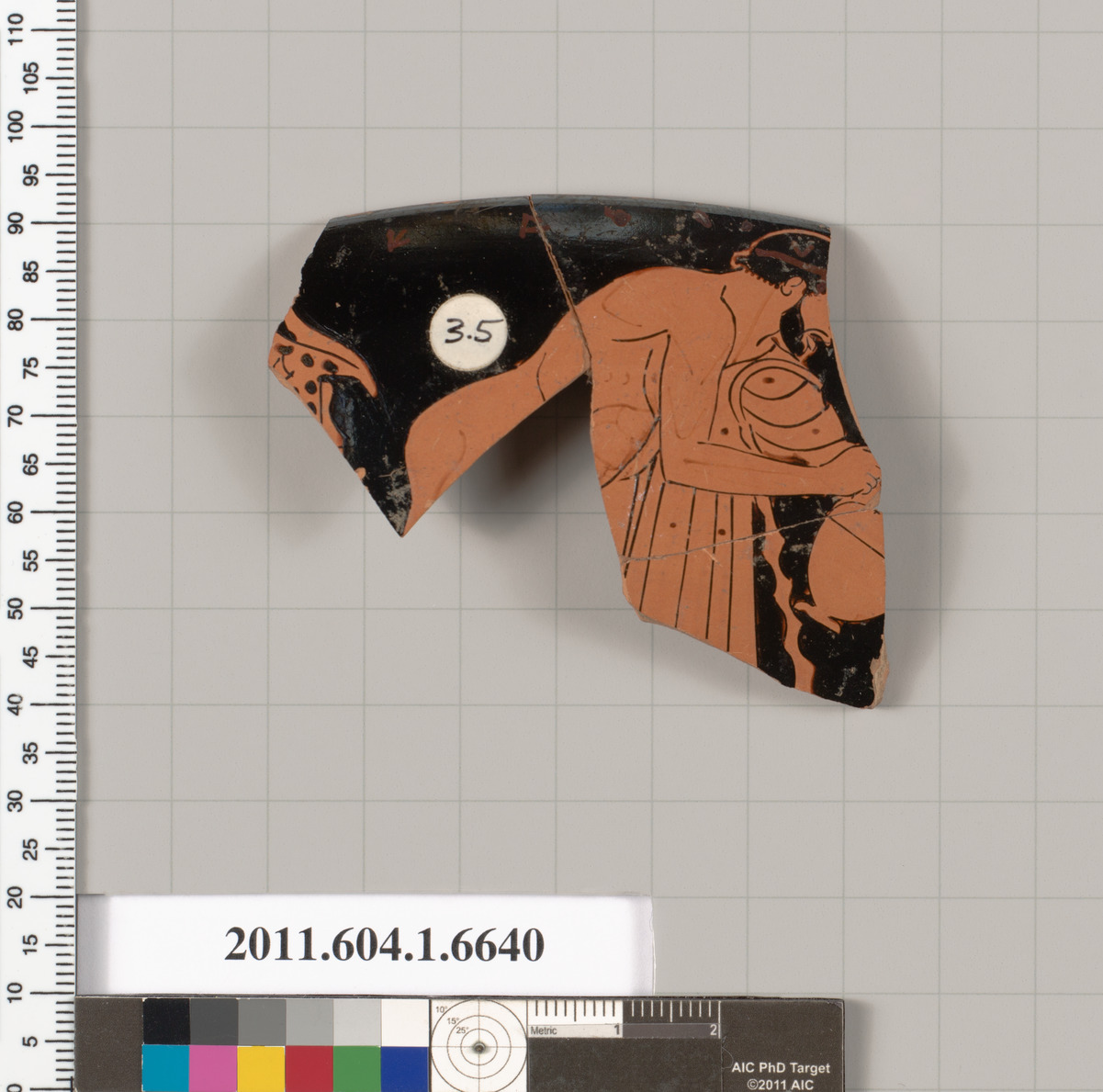
Heritage Synthesis: Terracotta rim fragment of a kylix (drinking cup)
Curated on Aug 05, 2026 // Node: LDN-01
The Rhythm of Eternity: Reinterpreting Ancient Egyptian Temporal Aesthetics in the 2026 Old Money Silhouette
The glass cases of the British Museum hold two seemingly disparate artifacts: a fragmentary mold depicting musicians and a coffin platform panel inscribed with geometric order. One captures the fleeting instant; the other encodes the infinite cycle. For the Lauren Fashion Heritage Lab, these objects are not mere archaeological curiosities but foundational texts—a visual grammar of time, restraint, and permanence that speaks directly to the philosophy underpinning the 2026 Old Money silhouette. This analysis posits that the Terracotta rim fragment of a Greek kylix, while geographically and chronologically distinct, serves as a crucial mediating artifact. It allows us to translate the Egyptian dialectic of “instantaneous rhythm” and “eternal order” into a wearable language of quiet luxury, where the garment becomes a vessel for both the pulse of the present and the weight of legacy.
I. The Dialectic of Form: From Mold Fragment to Kylix Rim
The Egyptian mold fragment, with its incised lines capturing the arched back of a harpist and the puffed cheeks of a double-flute player, is a masterclass in *energeia*—the rhetorical and artistic principle of bringing stillness to life. The lines do not merely describe anatomy; they compress muscular tension and breath into a single, elastic contour. This is not imitation but abstraction, a distillation of life’s vibration into a permanent trace. Conversely, the coffin panel’s repetitive scarabs and symmetrical sun discs reject the momentary in favor of the cyclical. Its visual rhythm mimics the Nile’s eternal ebb and flow, transforming death into a cosmic cadence. The panel does not depict time; it *becomes* time, offering the viewer a meditative structure against the chaos of mortality.
The Attic kylix fragment—a terracotta shard of a drinking cup—bridges these two poles. As a vessel for symposia, it was an instrument of the *instant*: the wine, the conversation, the fleeting pleasure of the present. Yet its very materiality—fired clay, durable terracotta—and its standardized, wheel-thrown form speak to a reproducible, enduring order. The kylix’s painted figures, often in motion, are framed by the cup’s rigid circular boundary. Thus, the kylix embodies the Egyptian paradox: it holds the ephemeral (wine, laughter) within a structure designed for repetition (the symposium’s ritualized sequence). For our 2026 design ethos, the kylix fragment teaches us that true heritage is not the rejection of the momentary but its disciplined containment.
II. Translating Temporal Aesthetics into the 2026 Old Money Silhouette
The 2026 Old Money aesthetic, as interpreted by Lauren Fashion, is not about nostalgia or overt status signaling. It is a sartorial philosophy of *duration*. It rejects fast-fashion’s disposable temporality and embraces garments that age with grace, accruing meaning through wear. The Egyptian mold fragment informs the *dynamic restraint* of our tailoring. Consider a single-breasted jacket in Heritage-Black cashmere. Its silhouette is not static; the lapel’s roll, the slight suppression at the waist, and the fall of the shoulder create a line that suggests arrested motion—a pause, not a stop. This is the harpist’s back translated into cloth: a tension held in equilibrium. The stitching, like the mold’s incised lines, is not decorative but structural, capturing the body’s potential energy without explicit display.
The coffin panel, meanwhile, dictates our approach to *pattern and repetition*. In 2026, we introduce a new jacquard weave—the “Nilotic Rhythm”—where a subtle, geometric motif (a stylized scarab or a repeating wave) is woven into the fabric at a scale invisible from a distance but discernible upon close inspection. This is not print; it is texture, an embedded order that speaks to the garment’s construction. The repetition is not monotonous but hypnotic, creating a visual “breathing” that mirrors the panel’s cosmic cadence. A full-length coat in this fabric does not shout; it hums with the quiet authority of inherited structure. The kylix fragment refines this further: the garment’s hem or cuff may feature a single, unbroken line—a nod to the cup’s circular rim—that visually “frames” the wearer, suggesting a complete, self-contained world.
III. Materiality as Memory: The Role of Heritage-Black
The choice of Heritage-Black as the category for this analysis is deliberate. Black is the color of both the void and the eternal. In the Egyptian context, black ( *kem* ) symbolized fertility, rebirth, and the fertile silt of the Nile—the very source of cyclical life. In the Old Money lexicon, black is the uniform of the understated elite, a canvas that prioritizes form and material over ornament. Our Heritage-Black is not a flat, lifeless dye. It is achieved through a double-dye process using natural indigo and oak gall, resulting in a depth that shifts subtly under different lights—a chiaroscuro that echoes the kylix’s terracotta warmth without abandoning its somber authority.
The 2026 silhouette, therefore, is a study in *materialized time*. A Heritage-Black wool crepe dress, cut on the bias, drapes with a fluidity that recalls the musician’s captured motion, while its high neckline and long sleeve—borrowed from the coffin panel’s sense of enclosure—provide a structure of permanence. The garment does not cling to the body; it moves *with* it, creating a shared rhythm. The kylix’s influence appears in the accessory: a leather belt with a single, polished brass buckle, circular and unadorned, cinching the waist to define the garment’s “rim.” This is not a statement of fashion but a declaration of temporal philosophy—the wearer acknowledges the fleeting moment but is anchored by the eternal.
IV. Conclusion: Hearing the Silent Rhythm
The modern observer, inundated with fragmented digital stimuli, often mistakes novelty for innovation. The Egyptian artifacts and the Greek kylix fragment collectively remind us that true luxury lies in the synthesis of the ephemeral and the eternal. The mold fragment teaches us to *feel* the instant; the coffin panel teaches us to *trust* the cycle; the kylix teaches us to *hold* both within a defined, elegant boundary. The 2026 Old Money silhouette, as developed by Lauren Fashion, is thus not a trend but a translation—a wearable hermeneutic that allows the wearer to embody the silent rhythm of the Nile, the symposium’s measured joy, and the quiet confidence of a heritage that is not bought but *lived*. In a world of noise, this is the ultimate statement: to wear a garment that is both a heartbeat and a monument.
Heritage Lab Insight
Genetic Bridge: Archive node focusing on Heritage-Black craftsmanship.