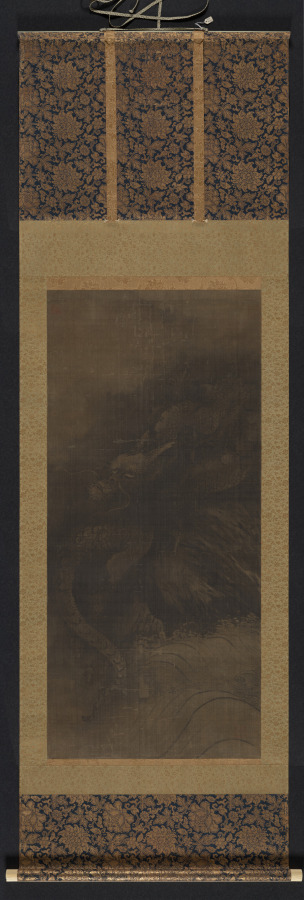
The Dragon in Silk: An Imperial Legacy, Reconsidered for the Modern Atelier
Introduction: The Thread of Sovereignty
In the hushed, precise world of Savile Row, where a lapel’s roll is debated with the gravity of a treaty, we rarely pause to consider the provenance of our raw materials. Yet the most potent symbol in our shared tailoring vocabulary—the dragon—owes its very existence to a material that predates the needle by millennia: silk. To speak of the dragon is to speak of imperial silk weaving, a craft so entwined with statecraft that the creature itself became a legal instrument, not merely a decorative motif. This artifact examines the dragon as a materialised ideology, rendered in a fibre that was once more valuable than gold. For the contemporary heritage specialist, understanding this legacy is not an exercise in nostalgia; it is a lesson in the immutable power of provenance, exclusivity, and the silent language of cloth.
The Materiality of Power: Why Silk, Why the Dragon
Silk is not a fabric; it is a biological marvel. The continuous filament of the Bombyx mori cocoon, sometimes extending over a kilometre, produces a fibre with a tensile strength comparable to steel at equivalent diameter, yet with a lustre and drape that no synthetic has ever replicated. For the imperial courts of China, this was not merely a luxury—it was a strategic monopoly. The Silk Road was, in effect, a supply chain for power. The dragon, in turn, was the visual signature of that power. Unlike the fire-breathing, hoarding beast of Western heraldry, the Chinese long was a benevolent, celestial entity—a controller of rain, rivers, and ultimately, the Mandate of Heaven. To weave a five-clawed dragon in silk was to literally bind the emperor’s authority into the warp and weft of his robes. The material and the motif were inseparable: silk’s unbroken thread symbolised dynastic continuity, while the dragon’s sinuous form, rendered in gold-wrapped threads and peacock feather filaments, demanded a technical mastery that no other civilisation could approach.
The Imperial Workshop: A Study in Precision and Secrecy
Consider the Jiangnan weaving bureaus of the Ming and Qing dynasties. These were not factories in the modern sense; they were state-sanctioned ateliers of extraordinary discipline. A single jifu (dragon robe) could require three years of labour. The master weavers, working on drawlooms that could hold up to 1,800 warp threads, operated in near silence. The pattern—the dragon’s scales, its five claws, its pearl of wisdom—was not drawn but programmed into the loom via a complex system of pattern cords, a precursor to the punch-card technology that would later drive the Industrial Revolution. The colour palette was equally regulated: imperial yellow was reserved exclusively for the emperor; azure for princes; and the number of claws—four for nobility, five for the Son of Heaven—was a matter of life and death. A weaver who misplaced a single claw was not merely making a defect; he was committing treason in thread. This is the ultimate lesson in quality control: when the stakes are existential, the standard becomes absolute.
The Dragon’s Anatomy: Reading the Robe
For the heritage specialist, the imperial dragon robe is a document. Every element is a clause in a visual constitution. The frontal dragon (zheng long) on the chest and back represents the emperor’s direct authority—static, confrontational, absolute. The profile dragons (xing long) on the shoulders suggest dynamism, the ability to survey the realm. The rising dragon (sheng long) and descending dragon (jiang long) on the lower hem depict the cosmic order—the ascent of the sovereign and the descent of heavenly mandate. The cloud collar (yun jian) framing the neck is not decorative; it is a cartographic representation of the universe, with the emperor at its axis. The twelve symbols—sun, moon, stars, mountains, dragons, pheasants, sacrificial cups, water weeds, flames, grains, fu symbol, and axe—are a complete philosophical system. The dragon is not isolated; it is the central protagonist in a woven cosmology. When we examine a fragment of such a robe under a loupe, we are not looking at a pattern. We are looking at a constitution, a tax code, and a prayer, all rendered in a material that whispers against the skin.
Technical Mastery: The Unseen Standard
The technical demands of imperial silk weaving are staggering, and they offer a benchmark for modern luxury. The warp-faced compound weave (jin) creates a fabric that is reversible, with the pattern appearing in contrasting colours on each side. The couching technique for gold thread—where flat, gilded paper strips are laid on the surface and stitched down with silk—produces a raised, sculptural effect that catches light differently with every movement of the wearer. The count of picks per inch in the finest robes can exceed 120, compared to a standard Savile Row suiting at around 50. This density is not for warmth; it is for substance. The robe must have a certain heft, a gravity that matches the weight of the crown. The finish is equally critical: the silk is degummed, dyed with natural indigo and madder, and then calendered to a subtle sheen—never glossy, always luminous. This is the antithesis of fast fashion. It is a material that demands patience, and in that patience, it confers dignity upon the wearer.
From Imperial Court to Contemporary Cloth
How does this legacy translate to the modern atelier? The dragon has been co-opted by countless brands, often reduced to a garish embroidered emblem on a bomber jacket. This is a travesty of provenance. The heritage specialist’s role is to reclaim the dragon’s materiality. We can borrow its principles without literal imitation. First, exclusivity through scarcity: the imperial weavers used only the finest, hand-reeled silk from specific mulberry groves. A modern house can source limited-batch silks from a single, documented farm in Zhejiang, with a certificate of origin. Second, structural integrity: the dragon’s form was built into the weave, not applied as an afterthought. A contemporary interpretation might use a jacquard weave with a dragon-scale pattern in a tonal, self-coloured silk—visible only at close range, a secret for the discerning. Third, the discipline of placement: the imperial robe placed the dragon with mathematical precision. A modern suit jacket might feature a single, abstracted dragon claw subtly integrated into the pick-stitching of the lapel, or a lining with a repeating, geometricised dragon motif in a deep aubergine on a midnight ground. The point is not to shout; it is to know.
Conclusion: The Thread Remains Unbroken
The dragon in silk is not a relic. It is a case study in how material, technique, and meaning can fuse into an object of transcendent value. The imperial weavers understood that a garment is never merely clothing; it is a statement of identity, a legal document, and a work of art. For the modern heritage specialist, the lesson is clear: provenance is not a marketing tagline. It is the accumulated weight of every hand that touched the thread, every rule that governed its pattern, and every emperor who wore it. When we handle a piece of imperial silk, we are not touching a fabric. We are touching a mandate. And in the quiet, obsessive world of Savile Row, we know that the cut may change, but the thread—like the dragon’s unbroken spine—must never be severed.