← BACK TO ARCHIVES
Silk
Heritage Synthesis: Silk Veil
Curated on Aug 06, 2026 // Node: LDN-01
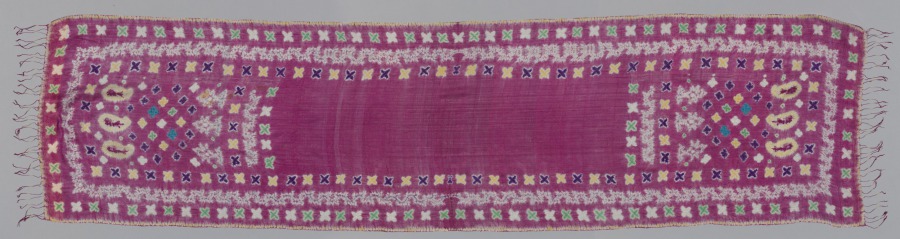
The Silk Veil: An Heirloom of Imperial Craft and Modern Restraint
In the hushed ateliers of London’s Savile Row, where the measure of a man is taken in cloth and the whisper of a lining is a signature, we understand that true luxury is never loud. It is a matter of weight, of drape, of the infinitesimal play of light upon a fibre. The silk veil, in this context, is not merely an accessory; it is a testament to a lineage of imperial weaving that predates the very concept of a tailored suit. To hold a silk veil is to hold a fragment of history that has been spun, dyed, and finished with a precision that modern machinery can imitate but never truly replicate.
The Material Imperative: Why Silk Endures
The materiality of silk is the foundation of its legacy. Unlike cotton or linen, which are spun from short staples, silk is a continuous filament—a single, unbroken protein thread extruded by the silkworm. This structural integrity grants the fabric an extraordinary tensile strength, often exceeding that of steel wire of the same diameter. For the connoisseur, this translates into a practical longevity: a well-made silk veil, if handled with the care it deserves, will outlive its owner and pass, unblemished, to the next generation.
Yet the true genius of silk lies in its optical and tactile properties. The triangular prism structure of the fibre’s outer layer refracts light, producing a lustre that is at once soft and luminous. This is not the flat sheen of a synthetic satin; it is a depth of colour that shifts with the angle of the wearer’s movement. In the imperial workshops of China, Persia, and later Byzantium, this optical quality was considered a form of alchemy. The veil, when worn, did not merely cover the face or shoulders; it created a moving canvas of shadow and light, suggesting form without revealing it. This is the essence of discretion—a virtue that Savile Row has long championed in its tailoring.
The Imperial Legacy: From Sericulture to Sovereign Courts
The history of silk is a history of guarded secrets. For millennia, sericulture—the cultivation of silkworms—was a closely held monopoly of the Chinese imperial court. The punishment for smuggling silkworm eggs or mulberry seeds out of the empire was death. This was not mere paranoia; it was the recognition that silk was a strategic asset, a currency of diplomacy and a marker of supreme status. The Silk Road, that vast network of trade routes, was less about commerce than about the transmission of power. A veil woven in the imperial looms of Chang’an was not simply a textile; it was a diplomatic gift, a symbol of the emperor’s favour, and a physical embodiment of the state’s mastery over nature.
By the time silk reached the Byzantine court in the sixth century, the craft had evolved into a complex liturgical and ceremonial art. The imperial workshops of Constantinople produced veils of such intricate weave that they were described as “woven air.” These were not mere garments; they were architectural elements, used to partition sacred spaces, to drape altars, and to shroud the faces of empresses during coronation. The weight of the silk, its density, and its ability to hold a fold were all calibrated to convey a specific message: the wearer was not merely wealthy, but possessed of a refined, almost sacerdotal authority.
This legacy of imperial weaving is directly relevant to the modern silk veil. When we speak of a “heritage” piece, we are not referring to a nostalgic reproduction. We are referring to a continuity of technique. The warp and weft of a fine silk veil are still set by hand, often on looms that have been in continuous operation for centuries. The dyeing process, particularly for deep, resonant colours like imperial purple or midnight blue, still relies on the slow, patient absorption of natural dyes into the fibre. This is not a process that can be rushed; it is a discipline that mirrors the patience required in a Savile Row fitting room, where a jacket is basted, tried, and adjusted over several sittings.
The Veil as a Study in Restraint and Revelation
In the language of tailoring, we speak of “balance” and “line.” The silk veil, at its finest, is an exercise in both. Its purpose is not to conceal but to modulate. A sheer silk veil, woven at a gauge of 12 momme or less, offers a translucent barrier that softens the features, creating a sense of mystery that is far more compelling than outright exposure. This is the same principle that governs the cut of a well-tailored overcoat: it suggests the form beneath without delineating it, allowing the imagination to complete the picture.
The weight of the veil is equally critical. A heavier silk, perhaps 19 to 22 momme, falls with a deliberate, liquid grace. It does not flutter; it flows. This weight gives the wearer a sense of groundedness, a physical reminder of the garment’s presence. In imperial contexts, this weight was a sign of substance—a veil that could be draped over a throne or used to shield a bride from the gaze of the court was not a frivolous object. It was a piece of regalia, designed to command respect.
For the modern client, the silk veil serves a dual purpose. On one hand, it is a nod to tradition—a way of connecting to a lineage of craftsmanship that has survived revolutions, wars, and the advent of fast fashion. On the other, it is a profoundly contemporary statement. In an era of relentless digital exposure, the veil offers a rare commodity: privacy. It is a deliberate act of withholding, a choice to reveal only what one wishes to reveal. This is the ultimate luxury—not the ability to show everything, but the confidence to show almost nothing.
Care and Custody: The Stewardship of a Heirloom
A silk veil is not a disposable item. It requires a certain reverence. We advise our clients to store their veils flat, wrapped in acid-free tissue, away from direct sunlight. Silk is a protein fibre, and like skin, it will age if neglected. It should never be washed in hot water; a cool, gentle hand wash with a mild detergent is acceptable, but dry cleaning is preferable for heavily constructed pieces. The veil should be ironed while slightly damp, on a low heat, with a pressing cloth to protect the lustre.
This care is not a burden; it is a ritual. It is the same ritual that a master tailor performs when he presses a lapel or adjusts a shoulder seam. It is a recognition that the object in your hands is not a product but a legacy. The silk veil, with its imperial provenance and its material perfection, is a reminder that true elegance is never ephemeral. It is a quiet, steadfast assertion of quality that will outlast every trend.
In the end, the silk veil is a paradox: it is both a shield and a mirror. It shields the wearer from the world’s gaze, while reflecting the world’s most refined craft. It is a piece of history that you can wear, a whisper of the imperial courts that now rests upon your shoulders. And that, in the language of Savile Row, is the highest form of bespoke—a garment that is not merely made, but inherited.
Heritage Lab Insight
Lab Insight: CMA Silk Archive Node integration.