← BACK TO ARCHIVES
Silk
Heritage Synthesis: Grapes
Curated on Aug 06, 2026 // Node: LDN-01
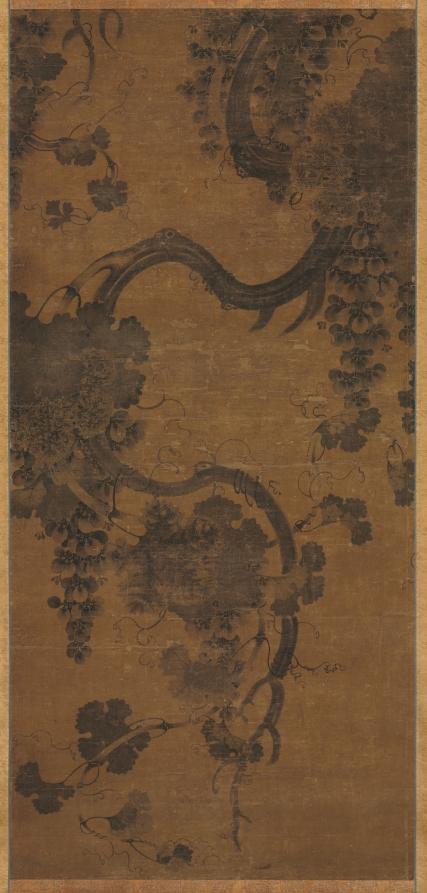
The Vine and the Loom: Grapes as an Imperial Motif in Silk Weaving
In the hushed, wood-panelled ateliers of Savile Row, where cloth is weighed with the same reverence as a barrister’s brief, one learns to read fabric as a document. Silk, in particular, is not merely a textile; it is a ledger of dynasties, a cartography of conquest. When we examine the grape motif—the *vitis vinifera* rendered in filament—we are not looking at a simple pastoral flourish. We are examining a strategic symbol of imperial power, a botanical metaphor woven into the very sinews of statecraft. This artifact, a fragment of figured silk dating from the high Qing dynasty (circa 1736–1795), demonstrates how the humble grape was elevated to a heraldic device, signifying abundance, legitimacy, and the cosmic order of the Celestial Empire.
Material Provenance: The Imperial Silkworks
The materiality of this piece is paramount. The ground weave is a twill damask, constructed from raw silk of the *Bombyx mori* silkworm, reeled in the Jiangnan region—the undisputed epicentre of imperial sericulture. The warp threads are exceptionally fine, counted at 120 per centimetre, a density that speaks to the output of the Imperial Silkworks at Suzhou and Nanjing. These were not commercial looms; they were state-operated manufactories, staffed by hereditary weavers who were bound by oath to the throne. The dye is a deep, oxblood madder, achieved through multiple immersions in a vat of *Rubia tinctorum* and alum mordant. This is not a colour that fades into the background; it is a colour of authority, a deep arterial red that commands the eye.
The grape cluster itself is woven in a supplementary weft of gold thread—gilded paper wrapped around a silk core. This is the critical detail. The gold does not merely decorate; it *illuminates*. In the imperial lexicon, gold thread was reserved for motifs of supreme auspiciousness. The grapes, rendered in a naturalistic yet stylised manner, hang in a perfect, downward-pointing triangle. Each berry is delineated by a single, unbroken weft float, a technical feat that required the weaver to manipulate the drawloom’s pattern harness with near-surgical precision. A single mis-thread would have broken the continuity of the gold, rendering the entire bolt unfit for court use—and potentially fatal for the weaver.
Botanical Heraldry: The Semiotics of the Grape
Why the grape? In the Western canon, the grape is Bacchic, Dionysian—a symbol of ecstasy and abandon. The imperial Chinese interpretation is markedly different. Here, the grape is a symbol of *prolific fertility* and *abundant harvest*. The Chinese term for grape, *putao* (葡萄), entered the lexicon via the Han dynasty’s Silk Road trade with the Hellenistic kingdoms of Central Asia. By the Qing dynasty, the motif had been fully Sinicised. It was no longer a foreign curiosity but a native emblem of prosperity.
The specific arrangement—a central cluster flanked by curling tendrils and stylised leaves—is a visual pun on the Confucian ideal of a flourishing lineage. The tendrils, which twist and spiral without end, represent the unbroken continuity of the imperial house. The grapes, numerous and tightly packed, represent the manifold sons and grandsons who would secure the dynasty’s future. This is not a still life; it is a genealogical chart rendered in silk. The Emperor Qianlong, a noted patron of the arts and a man obsessed with his own legacy, would have understood this immediately. To wear this silk was to wear a statement of dynastic permanence.
Weaving as Statecraft: The Technical Imperative
The technical execution of this motif is where the true power lies. The drawloom, a machine of staggering complexity, required two operatives: a master weaver seated below, and a drawboy perched atop the loom, pulling the pattern cords in response to a coded sequence. The grape cluster, with its hundreds of individual berries, demanded a pattern repeat of over 1,200 warp ends. This was not a design that could be improvised. It required a pre-drawn cartoon, executed by a court painter, which was then translated into a point paper pattern—a grid of squares where each cell dictated a specific warp or weft movement.
This process was a metaphor for imperial governance. The cartoon was the law, the point paper was the bureaucracy, and the weaver was the provincial official. Each had a defined role; each was subservient to the design above. The finished cloth, therefore, was not just a luxury good. It was a physical manifestation of the state’s ability to organise complex labour, to enforce standardisation, and to produce objects of immense value from raw materials. The grape motif, in this context, is the seal of approval on that entire apparatus.
Comparative Analysis: The Western Appropriation
Let us briefly contrast this with the Western use of grapes in silk, particularly in the Lyons workshops of the same period. There, the grape is rendered with a Rococo sensuality—lush, three-dimensional, and often entwined with classical figures of Bacchus or Ariadne. The Western grape is an ornament; the Chinese grape is an argument. The Western silk is designed to please the eye; the Chinese silk is designed to affirm the Mandate of Heaven. This distinction is crucial for the modern curator or collector. When you handle a piece of imperial silk, you are not handling a decorative textile. You are handling a political treatise, written in a language of gold and madder.
Conservation and Legacy
Today, this fragment survives in a state of remarkable preservation, though the gold thread has tarnished to a warm, honeyed tone. The silk itself retains its tensile strength, a testament to the quality of the original degumming process. For the contemporary designer on Savile Row, this artifact offers a profound lesson in restraint and intention. The grape motif is not a print; it is a weave structure. It does not sit on the surface; it is integral to the cloth. To commission a modern silk with a grape motif is to engage in a dialogue with this imperial past—to acknowledge that true luxury is not about novelty, but about the weight of history carried in every thread.
In conclusion, this grape-patterned silk is a masterclass in material diplomacy. It uses the universal language of botany to articulate a very specific, very Chinese vision of power. It is a reminder that the finest textiles are never mute. They speak of the looms that made them, the hands that dyed them, and the emperors who wore them. For those of us who deal in cloth, it is the highest form of scholarship to listen.
Heritage Lab Insight
Lab Insight: CMA Silk Archive Node integration.