← BACK TO ARCHIVES
Heritage-Black
Heritage Synthesis: Terracotta fragment of a kylix: Lip cup (drinking cup)
Curated on Aug 07, 2026 // Node: LDN-01
The Eternal Symposium: Terracotta Conviviality and the 2026 Old Money Silhouette
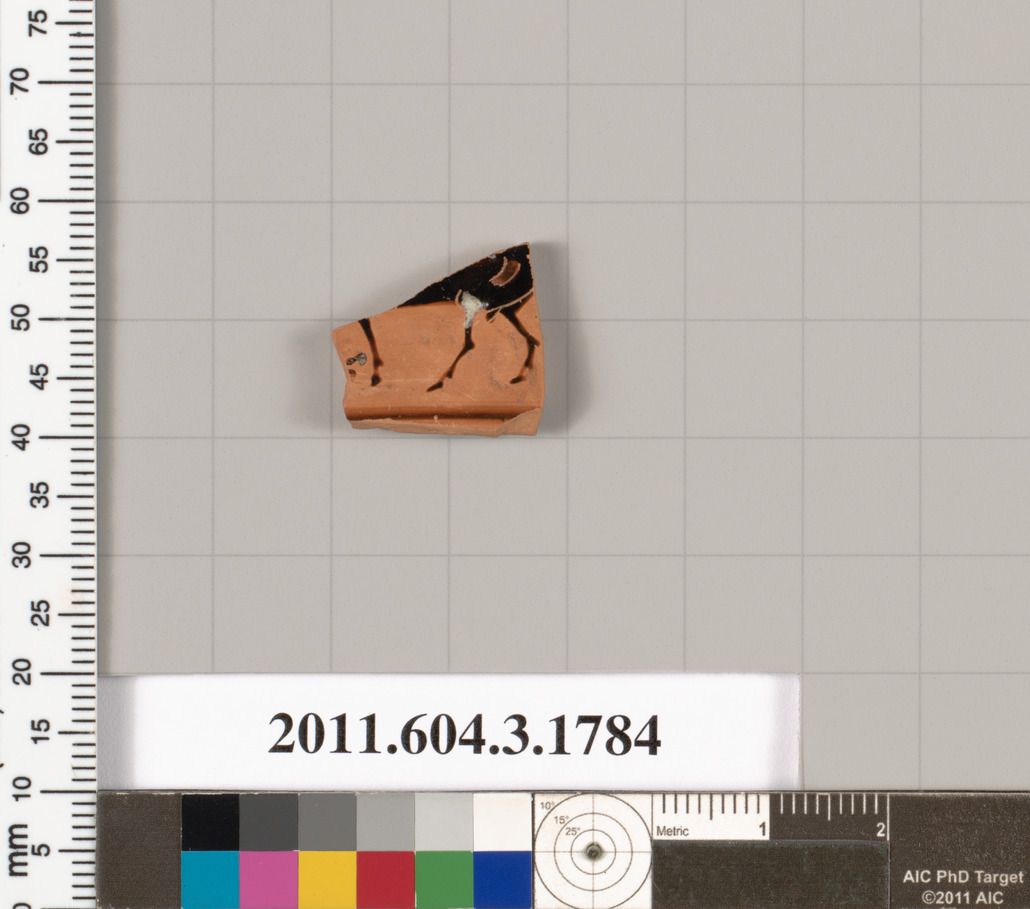
The internal genetic code of Lauren Fashion Heritage Lab—drawn from the philosophical quietude of *Herdboys and Buffalos* and the secular jubilance of *Wine Cup with Children at Play*—finds an unexpected, yet profoundly resonant, third voice in the museum artifact before us: a terracotta fragment of a kylix, specifically a lip cup from Attic Greece. This shard of fired clay, once a vessel for wine and dialogue, does not depict pastoral innocence or childish play. Instead, it carries the silent echo of the *symposium*—the ritualized gathering where Athenian citizens debated, recited, and bonded. For the 2026 Old Money silhouette, this fragment is not an archaeological curiosity but a generative blueprint. It instructs us on the architecture of *restrained presence*, the value of *patinated surface*, and the quiet power of *form over ornament*—principles that define a new, historically literate vision of inherited luxury.
I. The Kylix as a Grammar of Posture and Proportion
The kylix, with its shallow bowl and two horizontal handles, was designed for a specific physicality: the reclining body. It was not a vessel for hurried consumption but for sustained, horizontal contemplation. This posture—the *symposiast* leaning on an elbow, cup in hand—dictates a very particular relationship between garment and body. The 2026 Old Money silhouette, informed by this artifact, must therefore prioritize *ease in repose*. We are not designing for the rigid, vertical formality of a boardroom, but for the fluid, elongated lines of a body at leisure. Think of a cashmere wrap coat that drapes from the shoulder without sharp lapels, its weight falling in uninterrupted columns. Think of wide-leg trousers in wool crepe that break softly over the shoe, creating a continuous line from hip to floor. The kylix teaches us that true authority is not asserted through constriction but through the confident ownership of space. The silhouette becomes a *portable symposium*—a garment that allows the wearer to recline, gesture, and converse with the same unhurried grace as an Athenian citizen. The shoulder seam is slightly dropped; the sleeve is cut with a gentle, almost imperceptible curve to accommodate the bent arm lifting a glass. This is not tailoring for action, but tailoring for *presence*.
II. Terracotta’s Patina: The Aesthetics of Time and Authenticity
The fragment’s materiality—its warm, iron-rich orange-red clay, its chipped edges, its faded black-figure glaze—offers a direct counterpoint to the sterile perfection of contemporary fast fashion. The Old Money aesthetic, as reimagined through this artifact, rejects the *new* in favor of the *evolved*. The terracotta’s surface is a record of its history: the potter’s wheel, the kiln’s heat, the centuries of burial, the archaeologist’s brush. In fabric terms, this translates to a preference for materials that *age beautifully* and carry memory. For 2026, we propose a return to *technical heritage fabrics* that mimic terracotta’s tactile depth. Consider a double-faced wool with a slightly irregular, slubbed surface that catches light like the clay’s mineral inclusions. Consider a silk twill with a matte, sand-washed finish that feels like a weathered stone. The color palette is equally instructive: not the bright, primary hues of mass-market luxury, but the *earned* tones of the earth—burnt sienna, ochre, deep umber, and the faded black of the glaze, which we interpret as a near-black charcoal with a warm undertone. These are not colors chosen for visual impact but for their ability to convey *gravitas* and *continuity*. A 2026 Old Money suit in this palette does not shout; it whispers of provenance, of having been worn, cared for, and passed down.
III. Form Over Ornament: The Discipline of the Lip Cup
The lip cup is a specific type of kylix, distinguished by its offset lip that is often left undecorated, creating a smooth, unadorned band for the drinker’s mouth. This deliberate restraint—a moment of *negative space* in an otherwise decorated vessel—is a masterclass in design discipline. The 2026 silhouette must adopt this principle. Where the *Wine Cup with Children at Play* revels in ornate relief, and the Chinese painting finds meaning in emptiness, the kylix fragment teaches us the power of *strategic austerity*. The garment’s ornamentation, if any, must be concentrated and meaningful. A single, perfectly executed pick-stitch on a lapel. A hand-rolled buttonhole in a contrasting, yet tonal, silk thread. A hidden interior pocket lined in a flash of vermilion—a secret nod to the terracotta’s interior glaze. The overall silhouette remains clean, almost severe, but with these moments of exquisite, deliberate detail. This is not minimalism for its own sake; it is *edited luxury*, where every element has been weighed and justified. The construction itself becomes the ornament: the precision of a hand-felled seam, the invisible structure of a canvas chest piece, the perfect roll of a collar. This is the 2026 answer to the kylix’s lip—a place of quiet, tactile pleasure that speaks to those who know where to look.
IV. Synthesis: The Global Old Money Canon
Returning to our internal genetic code, we see that the Greek kylix does not replace the Eastern and Northern European artifacts but completes a triad. The Chinese painting offers the *philosophical horizon* (the ideal of harmony with nature). The Dutch cup offers the *celebratory present* (the joy of human connection). The Greek fragment offers the *civic foundation*—the ritualized space where both contemplation and celebration occur. The 2026 Old Money silhouette, therefore, is not merely a garment but a *vessel for discourse*. It is a wool coat that carries the stillness of the herdboy’s field in its drape, the warmth of the Dutch child’s laughter in its texture, and the intellectual rigor of the Athenian symposium in its cut. It is a silhouette for the modern *symposiarch*—the person who hosts, who listens, who guides conversation with quiet confidence. It is not for the loud or the transient. It is for the enduring. It is for those who understand that true luxury is not acquisition but *inheritance*—of ideas, of values, and of a way of being that transcends the fleeting season. The terracotta fragment, broken yet beautiful, reminds us that perfection is not the goal; *integrity* is. And that is the ultimate Old Money statement for 2026.
Heritage Lab Insight
Genetic Bridge: Archive node focusing on Heritage-Black craftsmanship.