← BACK TO ARCHIVES
Silk
Heritage Synthesis: Parrots and Animals
Curated on Aug 07, 2026 // Node: LDN-01
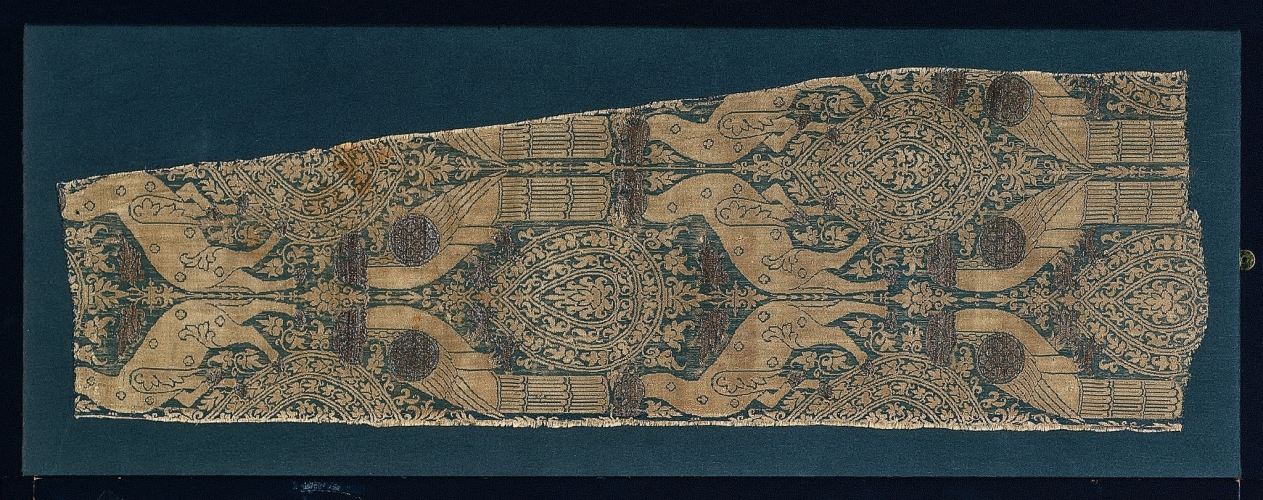
The Feathered Loom: Parrots, Animals, and the Imperial Legacy of Silk
In the hushed, wood-panelled ateliers of Savile Row, where the cut of a jacket is a matter of national honour and the drape of a lapel a silent declaration of pedigree, one does not speak of mere fabric. One speaks of *cloth*. And among the most storied, the most politically charged, and the most exquisitely rendered cloths in the canon of Western tailoring is that which carries the weight of empire upon its warp and weft: imperial silk, woven with the imagery of parrots and beasts.
To the uninitiated, a parrot is a gaudy ornament, a tropical curiosity. To the connoisseur of heritage textiles, however, the parrot is a heraldic device, a cartographic marker, and a testament to the audacious globalism of the 17th and 18th centuries. The presence of a macaw, a cockatoo, or a parakeet upon a length of silk is not a whimsical flourish; it is a deliberate, coded reference to the vast mercantile and colonial networks that fed the insatiable appetite of European courts. This is the materiality of power, rendered in filament.
The Material Imperative: Silk as a Political Instrument
Let us first establish the ground upon which we stand. Silk, in its imperial context, was never merely decorative. It was a diplomatic currency, a store of value, and a medium of soft power. The great weaving centres of Lyon, Spitalfields, and later, the specialised houses that supplied the British aristocracy, did not simply produce textiles; they produced arguments. A silk waistcoat, embroidered with a chattering flock of parrots, was a statement of dominion—a miniature, wearable map of the tropics brought into the drawing-rooms of London and Paris.
The materiality of the silk itself is paramount. The lustrous, continuous filament of the *Bombyx mori* silkworm, when thrown and dyed with the deep, fugitive colours of cochineal and indigo, created a surface that caught the candlelight with an almost liquid brilliance. Upon this ground, the weaver’s art was to create a tension between the flat, geometric discipline of the weave and the illusionistic, three-dimensional rendering of the animal form. The best of these textiles, often woven with supplementary wefts of gold and silver thread, achieved a startling verisimilitude. The parrot’s plumage—crimson, emerald, sapphire—was not merely depicted; it was *constructed* from the interplay of light and thread, a feat of engineering as precise as any Savile Row pattern cutting.
The Parrot as a Cartographic Signature
Why the parrot, specifically? In the European imagination, the parrot was the quintessential exotic. Unlike the lion or the eagle, which carried classical and biblical baggage, the parrot was a New World novelty. Its presence on a silk textile signalled a connection to the Americas, to the Portuguese and Spanish trade routes, and later, to the British colonial projects in India and the Caribbean. A parrot woven into a damask or a brocade was a signature of provenance, a silent boast that the wearer had access to the far corners of the globe.
Consider the specific iconography. The red-and-blue macaw, native to South America, appears frequently in French silks of the Louis XIV period, often paired with stylised palm trees and exotic flora. This was not naturalism; it was a political allegory. The parrot, perched upon a branch of an unknown tree, was a symbol of the untamed, yet captured, natural world. It represented the wealth of the colonies, now subjugated and rendered into a wearable, controllable form. In the context of the British Empire, the parrot was often paired with the Indian peacock or the Bengal tiger, creating a composite menagerie that spoke to the breadth of the Crown’s holdings. The silk, then, was a heraldic roll call of empire, stitched into the very structure of the garment.
The Animal Menagerie: A Hierarchy of Thread
The parrot, however, did not exist in isolation. The imperial silk loom was a crowded stage, populated by a carefully curated menagerie. The lion, the leopard, the stag, and the hound all made appearances, each carrying its own symbolic weight. The lion, of course, was the king of beasts, the emblem of England. Its rendering in silk was a statement of martial strength and royal authority. The leopard, often used in heraldry as a "lion passant guardant," was a mark of nobility. The stag, a symbol of the hunt and of aristocratic leisure, was a favourite for waistcoats and dressing gowns.
But it is the interaction between these creatures and the parrot that reveals the deeper narrative. In many surviving examples of 18th-century brocades, the parrot is placed in a subordinate position to the larger quadrupeds. It is perched above a lion or a stag, its vibrant plumage providing a chromatic counterpoint to the more sober, monochromatic rendering of the beast. This is a deliberate compositional choice. The parrot provides the exotic flourish, the "oriental" detail that elevates the piece from a simple hunting scene to a global statement. The lion is the power; the parrot is the proof of that power’s reach.
The Savile Row Translation: From Court to Cloth
How does this legacy translate to the modern Savile Row house? The heritage is not in the reproduction of these patterns, but in the *attitude* they engender. When a contemporary tailor selects a silk for a special commission—a smoking jacket, an evening waistcoat, a dressing gown—he is engaging with a lineage that stretches back to the courts of Versailles and the counting houses of the East India Company. The choice of a silk with a parrot motif is not a nostalgic retreat; it is a declaration of understanding. It acknowledges that the wearer is part of a continuum, a custodian of a visual language that once mapped the world.
The materiality of the silk remains the final arbiter of quality. A modern weaver, working on a Jacquard loom, can replicate the density and the sheen of an 18th-century brocade, but only with the finest Chinese or Italian silk. The weight, the handle, the "scroop" of the fabric as it is cut—these are the tactile proofs of authenticity. On Savile Row, we do not merely look at a cloth; we feel it, we listen to it. A silk that whispers of imperial grandeur, that carries the ghost of a parrot’s wing in its weave, is a cloth that commands respect.
Conclusion: The Enduring Thread
The legacy of imperial silk weaving, with its parrots and its beasts, is not a museum piece. It is a living tradition, a set of technical and aesthetic principles that continue to inform the highest levels of tailoring. The parrot, in its gaudy, defiant glory, reminds us that cloth is never neutral. It is a document, a declaration, and a delight. To wear such a silk is to wear a piece of history, cut to the measure of the present. And that, in the final analysis, is the very essence of the Savile Row art: the perfect marriage of heritage and hand, of the exotic and the exact. The loom is silent, but the thread still speaks.
Heritage Lab Insight
Lab Insight: CMA Silk Archive Node integration.