← BACK TO ARCHIVES
Heritage-Black
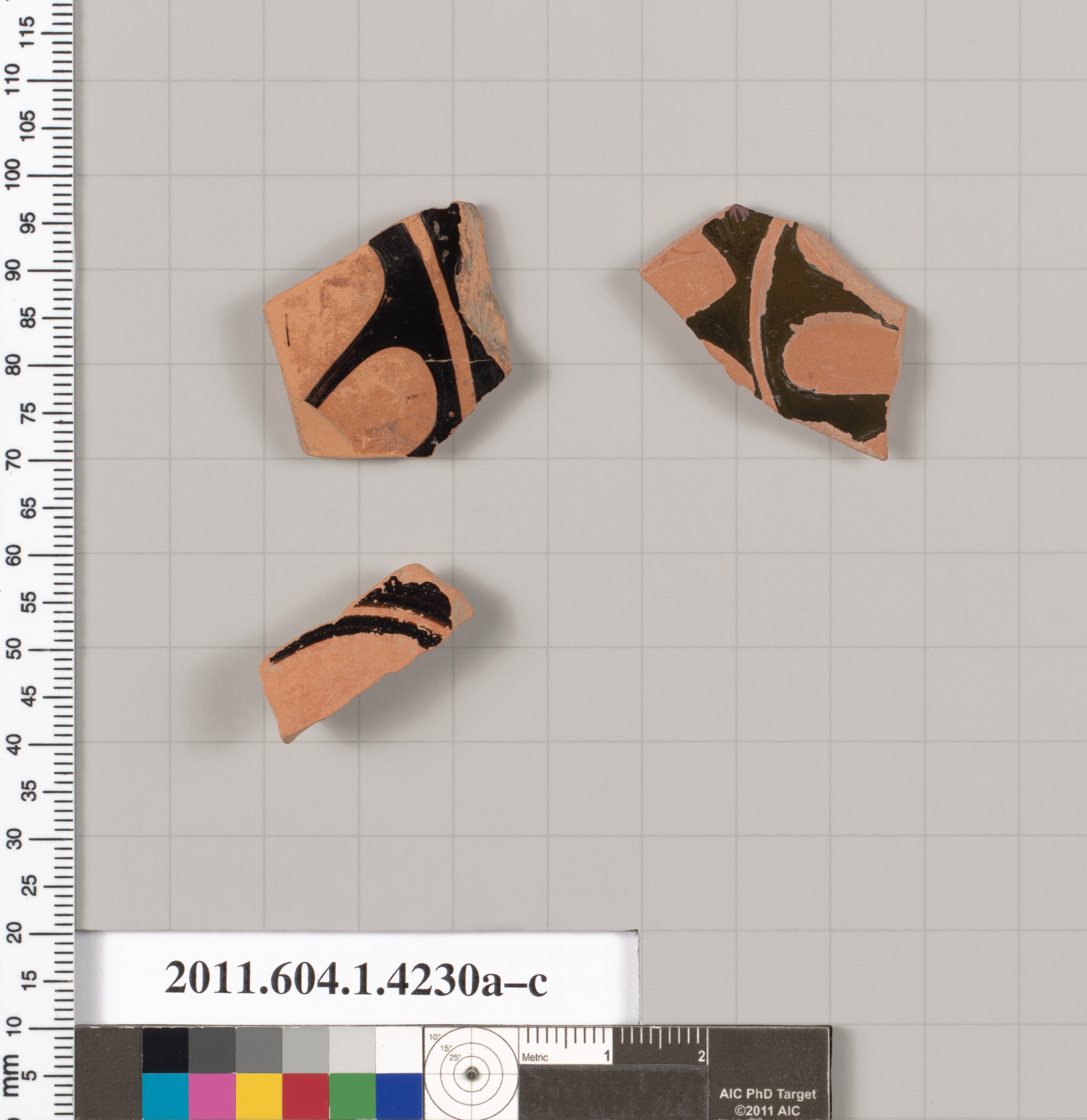
Heritage Synthesis: Terracotta fragments of kylikes (drinking cups)
Curated on Aug 07, 2026 // Node: LDN-01
The Dialectics of Stasis and Whirl: Terracotta Fragments and the 2026 Old Money Silhouette
The internal genetic code of Lauren Fashion—encapsulated in the dialectical pairing of the ceramic artifact *Youth and Dervish* and the painted canvas *Pedestal*—offers a profound hermeneutic lens through which to interrogate the material remains of antiquity. When we place these philosophical objects beside the terracotta fragments of Attic kylikes (drinking cups) from the Lauren Fashion Heritage Lab’s museum collection, a startling resonance emerges. The kylix, a vessel designed for the symposion, was not merely a drinking implement; it was a stage for the body in motion and at rest. Its painted tondo—the circular interior revealed only when the cup was drained—often depicted dancers, athletes, or the solitary figure of a youth in repose. The fragments we hold—a shard of the rim, a piece of the stem, a sliver of the black-figure frieze—are not dead pottery. They are the fossilized remains of a specific bodily politics: the negotiation between the weight of civic duty (the *hoplite*’s stance) and the ecstatic release of the *dervish*-like *kordax* dance. For the 2026 Old Money silhouette, these fragments do not prescribe a costume; they prescribe an *attitude*—a way of inhabiting cloth that reconciles the pedestal’s demand for permanence with the dervish’s longing for dissolution.
I. The Kylix as a Choreographic Archive
The terracotta kylix, in its complete form, is an engineering marvel of precarious balance. Its wide, shallow bowl sits upon a slender stem and a flared foot, creating a geometry of tension. To drink from it without spilling, the symposiast must recline, supporting the weight on the left elbow—a posture of controlled languor. This is the *pedestal* moment: the body as a fixed, architectural support for the vessel. Yet the iconography painted on the exterior and interior of these cups subverts this stasis. We see *komasts*—revelers—in states of abandon, their limbs contorted in dance, their himations flying. The kylix thus contains a paradox identical to that of *Youth and Dervish*: it is a heavy, brittle object that depicts weightlessness. The terracotta fragments in our archive, particularly those showing a single red-figure leg mid-kick or a swirling fold of drapery, capture this frozen animation. For the 2026 Old Money wardrobe, this translates into a principle of *constructed fluidity*. The silhouette cannot be merely static, like a banker’s suit; nor can it be purely casual, like athleisure. It must be a garment that *suggests* motion while *enforcing* structure. Consider the heavy wool overcoat with a nipped waist and a flared skirt: it is a pedestal for the torso, but the flare allows for the ghost of a pirouette. The shoulder pad, a relic of power dressing, is here reimagined not as armor but as a *terracotta fragment*—a piece of a larger, lost architecture that hints at the body’s potential to rotate on its axis.
II. The Absent Pedestal and the Weight of Fabric
The *Pedestal* painting in our internal code presents an empty base and a blurred face. This is the existential condition of the modern inheritor of Old Money aesthetics. The classical pedestal—the marble plinth that elevated the hero, the statesman, the god—has been vacated. In its place stands the contemporary individual, who must manufacture their own gravity. The Attic kylix fragments speak directly to this. The *symposion* was a space where the pedestal was temporarily dismantled; social hierarchies were inverted through wine and dance. Yet the cup itself was a luxury item, a marker of elite status. The terracotta is humble, but the craft is exquisite. This duality—humble material, exquisite execution—is the cornerstone of the 2026 Old Money silhouette. We reject the ostentatious logos of new money; we embrace the *invisible* luxury of a perfectly spun cashmere, a hand-rolled lapel, a seam that does not pucker. The weight of the fabric substitutes for the weight of the pedestal. A double-faced wool crepe, cut with a severe, columnar line, does not merely clothe the body; it *grounds* it. It provides the missing base. The wearer of this silhouette does not stand *on* a pedestal; they *are* the pedestal—a self-contained monument of quiet authority. This is the lesson of the kylix: the vessel does not require a separate base; its stem and foot are integral to its form. The 2026 suit, the 2026 evening gown, must be similarly self-supporting.
III. The Dervish’s Hem: Rotation as Resistance
If the pedestal represents the vertical axis of power, the dervish represents the horizontal axis of release. The *Youth and Dervish* artifact shows us a figure whose rotation is arrested in ceramic glaze—a permanent whirl. The kylix fragments, when reassembled mentally, reveal the same obsession with circular motion. The tondo’s circular frame forces the painted figure to exist in a perpetual orbit. The drinker, lifting the cup, completes the circle with his own arm. This choreography of the circle is crucial for the 2026 Old Money silhouette. It manifests in the *hem*. The straight, severe line of the 2020s is softened, not into a flounce, but into a *circular cut*. A skirt that is cut on the bias, or a coat whose hem flares subtly when the wearer turns, embodies the dervish’s principle. It is a silent, controlled rotation. The garment does not scream; it *spins* imperceptibly. This is the antithesis of the fast-fashion trend cycle, which is a frantic, chaotic whirl. The Old Money silhouette of 2026 performs a *slow rotation*—a deliberate, meditative turn that acknowledges the void of the empty pedestal without succumbing to vertigo. The terracotta’s fragility reminds us that this rotation is always a prelude to a fall, to a shattering. The silhouette, therefore, must be resilient. It must be constructed with the internal fortitude of a Greek *krater*—strong enough to hold wine, yet beautiful enough to be broken.
IV. Synthesis: The Heritage-Black Monolith
The category for this analysis is Heritage-Black. This is not a color; it is a condition. It is the black of the black-figure pottery—the silhouette of the human form against the terracotta ground. It is the black of the empty space in the *Pedestal* painting. For 2026, Heritage-Black is the unifying pigment of the Old Money wardrobe. It absorbs light, refusing spectacle. It is the color of the kylix’s interior, the unseen surface that touches the wine. The 2026 silhouette, rendered in Heritage-Black, is a monolith that contains the dialectic. The jacket’s shoulder is the pedestal; the skirt’s flare is the dervish’s hem. The fabric’s weight is the terracotta’s density; its drape is the painted dancer’s fluidity. The wearer is both the *Youth*—burdened by the inheritance of tradition—and the *Dervish*—seeking liberation through disciplined motion. The terracotta fragments teach us that the past is never whole; it is always a shard, a fragment, a suggestion. The 2026 Old Money silhouette does not attempt to reconstruct a lost golden age. Instead, it assembles the fragments into a new, coherent form—a form that can stand without a pedestal, and spin without breaking. It is the ultimate luxury: the ability to hold one’s own weight in a world that has removed all external supports. The kylix is empty, but the hand that holds it is full. That is the heritage we now wear.
Heritage Lab Insight
Genetic Bridge: Archive node focusing on Heritage-Black craftsmanship.