← BACK TO ARCHIVES
Silk
Heritage Synthesis: Roundels with Hunters
Curated on Aug 07, 2026 // Node: LDN-01
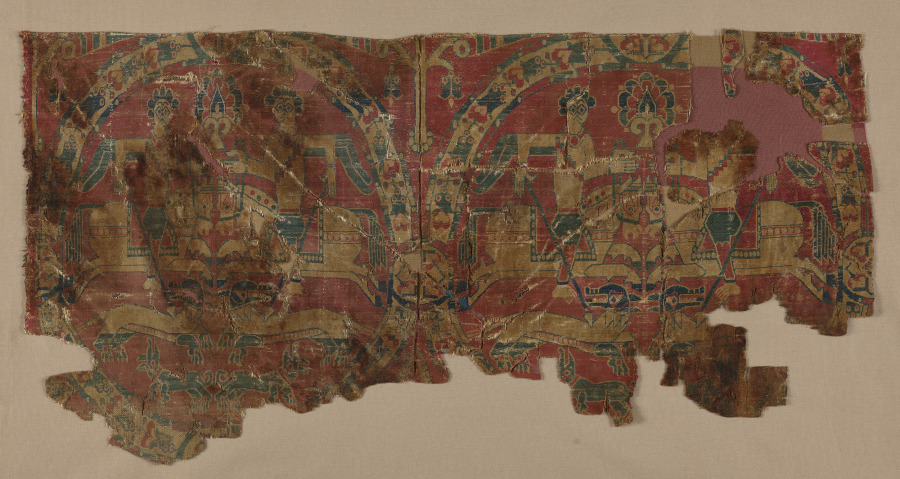
The Enduring Thread: Roundels with Hunters and the Imperial Legacy of Silk
In the rarefied atmosphere of London’s Savile Row, where a suit is not merely constructed but *engineered*, there exists a profound respect for provenance. We speak of cloth as if it were a pedigree, tracing the lineage of a bolt of tweed to a Scottish moor or a length of worsted to a specific Australian merino. Yet, the most compelling narratives in textile history are not woven in the damp mills of Yorkshire, but in the gilded ateliers of empires long past. It is there, in the shimmering legacy of imperial silk weaving, that we find the true antecedent of our craft’s obsession with materiality and meaning. This heritage research artifact examines the roundel with hunters, a motif of singular power, executed in silk—a material that has, for millennia, been the ultimate currency of authority, taste, and conquest.
The Material Imperative: Silk as Sovereign Fabric
To understand the roundel, one must first understand its medium. Silk is not a textile; it is a statement of geopolitical and economic dominance. From the Tang Dynasty’s control of the Silk Road to the Byzantine Empire’s state-sanctioned monopolies in Constantinople, the production of this lustrous filament was a closely guarded secret, a form of technological warfare. The imperial silk-weaving workshops—whether in Xi’an, Nishapur, or later, in the great *ateliers* of Safavid Persia and Ottoman Bursa—were not mere factories. They were engines of soft power, producing a material so coveted that it was used as diplomatic currency, religious vestment, and the ultimate marker of aristocratic rank.
In this context, the choice of silk for our subject—the roundel with hunters—is not incidental. The fabric’s inherent properties—its ability to absorb and reflect light, its fluid drape, its remarkable tensile strength—were metaphors for the empire itself. A silk roundel was not simply decorative; it was a portable declaration of sovereignty. The sheen of the thread, often augmented with gold or silver-wrapped filaments, caught the light in a way that wool or linen could never replicate, creating an aura of divine right around the wearer. For the discerning eye, the *hand* of the silk—its supple yet resilient texture—was a testament to the skill of the weaver, a skill that was, by definition, imperial.
Decoding the Motif: The Hunt as Political Allegory
The roundel format itself—a circular frame containing a central figure or scene—is a hallmark of Sasanian and early Islamic textile design. It is a contained universe, a microcosm of order imposed upon the chaos of the natural world. Within this frame, the motif of the hunter is paramount. At first glance, it is a scene of sport: a mounted archer, perhaps, drawing his bow against a lion or a stag. But in the language of imperial iconography, the hunt was never merely sport. It was a ritualized display of martial prowess, a symbolic reenactment of the king’s role as the protector of the realm and the vanquisher of its enemies.
The hunter in these roundels is not a generic figure; he is often depicted with regal attributes—a diadem, a specific style of dress, a particular breed of horse—that link him directly to the reigning monarch. The prey, whether a ferocious lion or a fleet-footed gazelle, represents the chaotic forces that threaten the empire’s stability. By capturing this moment of tension in silk, the weaver is not just creating a pretty picture. He is creating a talisman. The roundel, when applied to a royal robe or a ceremonial hanging, imbues the wearer with the hunter’s courage and the king’s authority. It is a form of wearable propaganda, a silent assertion of power that transcends language.
This specific iconography, disseminated through trade and conquest, became a lingua franca across the medieval world. We see echoes of it in the silk textiles of the Byzantine Empire, where the hunter-king motif was adapted to Christian symbolism, and in the luxurious fabrics of Mongol and Chinese courts, where the roundel format was retained but infused with local aesthetic sensibilities. The roundel with hunters is, therefore, a testament to cultural transmission—a design that travelled from the steppes of Central Asia to the palaces of Europe, carried by the very material that made it so precious.
The Weave of Power: Technical Mastery and Artistic Legacy
The creation of such a roundel demanded an extraordinary level of technical sophistication. The weaver, working on a drawloom—a machine that required two operators, one for the ground weave and one for the pattern—had to manage hundreds of individual warp threads to create the complex, curvilinear forms of the hunter and his mount. The use of a samite or lampas weave, where supplementary wefts float across the surface to create the pattern, allowed for a high level of detail and a rich, textured surface. The result is a fabric that is not flat but sculptural, with the figures appearing to emerge from the shimmering ground.
For the modern practitioner on Savile Row, the study of these artifacts is not an exercise in nostalgia. It is a lesson in the fundamental principles of our trade. The roundel demonstrates that pattern is not merely decorative but is a carrier of narrative and status. It teaches us that the choice of material is a moral and intellectual decision, not just a practical one. When we select a silk for a lining or a tie, we are participating in a lineage that stretches back to those imperial workshops. We are acknowledging that cloth has a voice, and that the right cloth, cut with precision, can speak volumes.
The legacy of imperial silk weaving is not confined to museum vitrines. It lives on in the very DNA of high-end tailoring. The discipline required to match a pattern at a seam, the respect for a fabric’s drape, the understanding that a garment is a form of communication—all of these are inheritances from the weavers who created the roundels with hunters. They understood that true luxury is not about excess but about intention. Every thread was placed with purpose, every colour chosen for its symbolic resonance.
In conclusion, the roundel with hunters in silk is far more than a beautiful artifact. It is a document of imperial ambition, a masterpiece of technical innovation, and a testament to the enduring power of cloth. It reminds us that the garments we create are not simply coverings; they are the material embodiment of history, power, and identity. As we handle a length of silk today, we are touching a thread that connects us to those ancient ateliers, a thread that still carries the weight of empire. And that, in the final analysis, is the true heritage of our craft.
Heritage Lab Insight
Lab Insight: CMA Silk Archive Node integration.