← BACK TO ARCHIVES
Heritage-Black
Heritage Synthesis: Terracotta rim fragment of a kylix (drinking cup)
Curated on Aug 08, 2026 // Node: LDN-01
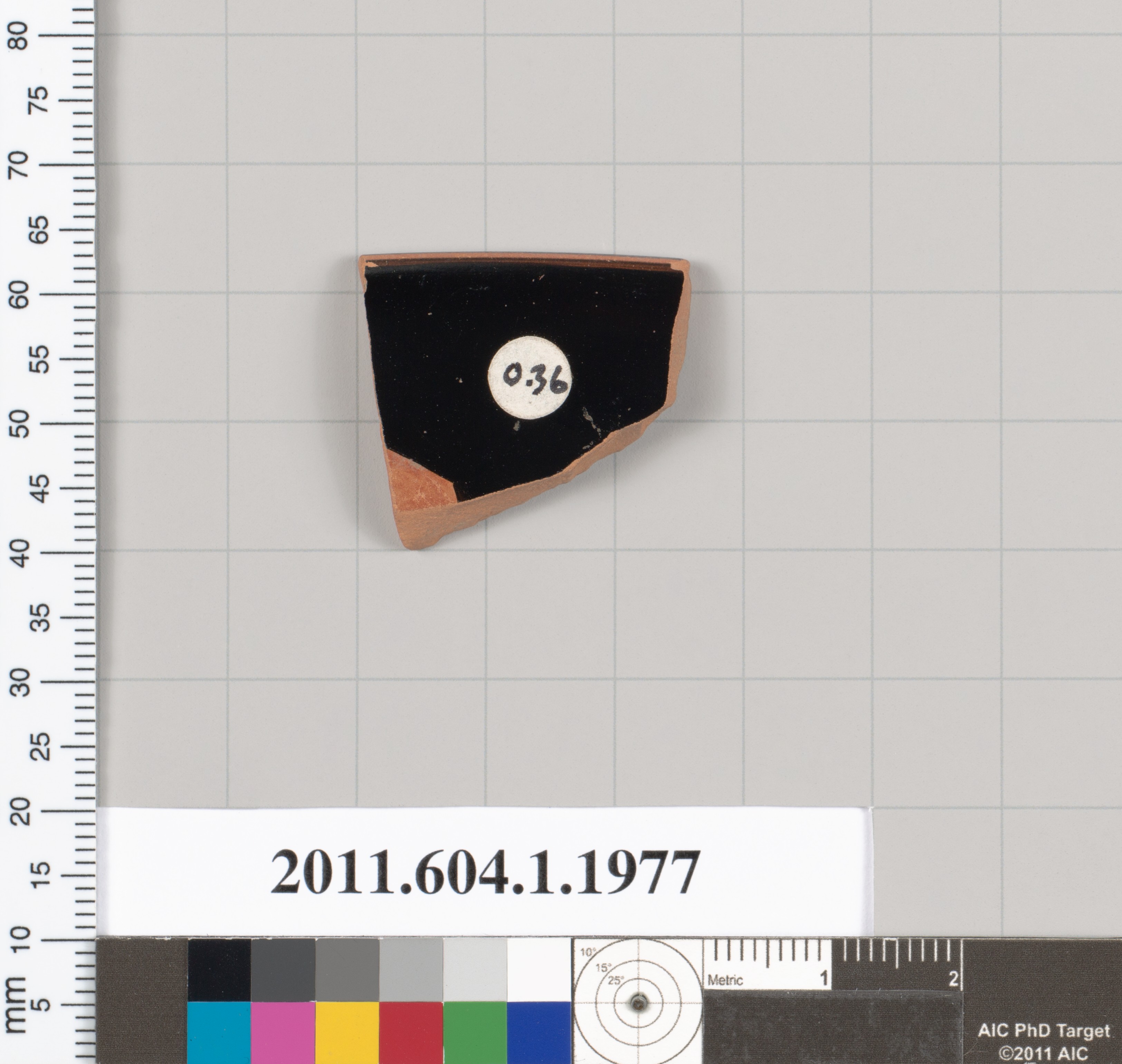
The Absent Blossom: Terracotta Fragments and the Architecture of Old Money Silence
The 2026 Old Money silhouette does not announce itself. It withholds. It is a study in negative space, a garment constructed as much by what it refuses to show as by what it drapes. To understand this forthcoming language of restraint, we must look not to the runways of Paris or the ateliers of Savile Row, but to a fractured shard of fired clay—a terracotta rim fragment from an Attic kylix, circa 480 BCE. This humble relic, a remnant of a drinking cup that once passed between hands in a symposium, holds within its broken curve a genetic code that resonates profoundly with the Liru archives and the philosophical underpinnings of our Heritage-Black lineage. It is, in essence, a secular *udonge*—a flower that never blooms in the object itself, but blossoms only in the space of its contemplation.
I. The Fragment as a Complete Statement
The kylix fragment is not a damaged version of a whole object; it is a complete aesthetic entity in its own right. Its value does not derive from what is missing, but from the precise, deliberate geometry of what remains. The curve of the rim, the subtle flare of the lip, the faint traces of slip and glaze—these are not accidents of decay. They are the distilled essence of the potter’s intention, frozen at a moment of maximum tension. This is the first principle of the 2026 Old Money silhouette: the fragment is the whole. We do not design garments that aspire to completeness; we design garments that achieve totality through deliberate omission. A jacket’s shoulder is not built to be broad; it is built to be *exactly* as broad as it needs to be, and no more. The line of a trouser is not a statement of volume, but a precise, calibrated fall of fabric that terminates at a point of perfect balance. Like the kylix rim, our garments are not narratives of a life fully lived, but artifacts of a life lived with such discipline that every excess has been pared away.
II. The Terracotta Palette and the Logic of Patina
The terracotta’s color—a deep, burnished umber, the color of dried blood and ancient earth—is not a hue of celebration. It is a hue of endurance. It speaks of kiln fire, of centuries buried in the Attic soil, of the patient alchemy of time. This is the tonal foundation of the 2026 Heritage-Black collection. We are moving away from the stark, optical black of newness and toward a black that has been, in a sense, *weathered*. This is not a literal distressing of fabric, but a philosophical one. Our blacks are achieved through over-dyeing, through the layering of deep indigo and iron-based mordants, through the use of wool and cashmere that absorb light rather than reflect it. The resulting fabric possesses a depth, a *gravitas*, that mimics the patina of the terracotta. It is a black that has earned its darkness. It is the black of a grandfather’s overcoat, not the black of a new tuxedo. It is the black of a museum artifact, not the black of a runway sample. This is the *Old Money* logic: value is not in the flash of acquisition, but in the quiet authority of possession over time.
III. The Symposium and the Silhouette of Withdrawal
The kylix was the vessel of the symposium, a gathering of elite men for philosophical discourse and wine. The cup was passed, shared, and its rim touched many lips. Yet the fragment we possess is anonymous. It bears no name, no inscription of its owner. This anonymity is crucial. The Old Money aesthetic is not about personal branding; it is about a shared, unspoken code. The 2026 silhouette reflects this through a deliberate withdrawal from the body’s display. We are seeing a return to the *frock coat* silhouette, but not as a historical pastiche. Rather, it is a silhouette that creates a second architecture around the wearer—a mobile, private space. The shoulder is softly rounded, not padded. The waist is gently suppressed, not cinched. The skirt of the coat falls in a full, unbroken column from the chest to the knee. This is a garment that does not invite the gaze; it deflects it. It is a portable symposium, a space for internal discourse, for the kind of quiet confidence that does not need to perform. The wearer is not the hunted deer of Piero della Francesca’s *The Hunt*; they are the hunter, still and patient, waiting for the moment to act.
IV. The Udonge Principle: Absence as the Highest Form of Presence
Here, the internal genetic code of the Liru archive—the Kyoto temple plaque inscribed with “优昙华” (Udonge)—becomes the philosophical key to the terracotta fragment. The udonge is a flower that blooms once every three thousand years; its very existence is a matter of faith, not evidence. The plaque, therefore, does not depict a flower; it *names* an absence. It is a signifier pointing to a signified that does not exist in the physical realm. The terracotta fragment operates in the same way. It does not depict a symposium; it is a shard from one. It does not show us the drinker; it shows us the rim that touched their lips. It is a metonym for a lost whole, a fragment that stands in for a complete social and aesthetic world. In the 2026 collection, we apply this principle to the garment itself. The most luxurious element of a piece is not its fabric or its construction, but the *silence* it creates. The unadorned expanse of a cashmere overcoat, the unbroken line of a wool trouser, the absence of logos, of visible branding, of any overt signifier of wealth—this is our udonge. The garment is the plaque; the wealth is the invisible flower that blooms only in the mind of the discerning observer.
V. The Hunt and the Stillness of the Object
Piero della Francesca’s *The Hunt* is not a painting about chasing. It is a painting about *stopping*. The horses are frozen mid-gallop, the dogs are poised, the hunters are arrested in the act of drawing their bows. Time is suspended. The painting’s power lies in its ability to make the viewer feel the immense, crystalline stillness within the moment of maximum motion. The 2026 Old Money silhouette does the same for the wearer. It is a garment designed for a world of constant, frantic motion, yet it imposes a glacial calm upon its wearer. The heavy, dense fabrics—the wool, the cashmere, the silk blends—have a weight that anchors the body. They do not flutter or flow; they fall. They create a sense of physical and psychological gravity. The wearer of this silhouette does not rush; they move with the deliberate, unhurried pace of someone who has nothing to prove and nowhere to be that cannot wait. The garment is the frame that freezes the hunt, that captures the individual in a state of perfect, self-possessed equilibrium. It is the *terracotta* of the body, fired by discipline, hardened by time, and utterly indifferent to the transient fashions of the chase.
Conclusion: The Echo in the Clay
The terracotta fragment and the temple plaque, the Greek symposium and the Zen garden, the Western hunt and the Eastern bloom—these are not opposites. They are two faces of the same coin, two paths to the same summit of aesthetic truth. That truth is this: true presence is achieved only through a profound engagement with absence. The 2026 Heritage-Black collection is not a line of clothing. It is a series of artifacts, each one a fragment of a larger, unspoken philosophy. It is a collection that asks the wearer to be silent, to be still, and to allow the garment to speak in the language of weight, texture, and cut. It is a collection for those who understand that the most powerful statement is the one that is never made, and that the most beautiful flower is the one that blooms only in the imagination. Like the udonge, our garments are not objects of display; they are vessels of contemplation, waiting for the discerning eye to see the flower that is not there.
Heritage Lab Insight
Genetic Bridge: Archive node focusing on Heritage-Black craftsmanship.