← BACK TO ARCHIVES
Heritage-Black
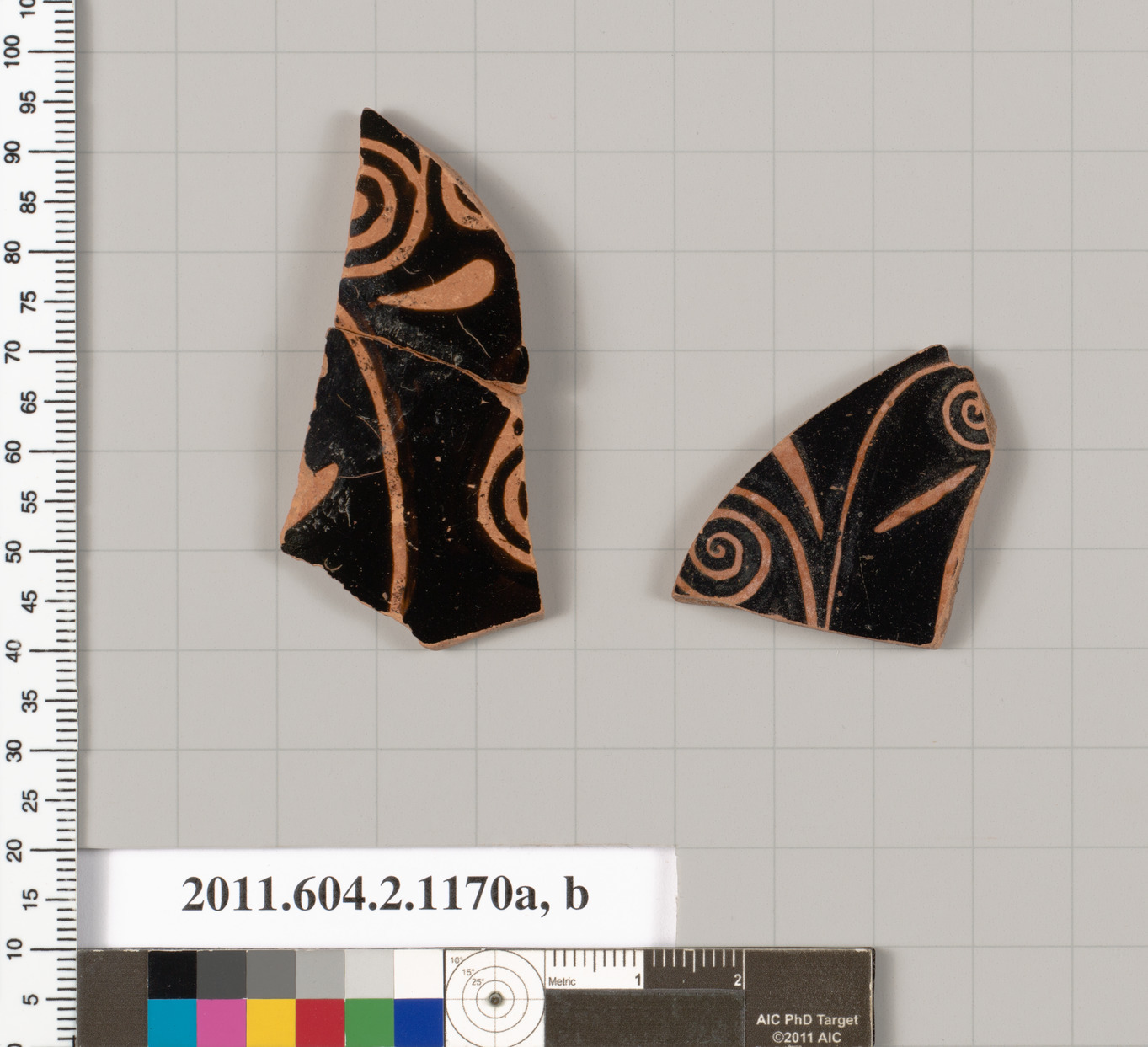
Heritage Synthesis: Terracotta fragments of skyphoi (deep drinking cups)?
Curated on Aug 08, 2026 // Node: LDN-01
The Mold and the Ring: Temporal Aesthetics and the Architecture of Old Money Silence
The internal archive of Lauren Fashion Heritage Lab holds a curious pairing: a coarse terracotta mold fragment bearing the incised figures of musicians, and a jade ring carved with a dragon’s head emerging from a perfect circle. One is a tool of production, hidden from the final gaze; the other is an ornament of display, worn against the skin. One captures the fleeting joy of a mortal performance; the other abstracts the eternal breath of the celestial. Yet, read together, they articulate a foundational principle of Chinese aesthetic thought—that the highest beauty resides not in explicit statement, but in the disciplined suggestion of the unseen. This principle, when translated into the language of contemporary dress, becomes the very grammar of the 2026 Old Money silhouette: an architecture of restraint, where meaning is not declared but withheld, and where the body moves through a world of quiet, deliberate implication.
I. The Mold Fragment: The Ethics of the Unseen Process
The *Mold Fragment with Musicians* is, by its nature, an artifact of the backstage. It was never intended for display; it was the negative space from which bronze vessels would be born. Its surface is rough, its edges broken, its imagery—a flautist, a zither player, their robes in motion—pressed into soft clay by an anonymous hand. There is no monumental symmetry, no hieratic frontality. These are not gods. They are men and women, their fingers caught mid-strum, their breath held in the hollow of a pipe. The aesthetic power here is not in the finished object, but in the *process* it preserves. The mold does not show us music; it shows us the *condition* for music—the labor, the preparation, the invisible craft that precedes the public event.
This is the first lesson for the 2026 Old Money silhouette. The contemporary luxury market is saturated with visible logos, with hardware that shouts, with prints that announce their cost. The Old Money response, informed by this mold, is a deliberate retreat into the *unseen*. The finest tailoring of 2026 will not be found in a label at the nape of the neck, but in the internal construction: the hand-felled seams, the floating canvas, the horsehair interfacing that gives a jacket its architectural roll without a single external stitch revealing its presence. The silhouette itself—a softly structured shoulder, a gently suppressed waist, a trouser that breaks precisely at the instep—is the *mold*, not the cast. It creates the conditions for a presence, but does not perform that presence. The wearer is the musician; the garment is the clay that holds the imprint of their movement, invisible to the observer yet essential to the sound.
The mold also teaches us about *time*. It captures a single, unrepeatable instant—a chord struck, a note held. In 2026, the Old Money silhouette will reject the fast-fashion temporality of the seasonal drop. Instead, it will embrace the *patina of the instant*: a fabric that creases with the memory of a seated lunch, a sleeve that softens with the repeated gesture of a handshake. The garment is not a static object but a *fragment* of lived time, and its value increases precisely because it does not pretend to be eternal. It is honest about its materiality, just as the terracotta is honest about its clay. This is the ethics of the mold: beauty is not the denial of process, but the dignified accommodation of it.
II. The Jade Ring: The Geometry of the Infinite
If the mold is about the *instant*, the *Fluted Ring with Dragon Head (Huan)* is about the *cycle*. The jade *huan* is a perfect circle, a form without beginning or end. It is the emblem of the cosmos, of the turning seasons, of the dynastic mandate. Yet the artisan has interrupted this perfect geometry with a dragon’s head—a creature of water and sky, of transformation and power. The dragon does not break the ring; it *emerges* from it, its snout and horn curling outward as if to greet the wearer. The ring is not a closed system; it is a portal. The dragon’s body is implied, coiled within the unseen circumference, its full form only suggested by the single visible head.
This is the second lesson for the 2026 Old Money silhouette. Where the mold teaches restraint, the ring teaches *abstraction*. The Old Money wardrobe is not a collection of literal statements. It is a series of *huan*—circular, self-contained garments that suggest a larger, hidden totality. The 2026 silhouette will favor the *unbroken line*: a coat that falls from the shoulder to the hem without a visible closure, a dress that wraps and returns upon itself, a scarf that is folded into a ring at the throat. The garment is not a costume; it is a *fragment* of a larger system of meaning. The dragon’s head is the single visible detail—a mother-of-pearl button, a hand-rolled lapel, a subtle contrast of twill and satin—that hints at the power coiled within the wearer’s bearing. The rest is left to the imagination, to the *void* of the ring.
The jade ring also speaks to *materiality as metaphysics*. Jade is not merely decorative; it is a moral substance, valued for its hardness, its resonance, its coolness to the touch. In 2026, the Old Money silhouette will demand a similar *moral fabric*. This is not about cost alone, but about *integrity*: a pure cashmere that does not pill, a silk twill that holds its drape, a wool gabardine that repels rain without a chemical finish. The fabric is the jade. It does not need to be loud; its quality is self-evident to those who know how to look. The silhouette is the *ring*—a disciplined form that allows the fabric to speak in its own register, without the interference of trend or novelty.
III. Synthesis: The 2026 Silhouette as a Dialectical Object
The 2026 Old Money silhouette, as synthesized from these two artifacts, is neither purely narrative nor purely abstract. It is a *dialectical* form. From the mold, it takes the *ethics of the unseen*: the refusal to display its own construction, the acceptance of the fragment, the beauty of the process. From the ring, it takes the *geometry of the infinite*: the unbroken line, the suggestion of a larger whole, the moral weight of material. The result is a wardrobe that functions like the *huan*—a circle that contains a dragon—but is constructed like the mold—a negative space that gives birth to a sound.
Concretely, this manifests in the 2026 collection as follows. The coat is long, fluid, and unconstructed in the shoulder, falling from a high armhole in a continuous sweep. It has no visible button; it is secured by an internal placket, a hidden closure that echoes the mold’s hidden musicians. The fabric is a double-faced cashmere, woven so densely that it holds its shape like jade, yet so soft that it drapes like the robe of the flautist. The trousers are cut with a slight taper, breaking at the ankle with a single, deliberate fold—a nod to the dragon’s head, the one visible interruption of the clean line. The color palette is drawn from the artifacts themselves: the warm, earthen ochre of terracotta; the pale, celadon green of aged jade; the deep, mineral black of bronze patina. There is no print, no embroidery, no ornament. The only decoration is the *shadow*—the way the light falls across the wool, the way the lapel folds back to reveal a darker interior.
The wearer of this silhouette is not performing wealth. They are performing *continuity*. They are the dragon in the ring, the musician in the mold. Their presence is felt not through what is shown, but through what is *withheld*. The garment is a *fragment* of a larger life, a *mold* of a more profound presence. It does not ask to be looked at; it asks to be *understood*. And in that understanding, it achieves what both the terracotta and the jade achieve: a transcendence of the immediate, a resonance with the eternal.
In the end, the 2026 Old Money silhouette is not a style. It is a *philosophy of form*—a belief that the highest beauty is that which implies, that which conceals, that which waits. The mold waits for the bronze; the ring waits for the dragon; the garment waits for the wearer. And in that waiting, time itself becomes the most luxurious material of all.
Heritage Lab Insight
Genetic Bridge: Archive node focusing on Heritage-Black craftsmanship.